Sourcing from China · Pillar guide
Buying EV Chargers from China: The Complete Sourcing Guide
Ten steps to source EV chargers from China: specify, shortlist and verify factories, compare quotes, test samples, certify, contract, inspect, ship and support.
- Prepared by
- VULTAE Engineering Team
- Published
- Reading time
- 8 min
- Sources
- 5 references
At a glance
- Steps
- 10, from specification to after-sales
- Decide first
- Market version, power, connectors, back end
- Shortlist
- 3–5 factories, verified
- Before bulk order
- Samples + documents for the exact model
- Payment
- Deposit + balance after inspection, or L/C
- Incoterm
- Named place + Incoterms 2020
- Biggest hidden cost
- Certification, service and spare parts
- Plan for
- Five-year cost, not unit price
Key takeaways
- 1Most problems with Chinese chargers start before the first quote: a vague specification. Fix the market version (IEC or North American), power, connectors, protocols, certificates and environment first, and send every supplier the same document.
- 2Verify the factory, not the website: business licence, factory address, real production of the product type, test equipment, and certificates whose holder, model and scope match what you are buying.
- 3Compare landed and five-year cost, not unit price — certification, freight, duties, installation, spare parts and the supplier’s ability to fix faults remotely all belong in the comparison.
- 4Protect yourself with process: approved samples as the quality reference, a contract that names models, documents and warranty terms, payment tied to a pre-shipment inspection, and a spare-parts kit in the first shipment.

Contents
- 01The process at a glance
- 021. Write one specification
- 032. Shortlist three to five manufacturers
- 043. Verify the factory
- 054. Compare quotes on landed and five-year cost
- 065. Test samples like you will use them
- 076. Confirm certificates for the exact model and market
- 087. Contract and payment
- 098. Production and pre-shipment inspection
- 109. Shipping and import
- 1110. Installation, spare parts and support
- 12Red flags at any step
- 13Where VULTAE fits
Short answer: buying chargers from China goes well when you treat it as a ten-step process rather than a price search: write one clear specification, shortlist and verify three to five factories, compare quotes on landed and five-year cost, approve samples, confirm certificates for the exact model, sign a contract that names documents and warranty, tie payment to a pre-shipment inspection, ship on a named Incoterm, and arrive with spare parts and a support plan. Each step below links to a detailed guide.
Written for distributors, installers, charge point operators, fleet owners and brand owners buying AC or DC chargers from Chinese manufacturers. We are one of those manufacturers — this guide describes the process we would want our own customers to follow, including with other suppliers.
The process at a glance
1. Write one specification
Before you contact anyone, decide what you are buying. The same document goes to every supplier, so their answers can be compared.
| Decide | Examples |
|---|---|
| Market version | IEC (230/400 V, 50/60 Hz, Type 2 / CCS2) or North American (208–240 V or 480 V, J1772 / CCS1 / NACS) |
| Power and phases | 7 kW single-phase, 11/22 kW three-phase, 60–180 kW DC… |
| Connectors and cable | Tethered or socket; cable length; one or two connectors |
| Back end | OCPP 1.6J or 2.0.1, tested with your platform; app; RFID; payment terminal |
| Certificates | What your market requires for the exact model — see step 6 |
| Environment | Indoor or outdoor; IP and IK rating; temperature range; coastal or dusty sites |
| Metering | Billing-grade meter where you sell energy by the kWh |
| Branding | Standard product, your logo, or a fully private-label version — see OEM / ODM |
For public tenders and larger projects, our tender specification template turns this into a full requirements document. If you are unsure between home and commercial units, read commercial vs residential wallboxes.
2. Shortlist three to five manufacturers
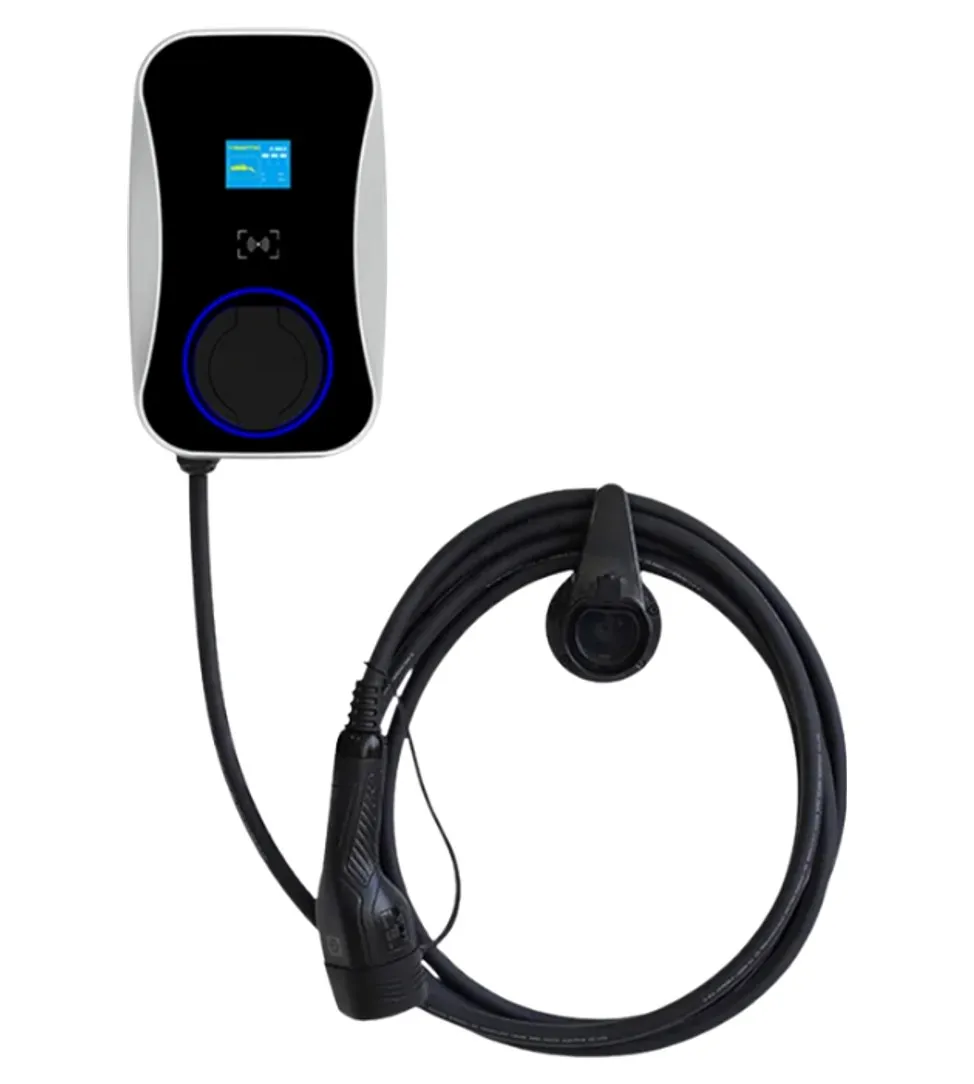
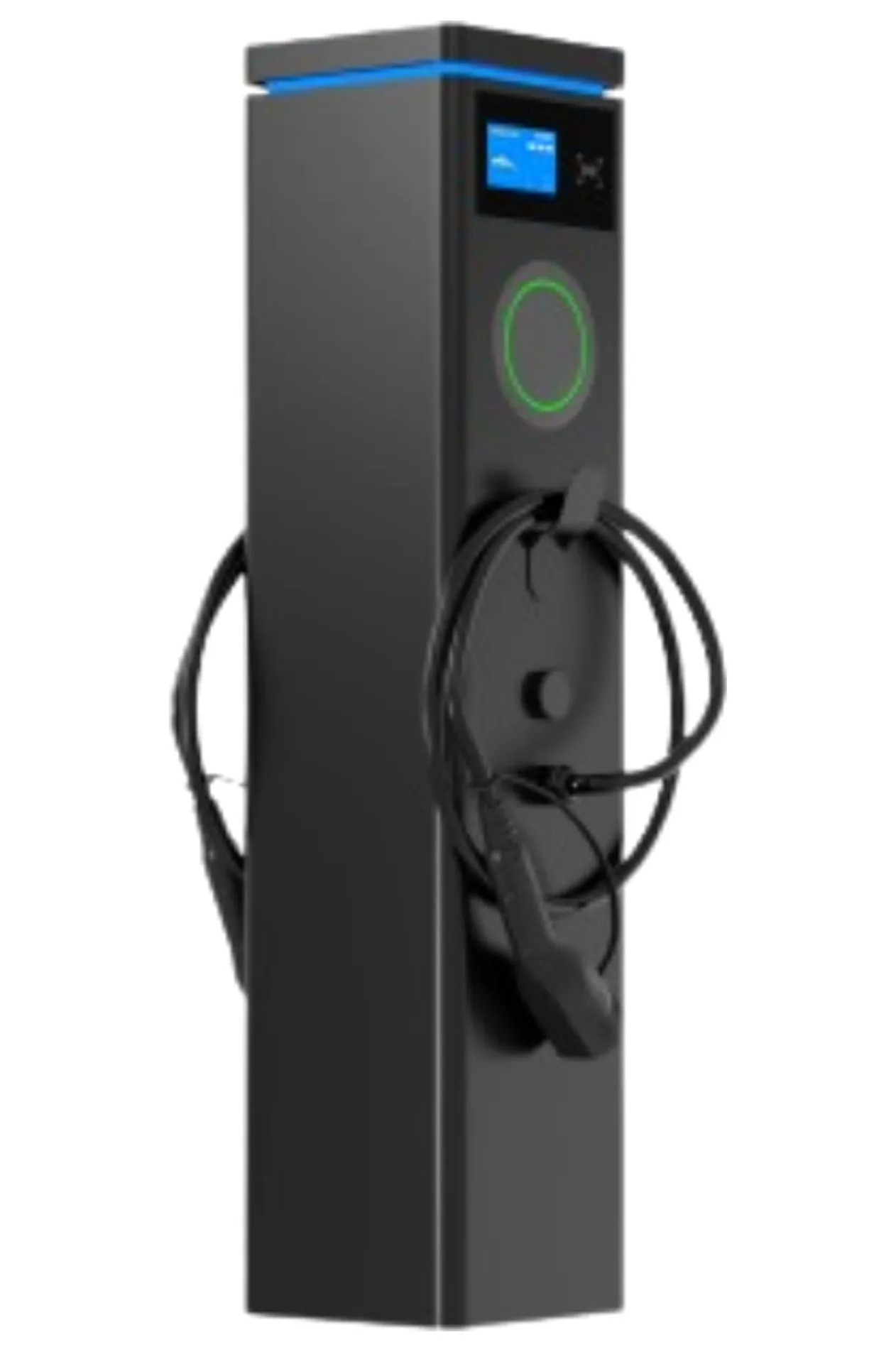
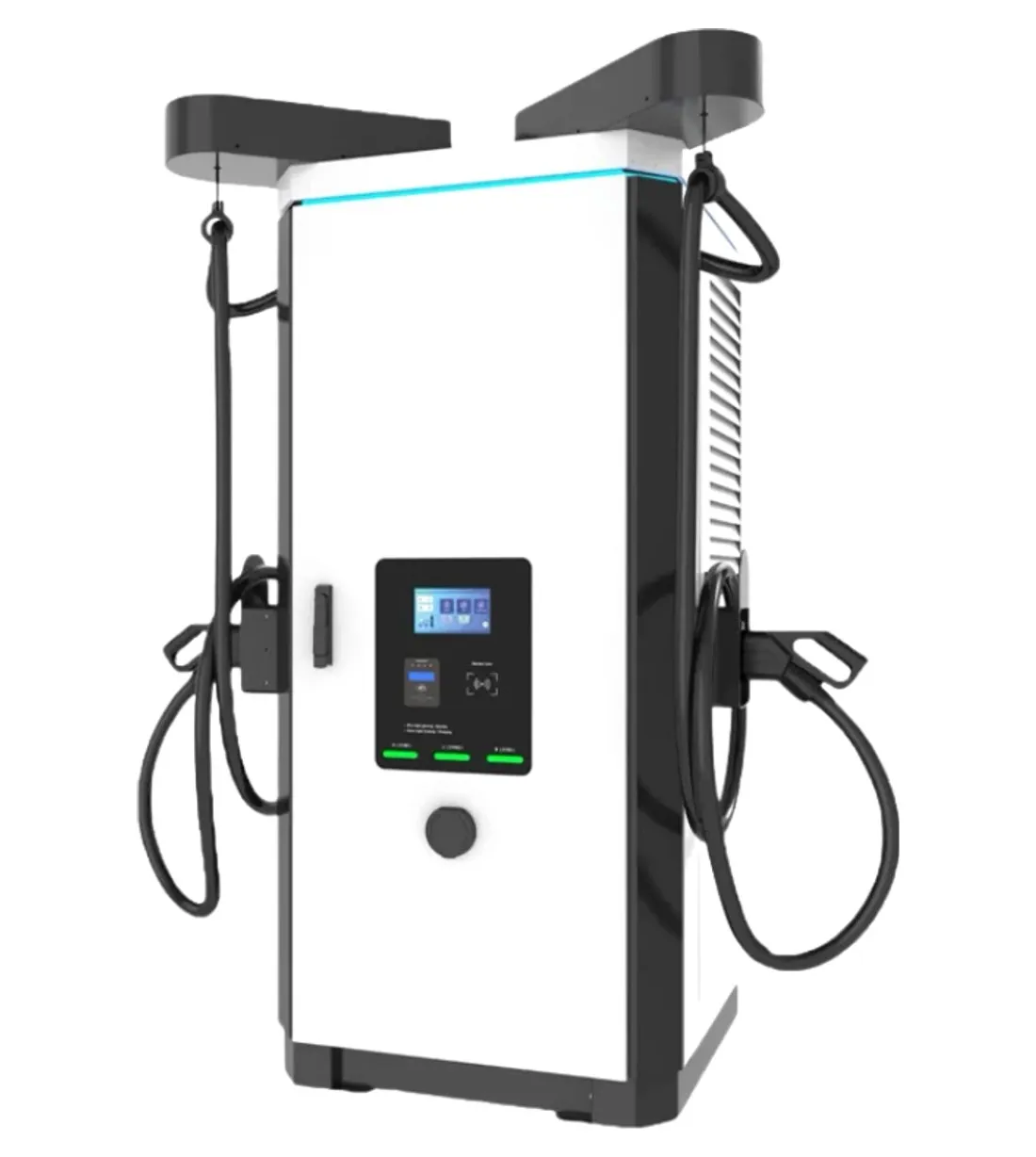
Look for companies that make the product type you need — AC wallboxes, AC pedestals, DC wallboxes or high-power DC cabinets are different production lines with different test equipment. Start from trade fairs, industry directories, references from installers in your market and the lists in top EV charger manufacturers in China and DC fast charger manufacturers.
Check early whether the company is a manufacturer or a trading company. Traders can be useful for small mixed orders, but for certification, firmware and long-term spare parts you want direct access to the factory.
3. Verify the factory
A website and a catalogue prove nothing. Before you pay a deposit, confirm:
| Check | How |
|---|---|
| Legal entity and scope | Business licence; China’s National Enterprise Credit Information Publicity System |
| Real factory | Address, video call walking the production line, or an on-site or third-party audit |
| Production of your product type | Assembly and test stations for the exact category (AC, DC, high-power DC) |
| Test equipment | Load banks, ageing racks, insulation and earth-continuity testers, EMC pre-scan |
| Certificates | Holder, model and scope match the product you are buying |
| Engineering | Who writes the firmware? Can they change it for you? |
Our step-by-step method, including what to ask on a video audit, is in how to verify a Chinese EV charger factory, and the full scorecard is in 15 checks before you sign.
4. Compare quotes on landed and five-year cost
Two quotes for “the same 22 kW wallbox” can differ in meter, RCD type, cable, enclosure, firmware support and warranty. Normalise them line by line:
| Cost layer | Examples |
|---|---|
| Product | Unit price by quantity; options; customisation |
| One-off | Samples, tooling, certification in your name, firmware changes |
| Landed | Packing, freight, insurance, duties and taxes, clearance, inland delivery |
| Installed | Mounting hardware, pedestals, cables, commissioning time |
| Five-year | Spare parts, failure rate, remote diagnostics, firmware updates, warranty handling |
The full method is in how to compare EV charger quotations. For ordering quantities and timing, see MOQ and lead time.
5. Test samples like you will use them
Order samples of the exact configuration, and test them with your cars, your supply and your back end: charging with the vehicles your customers drive, OCPP connection to your platform, RFID and app, behaviour after power loss, load management, and — for DC — a load test at full power. Keep the approved sample as the quality reference for mass production. What to test is in EV charger samples, and how to read the factory’s own test data in what a factory test report should show.
6. Confirm certificates for the exact model and market
| Market | Typical requirement |
|---|---|
| EU | CE marking with test reports to the IEC 61851 series and EMC standards; often a third-party mark such as TÜV |
| UK | UKCA (or CE where accepted) and the smart charge point regulations for private chargers |
| USA and Canada | NRTL listing (e.g. ETL or UL) to UL 2594 / UL 2202 and CSA standards; ENERGY STAR for some AC models |
| Gulf, Southeast Asia, Latin America, Oceania | National approvals on top of IEC test reports — see our country guides |
Check that the certificate names the model you are buying, the holder (manufacturer or brand), and the scope. If you sell under your own brand, ask how the certificates will be issued or extended to your name — see standards for Europe and the UK and North America.
7. Contract and payment
The purchase contract or proforma invoice should name: models and configurations, firmware version, approved sample, documents delivered with the goods (certificates, test reports, manuals, declaration of conformity), labelling and packing, inspection method, Incoterm with a named place, delivery date, warranty terms and what happens if a batch fails inspection.
For payment, a deposit at order and the balance after a pre-shipment inspection is the most common structure; a letter of credit gives more protection for large first orders. See Incoterms and payment terms.
8. Production and pre-shipment inspection
Ask for a dated production schedule and photos at key points. Before the balance is paid, inspect — yourself or through a third party — against the approved sample: appearance, labels, function test on a sample of units, insulation and earth tests, firmware version, packing and the documents list. DC chargers should show full-load and ageing test records per serial number.
9. Shipping and import
Agree the Incoterm with a named place (FOB Qingdao, Incoterms 2020, for example), the HS code with your broker, and the packing for sea freight. Market-specific import rules are in importing into the EU and UK and importing into the US; packing, HS codes and container loading are in shipping EV chargers from China.
10. Installation, spare parts and support
Plan support before you sign, not after the first fault:
- Spare parts in the first shipment — see the first-year spare-parts list.
- Remote diagnostics and firmware updates over OCPP or the supplier’s platform.
- Training for your installers and technicians.
- Warranty process: how faults are reported, what evidence is needed, and how replacement parts are shipped — see our warranty and service terms as an example.
- Power modules and DC repair: how modular the DC charger is — see DC charger power modules.
Red flags at any step
| Red flag | Why it matters |
|---|---|
| Certificates that name another company or model | They do not cover what you are buying |
| No video tour of the production line | Possibly a trading company or a workshop |
| “All certificates” for every market at a very low price | Usually not true for the exact model |
| No firmware engineer to talk to | Problems in the field will be hard to fix |
| 100 % payment before production for a bulk order | You carry all the risk |
| No spare-parts price list | Expect long downtime after the first fault |
Where VULTAE fits
We are an EV charger manufacturer in Qingdao, China, established in 2015, with our own R&D team and about 500 employees. We build AC wallboxes and pedestals, DC wallboxes and fast chargers, portable and mobile chargers in IEC and North American versions, and offer OEM / ODM private label. Send us your specification through the contact form and we will quote the standard and customised versions separately, with documents for the exact models.
Questions buyers ask
- Is it safe to buy EV chargers from China?
- Yes, if you buy from a verified manufacturer and run a structured process: a clear specification, factory verification, sample testing, certificates checked against the exact model, a written contract and a pre-shipment inspection. Most of the world’s charger electronics and many international brands are produced in China; the risk lies in skipping the checks, not in the country.
- How many suppliers should I ask for quotes?
- Three to five verified manufacturers is usually enough. Fewer leaves you without a benchmark; more takes time you will not spend checking them properly. Send all of them the same specification so the quotes can be compared.
- Which certificates should Chinese EV chargers have?
- It depends on the market: for Europe and the UK typically CE (and UKCA) with test reports to IEC 61851 and EMC standards, often with a third-party mark such as TÜV; for North America a listing from a nationally recognised testing laboratory such as ETL or UL to UL 2594 / UL 2202, and ENERGY STAR for some AC models. Each country may add its own approval. Always check that the certificate names the model you are buying.
- How should I pay a Chinese charger supplier?
- A deposit at order and the balance after a pre-shipment inspection is the most common structure. For large first orders, a letter of credit that requires an inspection certificate gives more protection. Avoid paying the full amount before production for anything other than samples.
- What is the biggest mistake buyers make?
- Choosing on unit price alone. A cheaper charger that cannot be repaired remotely, has no spare parts or fails certification in your market costs far more over five years than the price difference.
References
- [1]Incoterms 2020. International Chamber of Commerce.
- [2]IEC 61851-23:2023 — DC electric vehicle supply equipment. International Electrotechnical Commission.
- [3]National Enterprise Credit Information Publicity System. State Administration for Market Regulation (China).
- [4]CE marking — manufacturers’ obligations. European Commission.
- [5]OCPP — Open Charge Point Protocol. Open Charge Alliance.