Sourcing from China
What an EV Charger Factory Test Report Should Show
How to read EV charger test reports: lab type tests vs per-unit routine tests, what page one must show, and red flags that a report does not fit.
- Prepared by
- VULTAE Engineering Team
- Published
- Reading time
- 4 min
- Sources
- 5 references
Key takeaways
- 1There are two kinds of report. A type-test report from an accredited lab proves that one model design meets a standard; a routine test record from the factory proves that each serial number left the line working and safe.
- 2Page one of a type-test report must name the model you are buying, the factory that makes it, the standard and its edition, and an accredited lab — check all four before reading further.
- 3Compare the critical-components list in the report with the product you receive: a changed contactor, relay, residual-current device or power module can invalidate the report.
- 4Ask for the routine test record of every serial number in your order, or at least of the units picked at pre-shipment inspection.
Contents
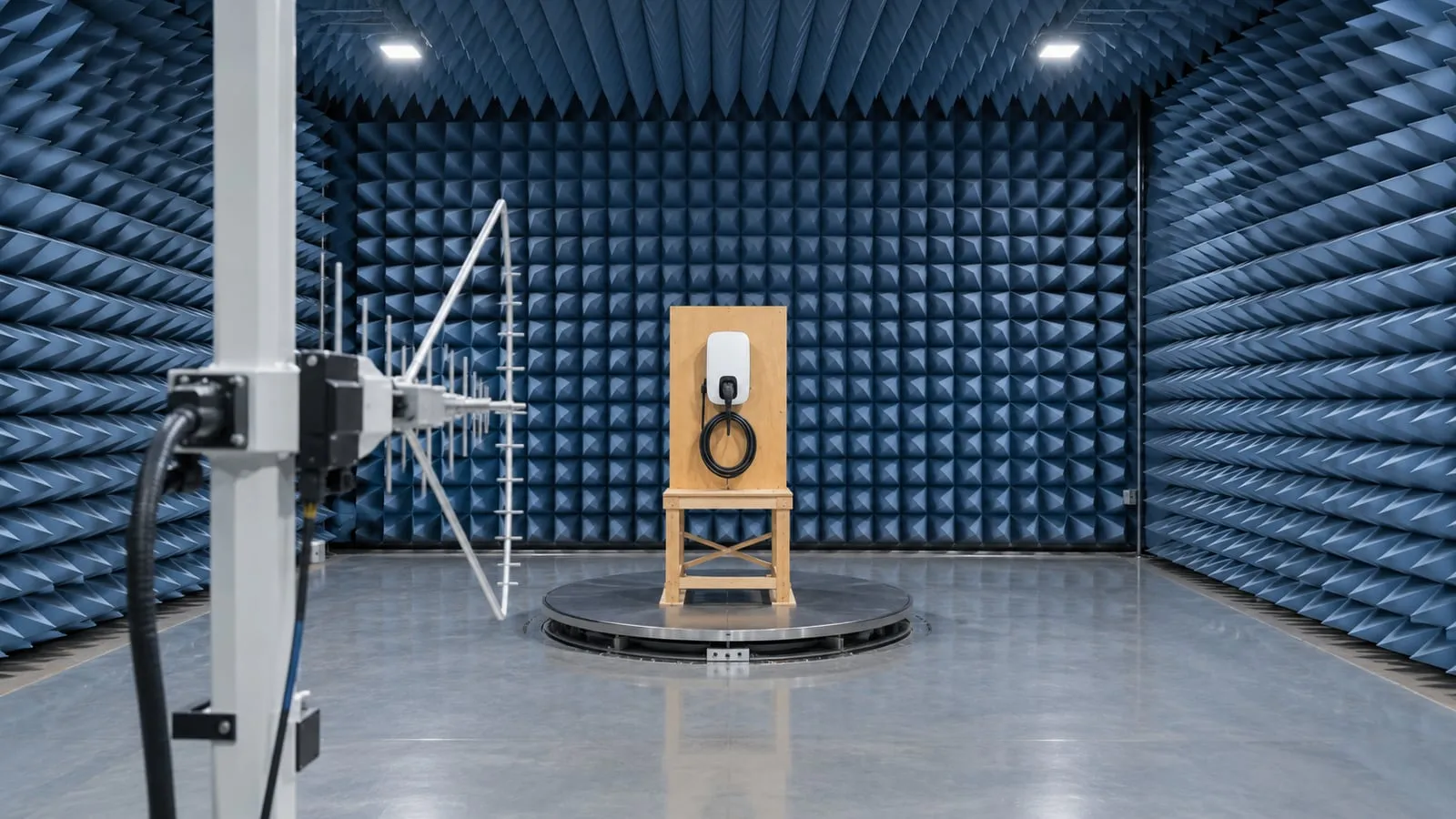
Short answer: ask for two different documents. A type-test report from an accredited laboratory shows that the charger model meets a standard such as IEC 61851-1 (safety), IEC 61851-21-2 (EMC), IEC 61851-23 (DC) or UL 2594. A routine test record from the factory shows that each serial number passed safety and function tests before packing. Check that page one of the type-test report names your model, the real factory, the standard edition and an accredited lab; then compare its critical-components list with the product you receive.
Two reports, two different questions
| Type-test report | Routine test record | |
|---|---|---|
| Question it answers | Does this design meet the standard? | Did this unit leave the factory safe and working? |
| Issued by | Testing laboratory (accredited to ISO/IEC 17025) | The factory’s own test station |
| Covers | One model or model family | One serial number |
| Typical tests | Full clause-by-clause testing: construction, insulation, temperature rise, protection, abnormal conditions, EMC | Earth continuity, dielectric / insulation test, functional charge test, protection device checks |
| When you need it | Before choosing the supplier; for certification and tenders | At pre-shipment inspection and for warranty records |
Page one of a type-test report: four checks
Most problems can be found on the first page, before reading a single test clause.
| Field | What to check |
|---|---|
| Model / type reference | Your exact model, or a listed family that clearly includes it (e.g. power and connector variants) |
| Manufacturer and factory | The company you buy from, or its named factory — not an unrelated brand |
| Standard and edition | The current edition used in your market, e.g. IEC 61851-1:2017 rather than an older edition |
| Laboratory | Name, accreditation mark and number (ISO/IEC 17025), report number and date |
Then look at the ratings: rated voltage, current, power, phases, IP rating and ambient temperature. A report for a 16 A model does not cover the 32 A version unless that version was included.
Inside the report
| Section | What it tells you |
|---|---|
| Clause-by-clause verdicts (P / F / N/A) | Every requirement and whether it passed. Many “N/A” on clauses that should apply to your product are a warning sign |
| Test data | Measured values: temperature rise of terminals and connectors, leakage current, insulation resistance, trip times |
| Photos | External and internal photos of the tested sample — compare them with your sample |
| Critical components list | The make and model of safety-relevant parts: residual-current device, contactors, relays, connector, cable, power supply, power modules |
| EMC results | Emissions and immunity levels for each port (supply, signal, communication) |
| Deviations and remarks | Any condition attached to the result (for example, a required external RCD) |
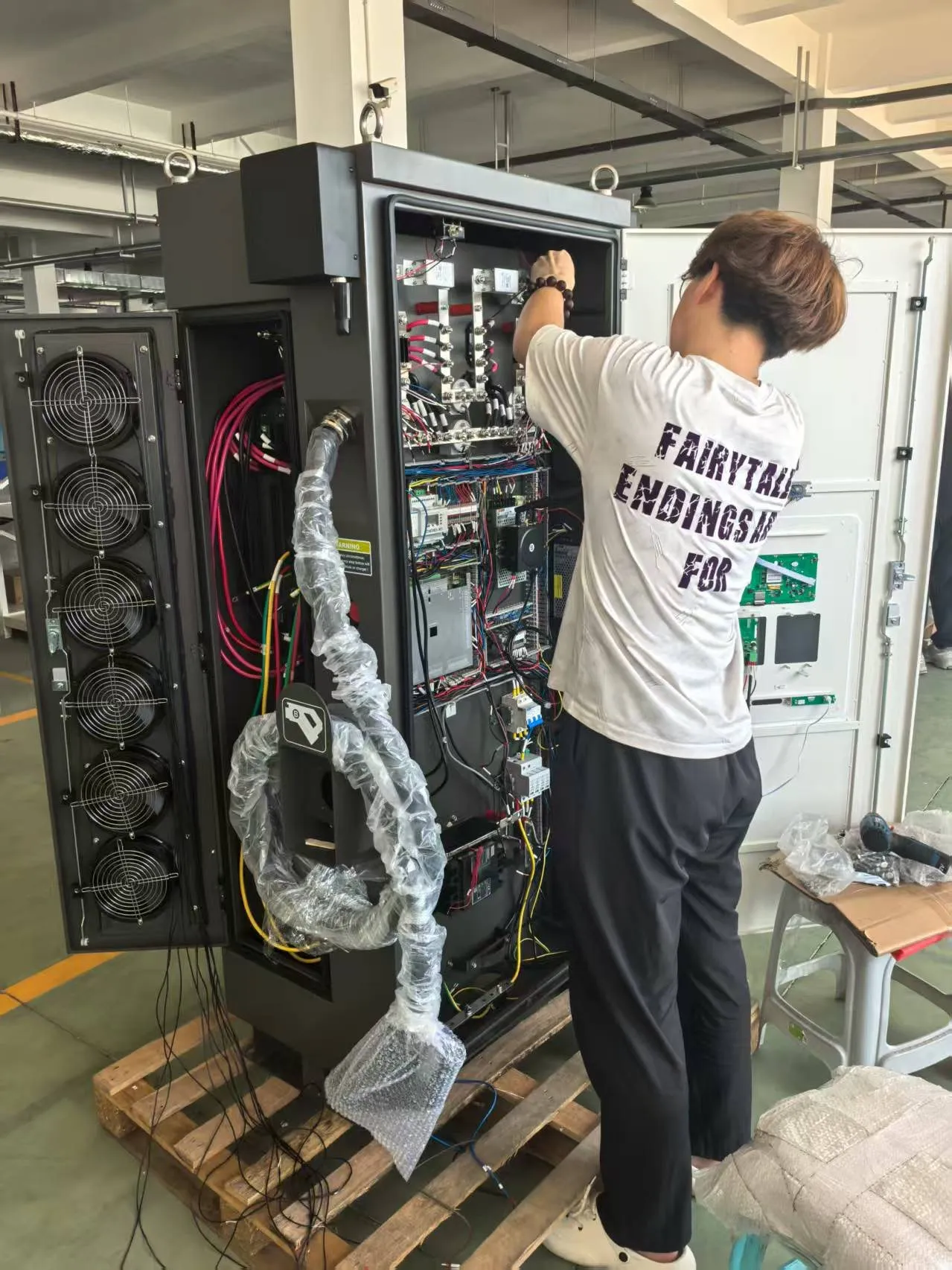
Standards you will see on charger reports
| Market | Safety | EMC | Notes |
|---|---|---|---|
| IEC markets (Europe, UK, Middle East, Asia-Pacific) | IEC 61851-1 (AC and general), IEC 61851-23 (DC), IEC 62196 (connectors) | IEC 61851-21-2 | CE / UKCA declarations rely on these reports (as EN IEC versions) |
| North America | UL 2594 (AC EVSE), UL 2202 (DC chargers), UL 2231 (personnel protection), CSA C22.2 No. 280 / 281 | FCC Part 15 | Listing by an NRTL such as UL or Intertek (ETL) |
| Energy efficiency (US) | — | — | ENERGY STAR test results for standby and efficiency |
Routine test record: what each unit should have
For every serial number, the factory should record at least:
- Protective earth continuity
- Dielectric strength (hi-pot) or insulation resistance
- Residual-current / ground-fault protection trip
- A functional charging test on a test load or simulator, including control pilot and communication
- Meter check (where a billing meter is fitted)
- For DC units: output voltage and current accuracy, emergency stop, insulation monitoring
- Ageing (burn-in) time and result, where the factory runs one
- Firmware version, tester ID and date
Ask for these records at pre-shipment inspection. They are also what you will need if a unit fails in the field and you claim under warranty.
Red flags
- The report names a different brand and gives no explanation of the relationship.
- The standard edition is outdated for your market.
- Clause verdicts show many “N/A” for requirements that obviously apply.
- Internal photos or critical components do not match your sample.
- No accreditation mark or number for the laboratory.
- Routine test records cannot be produced for the serial numbers you are buying.
Reports for VULTAE chargers
For each model we quote, ask us for the type-test reports and certificates that apply in your market, and for routine test records of the serial numbers in your order. See also our guides on verifying certificates at the source and testing samples.
Questions buyers ask
- What is a type test report for an EV charger?
- A report from a testing laboratory showing that a sample of one charger model was tested against a standard — for example IEC 61851-1 for safety, IEC 61851-21-2 for EMC or UL 2594 for North American AC equipment — with a verdict for each clause. It covers the design, not every unit built.
- What is a routine test for EV chargers?
- A test the factory performs on every unit before packing, typically protective earth continuity, a dielectric (hi-pot) or insulation test, a functional charging test and checks of protection devices. The results should be recorded against the serial number.
- How do I know a test lab is accredited?
- The report should carry the mark and number of the lab’s accreditation to ISO/IEC 17025, issued by a national accreditation body that is a signatory to the ILAC arrangement. You can look up the accreditation number on the accreditation body’s website.
- What is a CB test report?
- A report issued under the IECEE CB Scheme by a recognised CB testing laboratory, in a standard format. Certification bodies in other member countries can accept it, which reduces repeat testing when the charger is certified for additional markets.
- Does a CE marking mean the charger was tested by a lab?
- Not necessarily. CE is a declaration by the manufacturer. For chargers, ask for the LVD (safety) and EMC test reports behind the declaration, and check that they name the same model and standards.
References
- [1]IEC 61851-1:2017 — general requirements. International Electrotechnical Commission.
- [2]IEC 61851-21-2:2018 — EMC requirements for off-board charging equipment. International Electrotechnical Commission.
- [3]IEC 61851-23:2023 — DC electric vehicle supply equipment. International Electrotechnical Commission.
- [4]IECEE CB Scheme. IECEE.
- [5]ISO/IEC 17025 — testing and calibration laboratories. International Organization for Standardization.