Sourcing from China
Shipping EV Chargers from China: Packaging, HS Codes and Container Loading
How EV chargers are packed and shipped from China: cartons vs crates, HS codes for AC and DC chargers, container sizes, loading plans, documents and insurance.
- Prepared by
- VULTAE Engineering Team
- Published
- Reading time
- 5 min
- Sources
- 5 references
Key takeaways
- 1AC wallboxes and DC fast chargers are usually classified differently: US Customs has classified an AC charging station under 8537.10 (control and distribution boards) and DC chargers under 8504.40 (static converters). The code decides the duty — confirm it for your country before you ship.
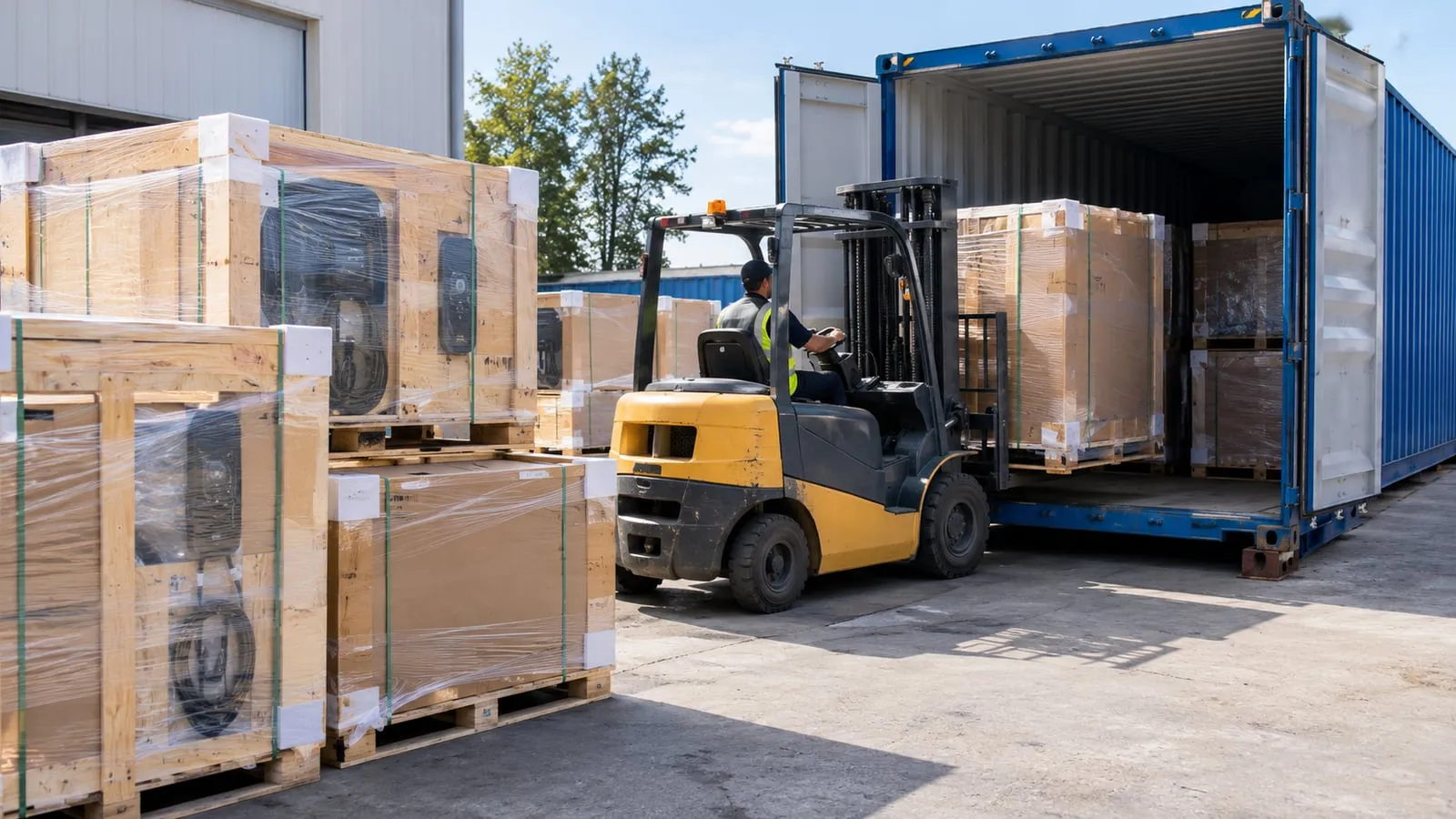
- 2Wallboxes travel in cartons on pallets; DC cabinets travel upright in wooden crates or on pallets with corner protection, usually not stacked. Export wood must be heat-treated to ISPM 15.
- 3Plan the container from the packed dimensions and weights, not from the product size. DC cabinets fill floor space long before they reach the weight limit.
- 4Documents that delay most shipments: a packing list that does not match the crates, missing certificates of origin for free-trade agreements, and missing country-of-origin marking.
Contents
Short answer: AC wallboxes ship in cartons on pallets; DC fast chargers ship upright in crates or on braced pallets, usually not stacked. Before you ship, confirm the HS code with your broker — customs rulings classify AC charging stations and DC chargers under different headings with different duties. Plan the container from packed dimensions, use ISPM 15 heat-treated wood, insure the cargo, and make sure the packing list, certificates of origin and origin marking match the goods.
HS codes: AC and DC chargers are not the same product
The first six digits of the Harmonized System code are the same worldwide; national codes add digits and set the duty. For chargers, the function decides the heading:
| Product | Heading used in customs rulings | Why |
|---|---|---|
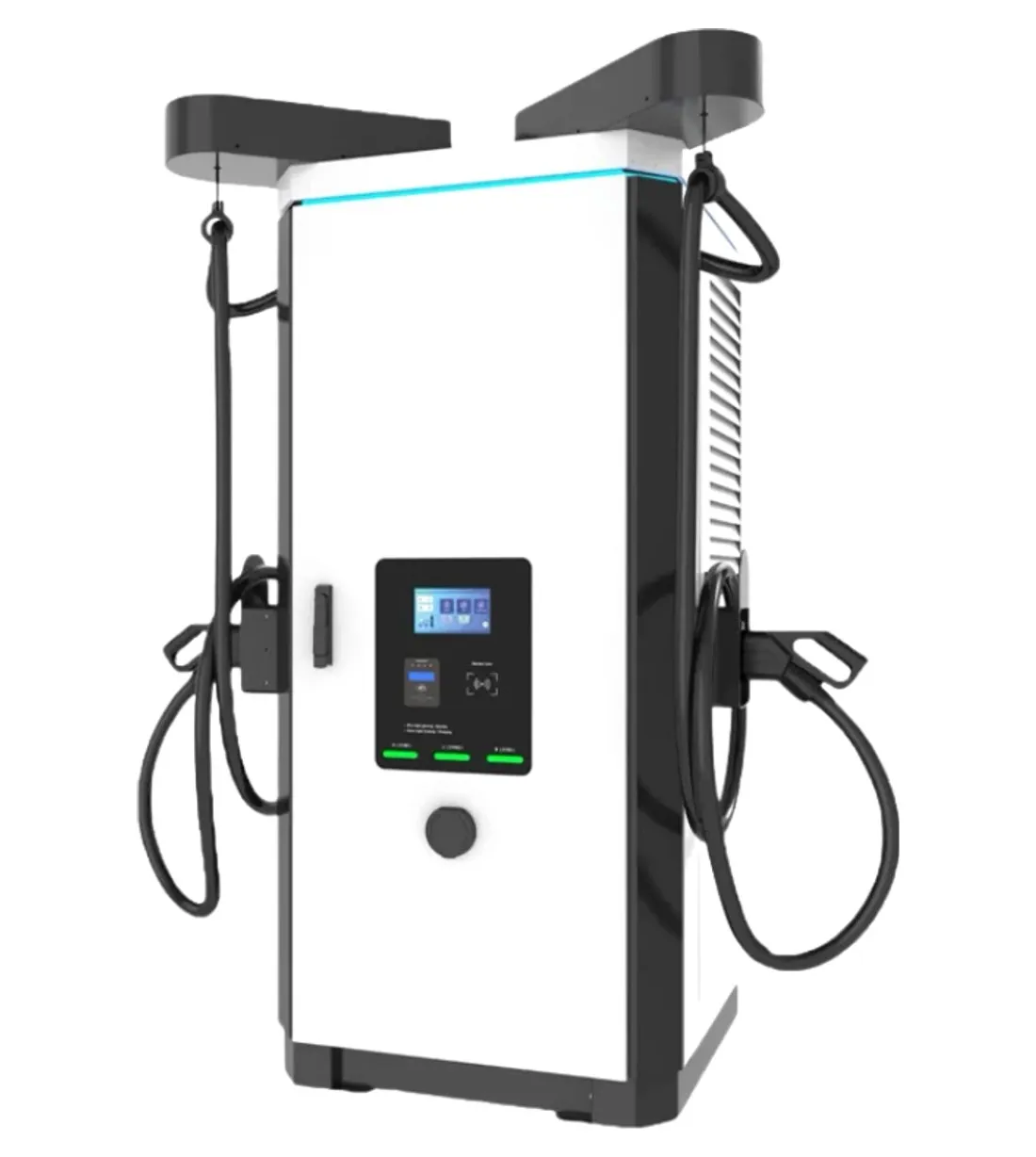
| DC fast charger | 8504.40 — static converters | Converts AC from the grid into DC for the battery |
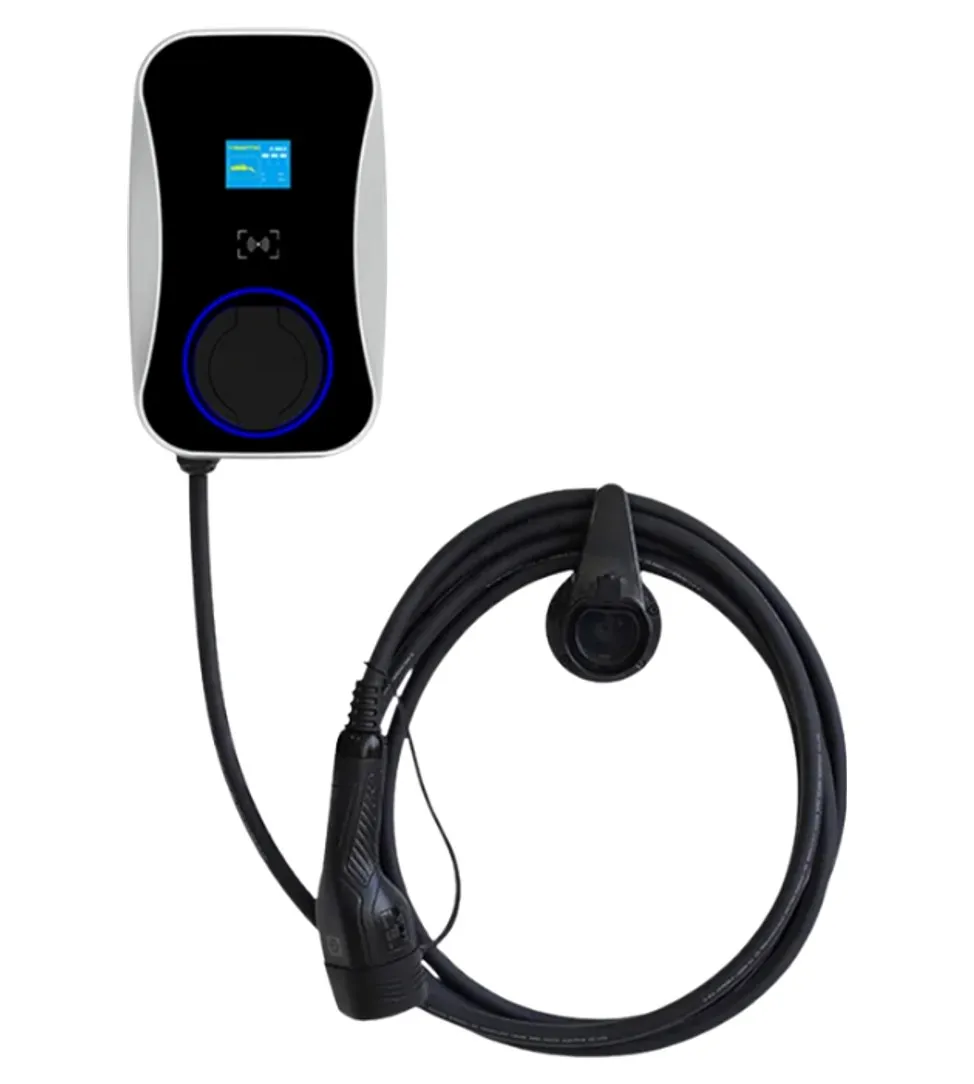
| AC wallbox / AC charging station | 8537.10 — boards and panels for electric control or distribution (≤ 1,000 V) | Switches, protects and distributes AC power; the car’s on-board charger does the conversion |
| Charging cable with connectors | 8544.42 — insulated conductors fitted with connectors | A cable assembly |
| Vehicle connectors, sockets | 8536.69 — plugs and sockets | Connector components |
US Customs, for example, classified an AC charging station under 8537.10 in ruling N313573 and DC chargers under 8504.40 in ruling N324397. Other countries may decide differently for a particular product, so for a large or repeated import ask your customs broker or apply for a binding tariff ruling in your country. The code also decides whether extra duties apply — in the US, for instance, Section 301 duties on Chinese goods depend on the exact subheading.
How chargers are packed
| Product | Typical export packing | Notes |
|---|---|---|
| AC wallbox, portable charger | Individual carton with foam, cartons palletised and stretch-wrapped | Accessories (brackets, RFID cards, manuals) inside each carton |
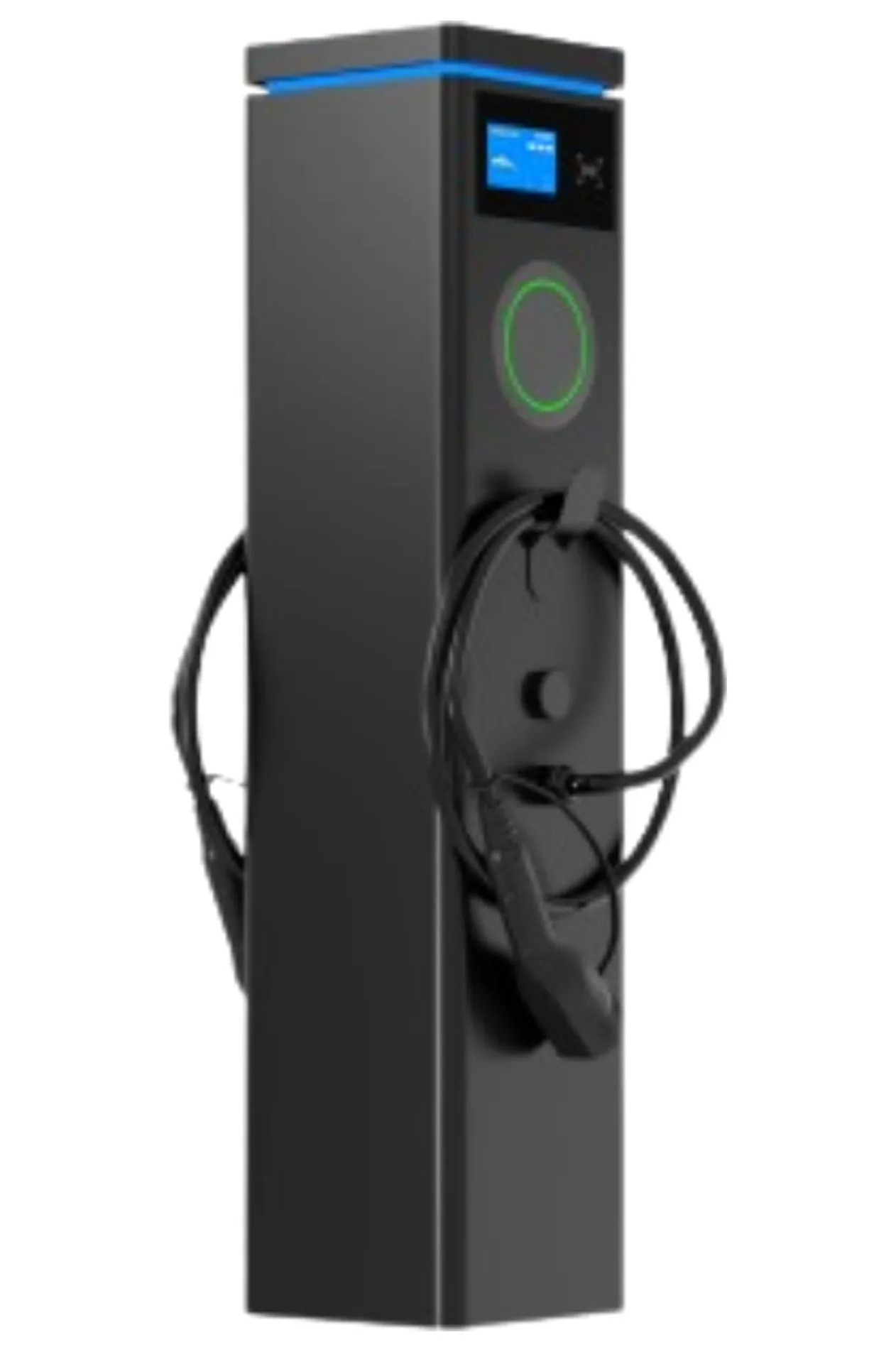
| AC pedestal | Carton or crate per unit, upright or flat as the design allows | Protect the display and the cable holster |
| DC wallbox | Carton or crate on a pallet | Weight per unit is higher than an AC pedestal |
| DC floor-standing cabinet | Bolted upright to a pallet or skid, wooden crate or reinforced carton, cables coiled and fixed | Usually not stackable; forklift access from the base |
Wooden crates and pallets for export must be heat-treated or fumigated to ISPM 15 and carry the IPPC mark — untreated wood can be refused or destroyed at destination.
Planning the container
Use the packed length, width, height and gross weight of every crate. DC cabinets almost always run out of floor space before they reach the weight limit.
| Container | Internal size (approx.) | Typical use for chargers |
|---|---|---|
| 20′ standard | 5.9 × 2.35 × 2.39 m | Mixed AC orders; small DC orders |
| 40′ standard | 12.0 × 2.35 × 2.39 m | Large AC orders; DC cabinets that fit under the door height |
| 40′ high cube | 12.0 × 2.35 × 2.69 m | Tall DC cabinets on pallets; mixed loads with stacked wallbox pallets |
| LCL (shared container) | — | Samples and small orders; more handling, so pack more strongly |
Ask the supplier for a loading plan: crate list with dimensions and weights, position in the container, bracing and lashing. Check that tall crates clear the door opening, which is lower than the internal height.
Documents that should travel with the goods
| Document | Why it matters |
|---|---|
| Commercial invoice | Value for duty; must match the contract and payment |
| Packing list | Crate-by-crate contents, dimensions, net and gross weights, serial numbers |
| Bill of lading or air waybill | Title to the goods; needed to collect them |
| Certificate of origin | Reduced duty under free-trade agreements (for example RCEP) where applicable |
| Certificates and test reports | Some countries check conformity at import (for example the UAE’s conformity scheme) |
| Insurance certificate | Under CIF or CIP, or your own policy |
Two details cause frequent delays: a packing list that does not match what customs finds in the container, and missing country-of-origin marking — for example, the US requires imported goods to be marked with their country of origin.
Insurance and risk
Under FOB, risk passes to you when the goods are loaded on the vessel in China; under CIF, the seller arranges minimum insurance but the risk still passes at loading. For chargers, an all-risks policy at 110 % of invoice value is common practice. Photograph crates at loading and at arrival, and report any damage to the carrier and insurer before signing the delivery receipt without remarks. Our guide to Incoterms and payment terms explains where risk and cost pass under each rule.
Shipping VULTAE chargers
Our factory is in Qingdao, one of China’s main container ports. Ask us for the packed dimensions, weights and a loading plan for your order, and tell us the HS code your broker will use so the documents match. See also MOQ and lead time.
Questions buyers ask
- What is the HS code for an EV charger?
- It depends on what the charger does. US Customs has classified an AC charging station, which controls and distributes electricity, under heading 8537.10, and DC chargers, which convert AC to DC, under 8504.40. Charging cables are usually 8544.42. National tariff codes differ after the first six digits, so ask your customs broker or apply for a binding ruling.
- How are EV chargers packed for export?
- AC wallboxes and portable chargers are packed in individual cartons, then palletised and stretch-wrapped. DC chargers are fixed upright on a pallet or skid and boxed in a wooden crate or reinforced carton, with the cables secured and the screen protected. Wooden packaging must be ISPM 15 heat-treated and marked.
- How many DC chargers fit in a container?
- It depends on the crate footprint and whether units can be stacked, which usually they cannot. Calculate from the packed length, width and height against the container’s internal floor, leaving space for bracing — your supplier should send a loading plan.
- Do I need a certificate of origin for EV chargers?
- You need one to claim reduced duty under a free-trade agreement that covers China and your country, for example RCEP for many Asia-Pacific countries. Some importers also need it for customs or letter-of-credit documents. Ask the supplier to issue it with the shipping documents.
- Should I insure EV charger shipments?
- Yes. Under CIF the seller buys minimum cover; for chargers, all-risks cover at 110 % of the invoice value is common practice. Under FOB or EXW, arrange insurance yourself from the point where risk passes to you.
References
- [1]CBP ruling N313573 — classification of an electric vehicle charging station (AC, heading 8537.10). U.S. Customs and Border Protection.
- [2]CBP ruling N324397 — classification of an electric vehicle charging station (DC, heading 8504.40). U.S. Customs and Border Protection.
- [3]ISPM 15 — regulation of wood packaging material in international trade. International Plant Protection Convention.
- [4]Regional Comprehensive Economic Partnership (RCEP). RCEP Secretariat.
- [5]Incoterms 2020 rules. International Chamber of Commerce.