Markets
Middle East EV Charging: Standards, Climate and Approvals
EV charger requirements in the Gulf: UAE and Saudi grid and connectors, 55 °C design, IP54 and IK10, OCPP, SASO and SABER, and what to check before shipping.
- Prepared by
- VULTAE Engineering Team
- Published
- Reading time
- 3 min
- Sources
- 3 references
Key takeaways
- 1The Gulf mostly uses 230/400 V three-phase supply with Type 2 for AC and CCS2 for DC. Saudi Arabia runs at 60 Hz, while the UAE, Qatar, Kuwait, Oman and Bahrain run at 50 Hz — check the frequency of your charger.
- 2Heat decides the design: Dubai’s specification asks for operation at 55 °C ambient at full output, IP54 minimum and IK10 impact protection, with OCPP 1.6J or higher for the back end. Many Gulf tenders follow similar values.
- 3Product approvals differ by country: Saudi Arabia needs a SASO certificate through SABER; the UAE has a federal product rule and local utility approvals; others follow GSO-based schemes. Confirm per project.
- 4Dust, humidity on the coast and sun load are as important as temperature. Specify filtered air, corrosion class and shade.
Contents
Short answer: the Gulf uses Type 2 and CCS2 on 230/400 V supply — 60 Hz in Saudi Arabia, 50 Hz elsewhere. The design driver is heat: 55 °C at full output, IP54 and IK10 minimum in Dubai’s specification, OCPP 1.6J or higher. Product approval routes differ by country, and dust and coastal humidity matter as much as temperature.
At a glance
| UAE | Saudi Arabia | Qatar, Kuwait, Oman, Bahrain | |
|---|---|---|---|
| Grid | 230/400 V, 50 Hz | 230/400 V, 60 Hz (older systems 127/220 V) | 230/400 V, 50 Hz |
| AC connector | Type 2 | Type 2 | Type 2 |
| DC connector | CCS2 | CCS2 | CCS2 |
| Design ambient | 55 °C at full output (DEWA) | Extreme heat; dust storms | Similar conditions |
| Minimum protection | IP54 and IK10 (DEWA) | Per project and authority | Per project and authority |
| Backend | OCPP 1.6J or higher (Dubai) | Per tender | Per tender |
| Product approval | Federal rule and utility approvals | SASO certificate via SABER | National schemes; confirm locally |
These values come from our country guides — UAE and Saudi Arabia — and from the sources listed. Check the current rule for each project.
Climate design
| Stress | What to specify |
|---|---|
| Heat | 55 °C at full output; derating curve; shaded layout — see hot climates |
| Sun | Light-coloured or coated enclosures; canopies — see solar carports |
| Dust and sand | Filtered air, washable filters, cleaning plan |
| Coastal humidity and salt | Corrosion class C4/C5 — see coastal and desert enclosures |
| Impact | IK10 for public sites — see IP and IK ratings |
| Lightning (some coastal areas) | Surge protection — see surge protection |
Frequency
Saudi Arabia’s 60 Hz grid is different from the other Gulf states. Confirm that the charger (AC and DC) supports 60 Hz and the voltage on site, which may be 230/400 V or an older 127/220 V system. See the voltage reference.
Approvals and licences
| Topic | UAE | Saudi Arabia |
|---|---|---|
| Product | Federal product regulation; Dubai specification for public chargers | SASO conformity certificate through SABER |
| Installation | Utility approval (for example DEWA in Dubai) | Utility connection (Saudi Electricity Company) |
| Operation | Licence rules differ by emirate | WERA framework for charging activity |
Ask a local consultant to confirm current rules; they change.
Typical projects
| Project | Charger |
|---|---|
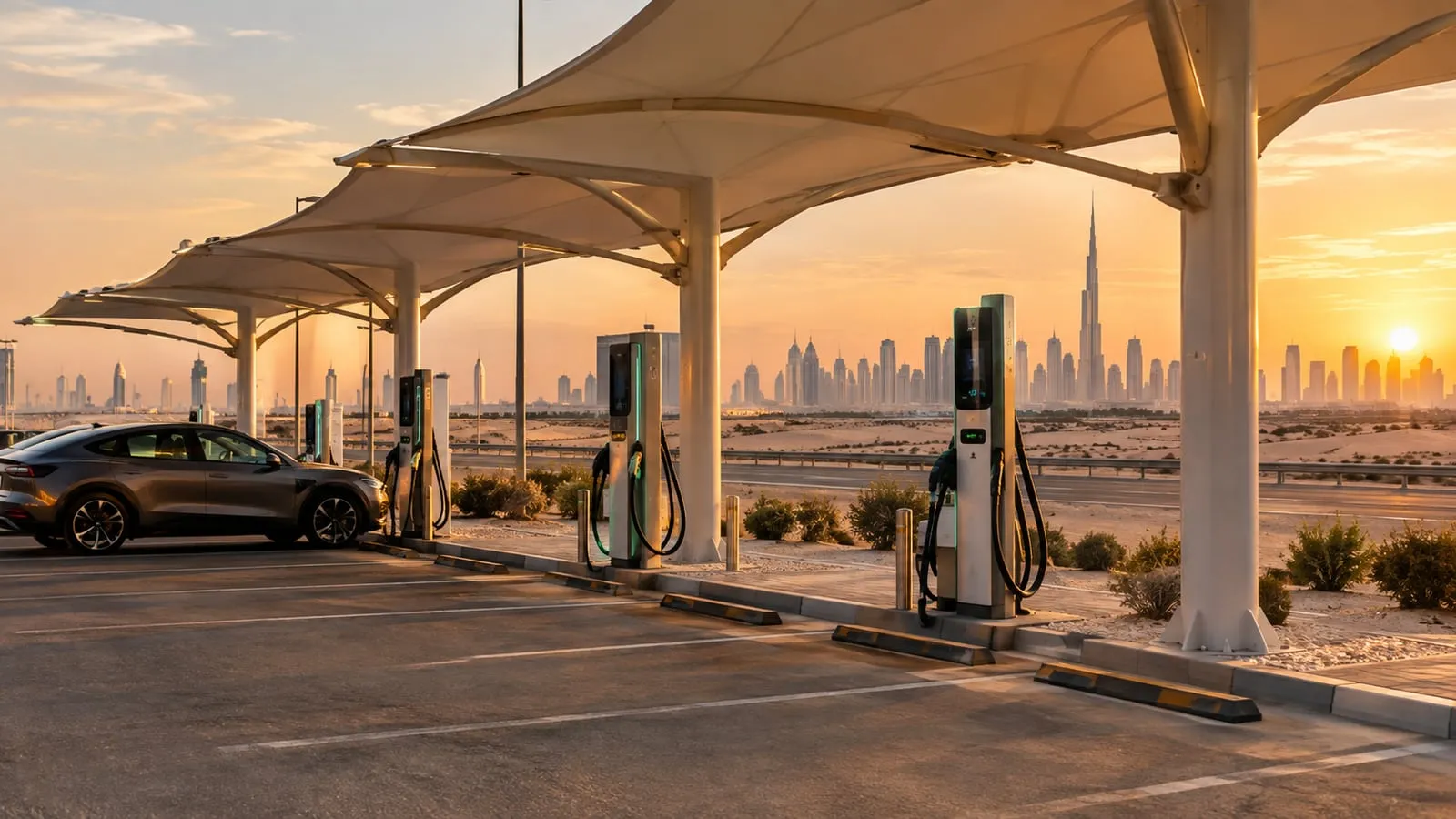
| Highway service area | DC 120–360 kW under canopy |
| Mall and hotel | AC 22 kW and DC 60–120 kW |
| Residential tower | AC with load management |
| Fleet (taxi, delivery, bus) | AC overnight, DC for turnaround |
| Fuel station | DC, often 120 kW and above |
Checklist before shipping
- Confirm frequency and voltage at the site.
- Confirm product approval route and documents.
- Check temperature rating and derating.
- Confirm IP, IK and corrosion class match the site.
- Confirm OCPP version and back end.
- Prepare labels and manuals (Arabic and English as required).
- Plan service and spare parts — see maintenance.
VULTAE
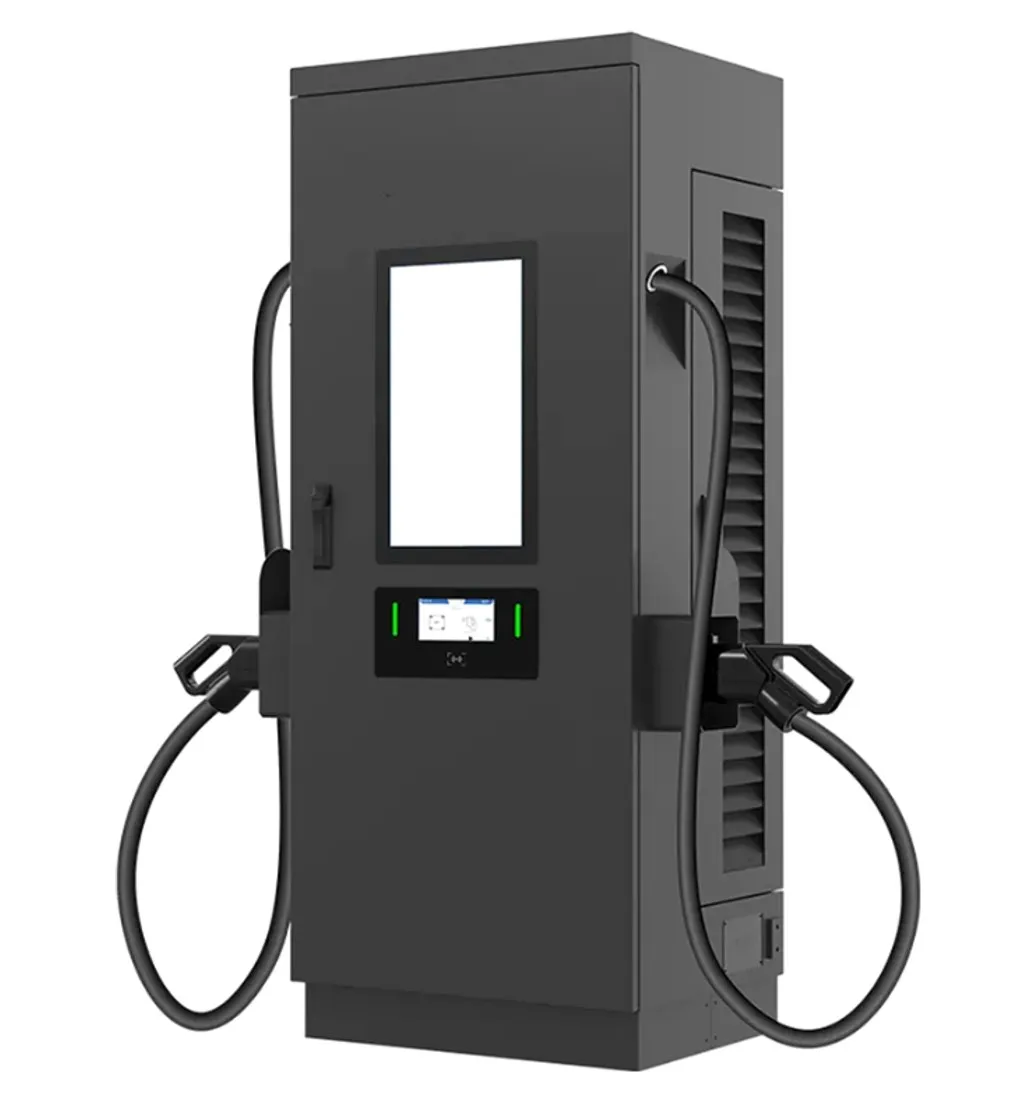
VULTAE chargers are specified for operation up to +55 °C and offer IP54 or higher, IK10 on commercial models and an optional C4 anti-corrosion treatment on DC chargers; OCPP 1.6J and 2.0.1 are supported. We confirm 60 Hz capability, the approvals available and the documents for the exact model and country before quotation. See the DC fast charger and the Arabic site for the Gulf and North Africa.
Questions buyers ask
- What temperature rating do EV chargers need in the Gulf?
- Dubai’s technical specification asks for operation at an ambient temperature up to 55 °C at full output. Many tenders in the region use similar requirements. Check the data sheet and the derating curve.
- What connectors are used in the Middle East?
- Type 2 for AC and CCS2 for DC in the main Gulf markets. Some older imports use other connectors, but new public infrastructure follows Type 2 and CCS2.
- Do I need SASO approval in Saudi Arabia?
- Products regulated in Saudi Arabia need a SASO conformity certificate through the SABER platform. Check the current requirements for EV chargers with a local agent or consultant.
- Which backend protocol is required?
- Dubai’s specification requires OCPP 1.6J or higher for public chargers. Check the specification of each tender or authority.
References
- [1]WAM: Dubai’s charging points. Emirates News Agency.
- [2]TÜV Rheinland: UAE draft Cabinet resolution on EVSE. TÜV Rheinland.
- [3]IEC 61851-1:2017 — general requirements. International Electrotechnical Commission.