Sites & Applications
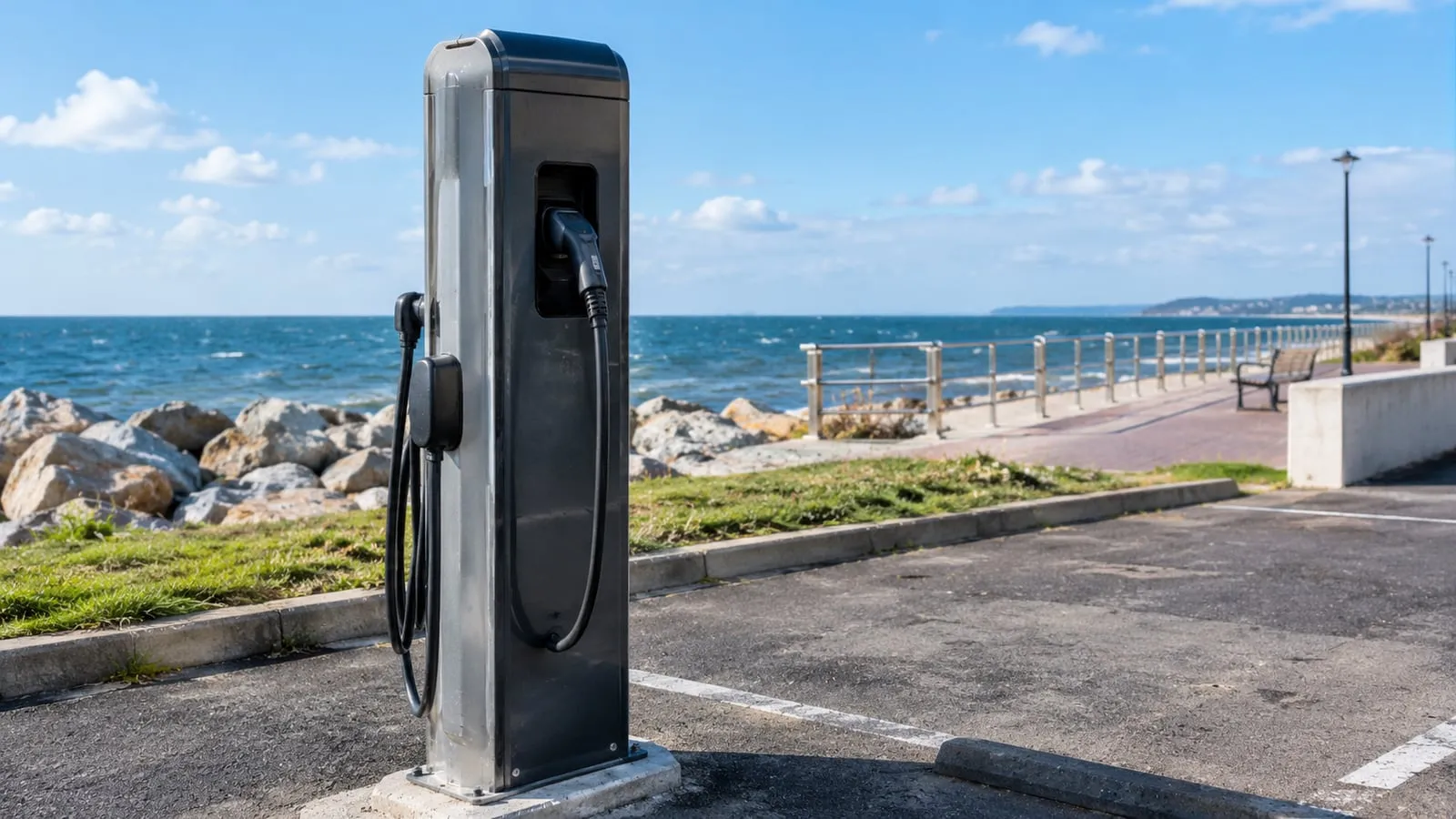
Enclosures for Coastal and Desert Sites: Materials and Corrosion
Salt spray, sand and UV: how corrosion classes (C3–C5), coatings, stainless steel, gaskets and filters protect EV chargers on coasts and in deserts.
- Prepared by
- VULTAE Engineering Team
- Published
- Reading time
- 3 min
- Sources
- 2 references
Key takeaways
- 1Coasts and deserts attack chargers differently. Salt spray corrodes metal, fasteners and electronics; sand and dust abrade surfaces, clog filters and get into mechanisms; UV and heat age plastics and seals.
- 2Use the corrosion classes in ISO 12944 as a language with suppliers: C3 (moderate, urban), C4 (high, coastal and industrial), C5 (very high, near the sea, offshore). Ask for the class the enclosure coating is tested for and the expected life.
- 3Details decide life: material (galvanised steel, stainless, aluminium), coating system, seal quality, stainless fasteners, drain holes, conformal-coated boards and washable filters.
- 4Maintenance is part of the design: rinse salt off, clean filters, check seals and touch up coatings on a schedule.
Contents
Short answer: salt, sand and UV each damage chargers in a different way. Ask for a corrosion class (ISO 12944: C4 for most coastal sites, C5 near the sea), check materials, coating, seals and fasteners, and plan cleaning and filter changes. The IP rating alone does not protect against corrosion.
What each environment does
| Environment | Main stress | Typical damage |
|---|---|---|
| Coast | Salt spray, humidity | Corroded enclosures, hinges, screws; creeping corrosion on boards and terminals |
| Desert | Sand, dust, heat, UV | Abrasion, clogged filters, jammed locks, cracked plastics |
| Tropical | Humidity, heat, rain | Mould, condensation, accelerated ageing |
| Industrial | Chemicals, dust | Coating attack, contact corrosion |
Corrosion classes
| Class (ISO 12944) | Environment | Example |
|---|---|---|
| C3 — medium | Urban and industrial, moderate pollution | City car parks |
| C4 — high | Industrial areas, coastal with moderate salinity | Coastal towns, harbour areas |
| C5 — very high | Marine, high salinity, humidity | Seafront, offshore, ports |
The class tells the supplier which coating system and test duration is expected. Ask which class the actual enclosure meets, not just a component.
Materials and finishes
| Material | Pros | Cons |
|---|---|---|
| Galvanised steel + powder or paint | Strong, cost-effective | Scratches expose steel; edges and welds need care |
| Stainless steel (304 / 316) | Good corrosion resistance; 316 for marine | Higher cost; scratches and cleaning needed |
| Aluminium | Light, corrosion resistant | Softer; needs a protective finish |
| Plastic or composite | No rust | UV ageing; lower impact resistance |
Check also fasteners (stainless), hinges and locks (corrosion resistant, sealed), gaskets (UV and salt resistant), cable glands (marine grade) and boards (conformal coating).
Design features that matter
- Drainage: water must leave the base, with no pockets.
- Seal quality: salt creeps into poor seals.
- Filtered cooling air for dusty sites — see hot climates.
- Raised base so splashes and drifts of sand do not reach vents.
- UV-stable materials for covers, displays and cable jackets.
- Anode or sacrificial protection for metal parts where relevant.
IP rating and corrosion
An enclosure can be IP65 and still corrode in a few years on a seafront. IP covers ingress; corrosion class covers surface and material. Ask for both — see IP and IK ratings.
Maintenance routine
| Task | Interval |
|---|---|
| Rinse salt deposits with fresh water | Monthly at the coast |
| Clean or replace filters | Weekly to monthly in dust areas |
| Check seals, glands and locks | Quarterly |
| Touch up scratches and chips | As found |
| Check terminals for green or white corrosion | Annually |
See the maintenance checklist.
Questions for the supplier
- Which corrosion class does the enclosure meet, and what test report supports it?
- What coating system and thickness are used?
- Which materials for fasteners, hinges, glands and locks?
- Are boards conformally coated?
- What is the recommended maintenance interval at my site?
VULTAE options
VULTAE DC chargers offer an optional C4 anti-corrosion treatment, with IP54 as standard; some AC wall-mounted chargers are available in IP65. For sites close to the sea or in desert regions, tell us the distance to the coast and the dust conditions and we will confirm the suitable configuration — see the DC fast charger and the UAE and Saudi Arabia guides.
Questions buyers ask
- What is C4 or C5 corrosion protection?
- Corrosivity categories from ISO 12944 for coatings. C3 is moderate (typical urban areas), C4 high (industrial areas and coastal areas with moderate salinity) and C5 very high (industrial and marine areas with high humidity and salinity). A higher class means a more demanding coating system.
- Is stainless steel always the best choice?
- Not always. Stainless steel resists corrosion well, but grades differ (304 vs 316 marine grade) and it costs more. A good coating system on galvanised steel or aluminium can be a cost-effective alternative. Fasteners and hinges should always be corrosion resistant.
- How close to the sea is too close?
- Salt spray can affect sites several kilometres inland, depending on wind and coast. The closer and more exposed, the higher the class. Ask the supplier to suggest a class for your distance and exposure.
- How do I protect chargers from sand?
- Use filtered air intakes or sealed designs, keep filters clean, choose seals rated for dust, and avoid mechanisms that sand can jam. Plan regular cleaning.
References
- [1]IEC IP ratings. International Electrotechnical Commission.
- [2]IEC 61851-1:2017 — general requirements. International Electrotechnical Commission.