Sites & Applications
Parking Garage EV Charging: Fire Safety, Ventilation, Cable Routing
Planning EV chargers in a parking garage: fire strategy, sprinklers, ventilation, cable routes, compartments, electrical protection and insurer questions.
- Prepared by
- VULTAE Engineering Team
- Published
- Reading time
- 2 min
- Sources
- 3 references
Key takeaways
- 1Chargers do not usually cause garage fires; the risk comes from the vehicle battery, faulty wiring and overloaded circuits. Good design addresses all three: protected circuits, quality equipment, space between bays and a fire strategy agreed with the authority and the insurer.
- 2Rules vary widely by country and city. Typical topics: sprinkler coverage, smoke and heat detection, ventilation, fire compartments, cable fire rating, emergency shut-off and access for fire services. Always involve the fire authority and the insurer early.
- 3Electrical safety first: dedicated circuits, residual current protection, surge protection, correct cable sizes, thermal monitoring and load management. A well-designed electrical system prevents the most common cause of charger-related incidents.
- 4Document everything: the design basis, test results, emergency procedures and signs. Insurers increasingly ask for them.
Contents
Short answer: plan garage charging with three layers: safe electrics (dedicated, protected circuits and load management), physical layout (space, cable routes, compartments) and a fire strategy agreed with the fire authority and the insurer. Rules differ by country and city, so involve them early. This article is a planning guide, not a code reference.
Where the risk comes from
| Source | Examples | Control |
|---|---|---|
| Vehicle battery | Cell failure, damage | Vehicle standards; fire strategy; detection |
| Electrical installation | Overloaded circuits, loose terminals, wrong cable size | Design, protection, testing — see wire size |
| Charger | Poor quality, damaged connector | Certified equipment — see verify certificates |
| Operation | Extension cords, damaged cables | Rules, signs, maintenance — see maintenance checklist |
Electrical design
- Dedicated circuits for chargers, with correct breakers and residual current protection — see RCD requirements.
- Surge protection and correct earthing — see surge protection and earthing.
- Load management to stop overload of the garage’s supply — see load management.
- Emergency shut-off that can isolate chargers, as required locally.
- Thermal monitoring at the plug and in the charger.
- Testing and records at commissioning — see the commissioning checklist.
Layout and construction
| Topic | Points to consider |
|---|---|
| Bay spacing | More space between bays reduces fire spread; local rules may set minimums |
| Fire compartments | Chargers near compartment boundaries; cables through walls with fire stopping |
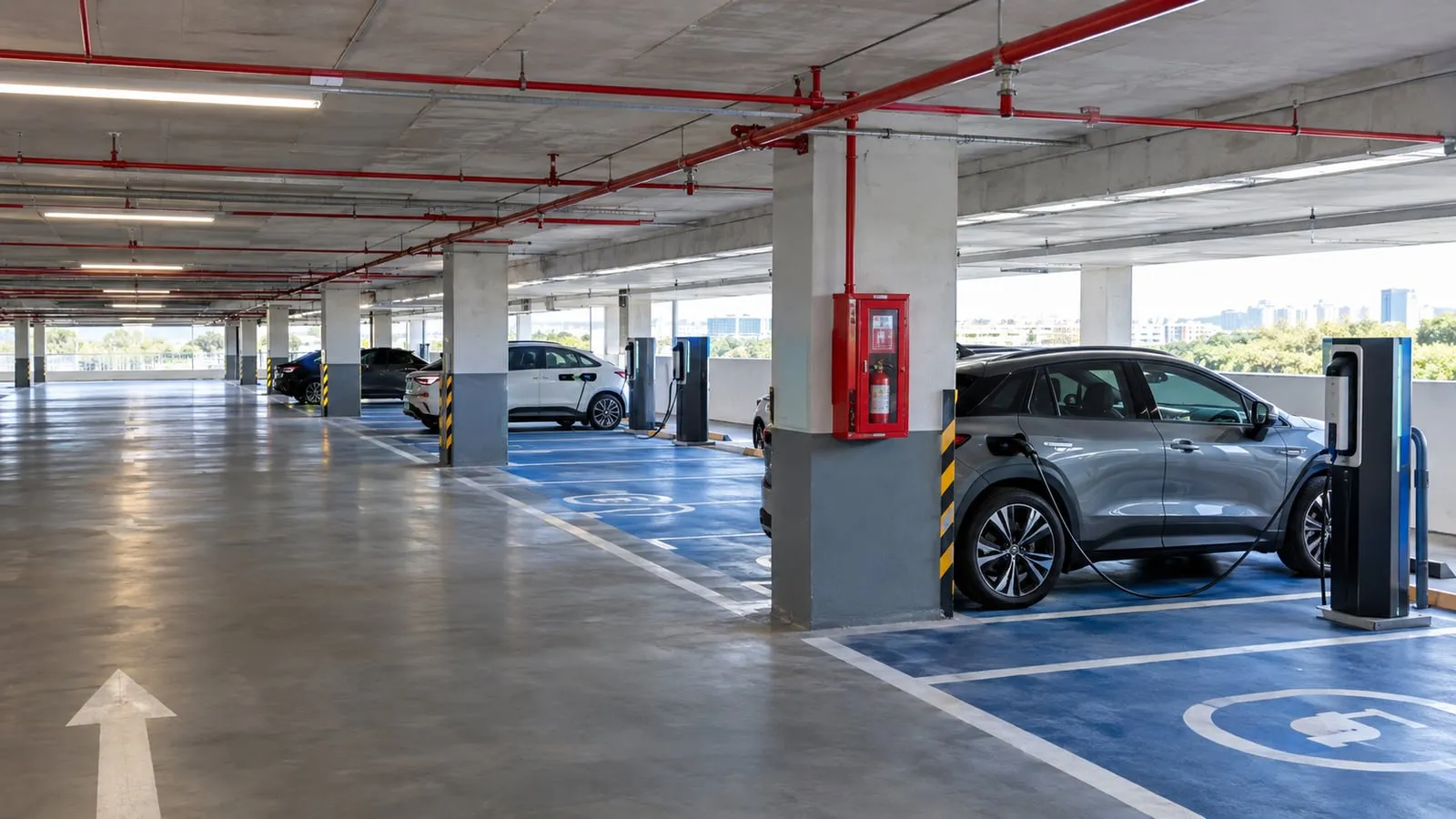
| Cable routes | Fire-rated trays, kept off the floor, away from escape routes and sprinkler heads |
| Ventilation | Natural or mechanical; smoke control as required |
| Detection | Smoke and heat detection suited to the garage type |
| Sprinklers or water mist | Depends on local rules and the garage’s existing system |
| Access for fire services | Clear routes, signage, drawings and a way to isolate power |
| Signage | Charger location, emergency stop and instructions |
Process
- Early meeting with the fire authority, building owner and insurer.
- Fire strategy or risk assessment for the garage with chargers.
- Design the electrics and layout to match.
- Equipment selection with certificates and test reports.
- Installation and commissioning with records.
- Operating procedures: user rules, emergency plan, staff training, inspection schedule.
- Review after the first year and after any incident.
Questions to ask suppliers
- Which standards and certificates cover the charger?
- What protection and monitoring does it include (residual current, temperature, over-current)?
- Does it support load management and remote shut-down?
- What fire-rated cable and accessories are recommended?
- What documentation can you provide for the insurer?
Related layouts
For bay geometry and bollards see bay layout; for apartment buildings see apartments and condos.
VULTAE chargers
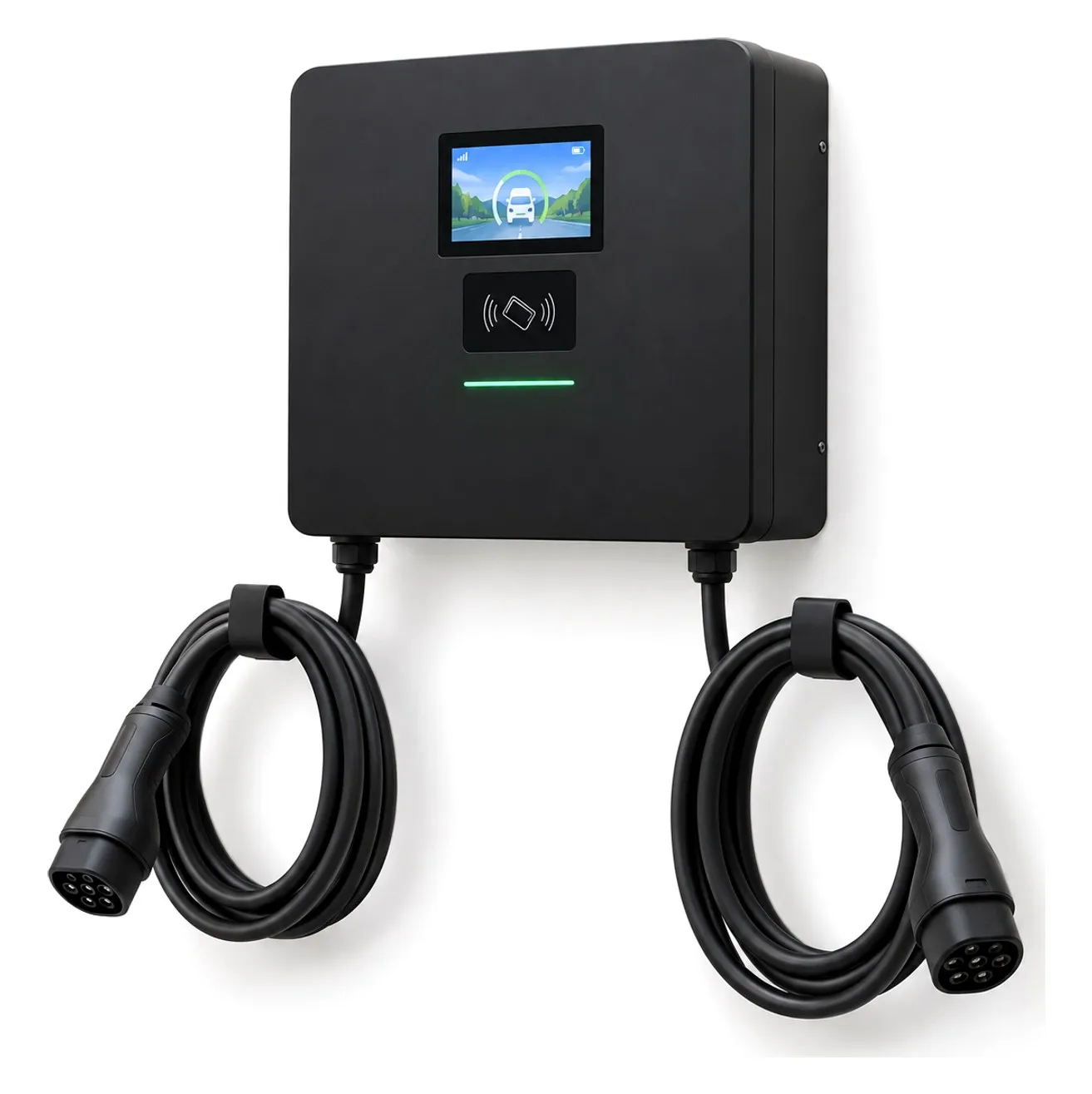
VULTAE wall-mounted chargers include residual current protection with 6 mA DC detection, over-temperature, over-current, over- and under-voltage and surge protection, and support load management over OCPP. Ask for the certificates and the protection details of your model, and share them with your fire authority and insurer.
Questions buyers ask
- Are EV chargers a fire risk in parking garages?
- Chargers are electrical equipment and, like any equipment, can fail if poorly made or installed. Most incidents involve vehicles or wiring. Using certified chargers, correct protection, proper cable sizing and load management keeps the electrical risk low.
- Do garages need sprinklers for EV charging?
- It depends on the local building and fire rules and on the garage type. Many underground and multi-storey garages already have sprinklers or other fire systems; adding chargers may require a review. Ask the local fire authority.
- How should cables be routed in a garage?
- On cable trays with proper fire rating, kept off the floor, with clear separation from sprinkler heads and exits, and with fire stopping where they pass through walls. Avoid long unprotected runs along escape routes.
- What should I tell my insurer?
- Describe the number and type of chargers, the electrical design and protection, the load management, the maintenance plan and the fire safety measures. Ask for their requirements before the design is fixed.
References
- [1]IEC 60364-7-722:2018 — supplies for electric vehicles. International Electrotechnical Commission.
- [2]NFPA 70 (National Electrical Code). NFPA.
- [3]Regulation (EU) 2023/1804 — AFIR. EUR-Lex.