Installation & Power
Earthing Systems (TN, TT) and EV Chargers: What Installers Must Check
How TN-S, TN-C-S (PME) and TT earthing affect EV charger installation, why open-PEN protection matters and how to test earth resistance on site.
- Prepared by
- VULTAE Engineering Team
- Published
- Reading time
- 3 min
- Sources
- 3 references
Key takeaways
- 1The earthing system of the supply (TN-S, TN-C-S/PME, TT, IT) decides what protection the charger needs. Find out which one you have before choosing and wiring the charger.
- 2On TN-C-S (PME) supplies, a broken neutral can put dangerous voltage on the car body. Many codes then require open-PEN detection in the charger or a separate earth electrode — in the UK this is a key requirement for outdoor chargers.
- 3On TT supplies the earth comes from a local electrode. The electrode resistance must be low enough for the RCD to trip safely, and it must be tested.
- 4The charger’s protection is one layer; the installation’s earthing is another. Never rely on one to replace the other.
Contents
Short answer: the earthing system of the supply decides the charger’s protection. TN-S is the simplest. TN-C-S (PME) needs open-PEN protection or an earth electrode, because a broken neutral can make the car’s body live. TT needs a tested earth electrode and an RCD. Find out the system first, and test the earth on site.
The common systems
| System | How the earth reaches you | Notes for EV chargers |
|---|---|---|
| TN-S | Separate earth and neutral from the utility transformer | Simplest; standard protection |
| TN-C-S (PME) | Utility combines earth and neutral (PEN) up to your intake, then splits | Risk if the PEN breaks upstream; open-PEN protection or electrode needed |
| TT | No utility earth; you drive an electrode | Electrode resistance and RCD must match; test it |
| IT | Isolated or high-impedance earth (rare) | Needs specialist design |
Country practice varies. The UK has many PME supplies, much of continental Europe uses TT or TN-S, and the US uses a grounded neutral with a separate grounding electrode system.
The PME open-PEN problem
On a PME supply, the neutral is also the protective earth. If the combined conductor breaks upstream, the neutral and earth float to a higher voltage. A car plugged into a charger is connected to the earth. If the car body is touched by someone standing on wet ground, they receive a shock.
For this reason wiring rules in several countries require that, on PME supplies, an outdoor EV charger has:
- open-PEN detection inside the charger or in a protective device, which disconnects when it senses a dangerous voltage, or
- a separate earth electrode that meets a resistance limit and keeps touch voltage low, or
- isolation of the car from the supply earth in other ways, or an island arrangement.
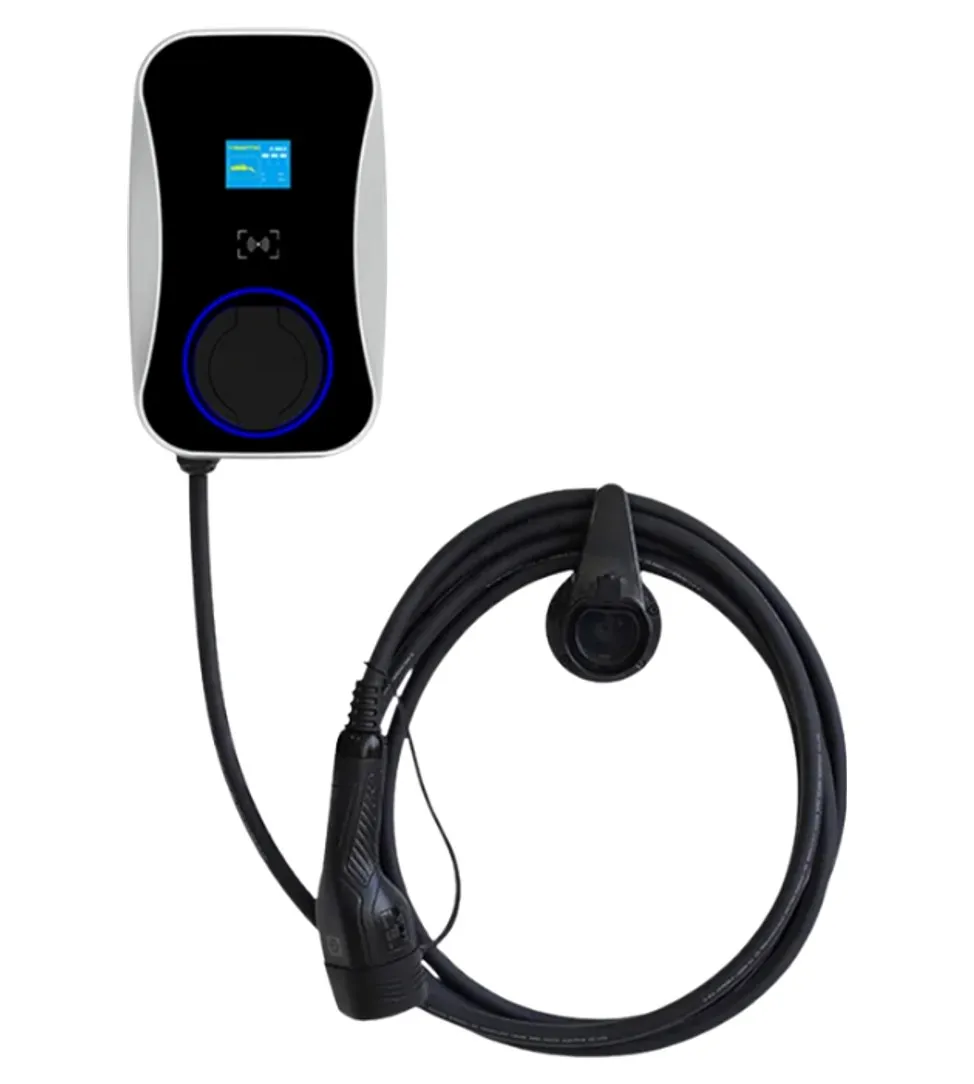
Many chargers offer PEN protection as an option, such as the PEN protection (UK) option on our wall-mounted chargers. Check the exact requirements in your country.
TT supplies
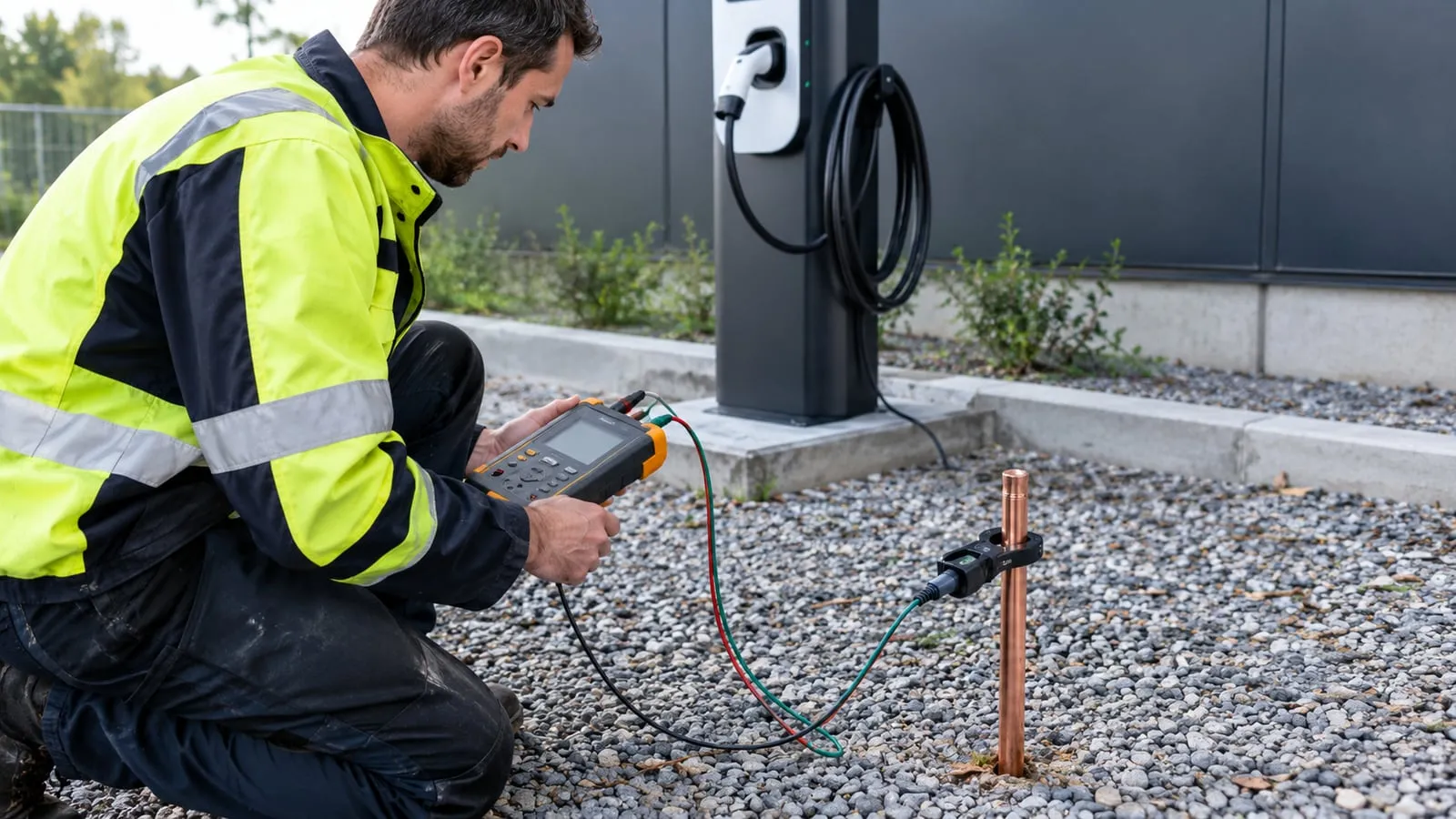
On TT the installation has its own earth electrode. The RCD must trip when the fault voltage on exposed parts would exceed a safe limit (commonly 50 V). The simple rule: electrode resistance × RCD trip current ≤ 50 V. For a 30 mA RCD the theoretical limit is high, but real installations aim far below it, because soil dries and rods corrode. Test, record and re-test periodically.
How to test
| Test | Instrument | What it shows |
|---|---|---|
| Earth electrode resistance | Earth tester (fall-of-potential or clamp) | Resistance to ground |
| Earth loop impedance | Loop tester | Whether the breaker or fuse will trip fast enough in TN systems |
| RCD trip time and current | RCD tester | Whether the RCD works at its rating |
| Continuity of protective conductors | Low-resistance ohmmeter | The earth path is complete |
| Polarity and phase | Multifunction tester | Correct wiring |
Results go on the installation certificate. See the commissioning checklist.
Installation tips
- Use a dedicated circuit back to the board, with its own protective devices.
- Do not rely on the building’s metal frame for the earth unless it is designed for it.
- Bond metal parts near the charger: canopy, poles, bollards — as the code requires.
- Check soil when driving a rod: dry sand or rock gives high resistance; use longer or multiple rods or chemical electrodes.
- Protect the connection against corrosion, especially near the coast.
- Combine with surge protection; surge devices need a good earth — see surge and lightning protection.
What to ask the supplier
Which earthing systems the charger supports, whether PEN protection is built in or optional, whether the charger checks the earth connection before charging, and what the manual requires for TT sites. Also see the installation requirements guide and RCD requirements.
Questions buyers ask
- What is PEN protection on an EV charger?
- Protection against a broken PEN (combined protective earth and neutral) conductor on a TN-C-S supply. The charger detects dangerous voltage on the neutral or loss of neutral and disconnects, so that the vehicle body does not become live. It is often called open-PEN or PME protection.
- Do I need an earth rod for an EV charger?
- On a TT supply, the installation earth electrode already exists and must be tested. On a TN-C-S supply, an earth electrode is an alternative to open-PEN detection in some codes, with limits on its resistance. Follow the local wiring rules.
- How is earth resistance measured?
- With an earth tester using the fall-of-potential method or a clamp-on tester where suitable. The result is compared with the limit that the protection needs, and recorded on the installation certificate.
- Does a charger work without a good earth?
- The charger checks for a protective earth connection and may refuse to start without one. A poor earth is a safety risk, and a residual current device may not trip when it should.
References
- [1]IEC 60364-7-722:2018 — supplies for electric vehicles. International Electrotechnical Commission.
- [2]Regulations: electric vehicle smart charge points. GOV.UK.
- [3]NFPA 70 (National Electrical Code). NFPA.