Installation & Power
EV Charger Commissioning Checklist: Tests Before Handover
A step-by-step commissioning checklist for AC and DC EV chargers: electrical tests, communication, settings, test charge and the handover record.
- Prepared by
- VULTAE Engineering Team
- Published
- Reading time
- 3 min
- Sources
- 3 references
Key takeaways
- 1Commissioning proves the charger is safe, connected and configured before it is handed to the owner. It has five parts: visual inspection, electrical tests, communication, settings and a test charge with a real car.
- 2Record every result. A signed commissioning record protects the installer and supports the warranty and the insurance.
- 3Test with at least one real vehicle per connector. A simulator checks the basics, but real cars reveal handshake and compatibility problems.
- 4Do not skip the back-end check: ID, tariff, limits and a remote start/stop must work, not just local charging.
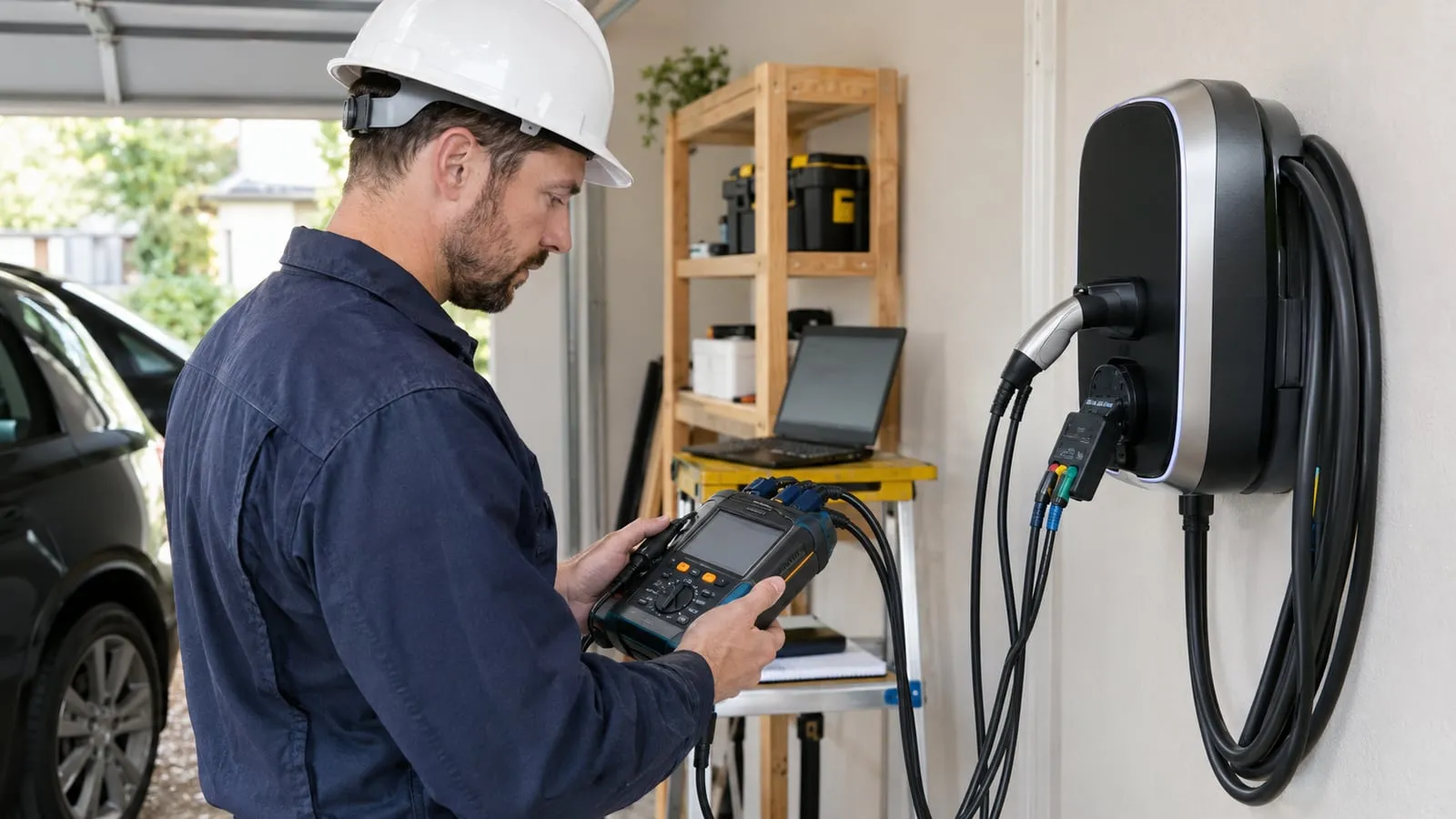
Short answer: commissioning has five parts — inspect, test electrically, connect, configure, charge a real car — and ends with a signed record. Skipping the real-car test or the back-end check is the most common reason a “finished” charger fails in its first week.
Checklist
1. Visual inspection (before power)
- Charger model and rating match the order and the design
- Mounting secure; plinth or wall suitable; no damage in transit
- Cable entries sealed; glands tight; IP rating intact
- Cable size and protective devices match the design — see wire size
- SPD installed where required — see surge protection
- Labels in place: circuit identification, warnings, emergency contact
2. Electrical tests (before energising the charger)
| Test | Pass criterion | Record |
|---|---|---|
| Continuity of protective conductors | Low resistance on the earth path | Value |
| Insulation resistance | Meets the code limit (commonly ≥ 1 MΩ at 500 V) | Value per conductor pair |
| Polarity and phase rotation | Correct | Pass/fail |
| Earth loop impedance (TN) or electrode resistance (TT) | Below the limit for the protective device | Value — see earthing |
| RCD trip current and time | Trips within the standard’s limit | Time and current |
| Supply voltage and frequency | Within the charger’s range | Values |
3. Energise and check the charger
- Display, LEDs and start-up self-test OK
- Supply voltage on all phases correct under load
- Protective earth detection OK
- Emergency stop and door switch work (DC)
- Insulation monitoring works (DC)
- Charger time and date correct
4. Communication and settings
- Network link (Ethernet, Wi-Fi or 4G) connected with good signal — see connectivity
- Charger connects to the back end; ID matches
- OCPP version and security profile set — see cybersecurity
- Maximum current and load management set
- Authentication (RFID, app, plug & charge) works
- Tariff, meter values and sessions arrive at the back end
- Remote start, stop and reset work
- Firmware version recorded; update process confirmed — see OTA updates
5. Test charge
- At least one real vehicle per connector, charging for 10–15 minutes at full power
- For DC: a second vehicle model if available
- Current, power and energy readings are plausible
- Charger stops cleanly; cable releases; session recorded
- Temperatures stable; no unusual noise or smell
6. Handover
- Installation certificate and test results signed
- Settings exported or recorded; passwords handed to the owner
- Owner trained: starting a session, error indicators, emergency stop
- Support contact and warranty documents given
- Photos of the finished installation and the inside of the charger
Common failures found at commissioning
- No communication because the 4G module has no signal or the Wi-Fi password is wrong.
- Wrong current limit left at the factory default.
- Earth fault from a loose conductor.
- Vehicle compatibility — rare, but a particular car refuses to start; real-car tests find it before the customer does.
- Phase sequence or neutral wrongly connected on a three-phase charger.
DC specifics
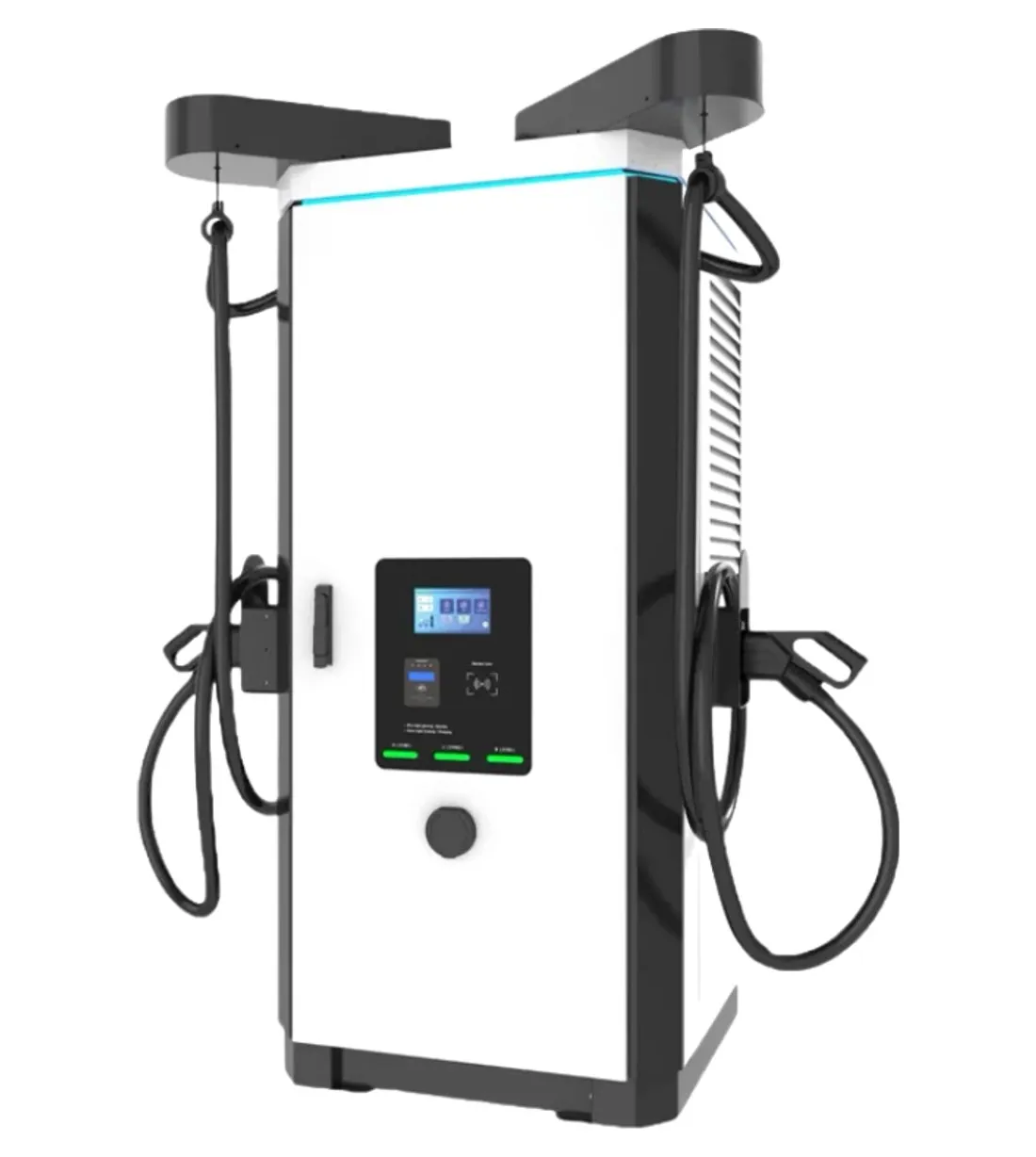
A DC charger needs a longer test: the power modules are checked under load, insulation monitoring is tested, cable cooling is checked at high current, and the charger is tested with vehicles of different voltage classes. See DC charger installation.
VULTAE support
VULTAE supplies installation manuals with every model; ask us about commissioning support for your project. Use the checklist above together with the installation requirements guide, and keep the results for the warranty — see warranty and service.
Questions buyers ask
- What tests are needed to commission an EV charger?
- Visual inspection, continuity of protective conductors, insulation resistance, polarity and voltage, earth loop impedance, RCD tests, and a functional test of the charger with a vehicle or an EV simulator. DC chargers add isolation monitoring and communication tests.
- How long does commissioning take?
- A single home charger takes about an hour. A commercial AC charger with back-end setup takes a couple of hours. A DC charger usually takes one to two days including configuration and test charges.
- Who signs the commissioning record?
- The installer who did the electrical work signs the installation certificate. The commissioning record may also be signed by the owner and the charger supplier or service partner.
- Can I commission remotely?
- Parts of it: configuration, back-end connection and firmware checks can be done remotely. Electrical tests and the test charge need someone on site.
References
- [1]IEC 60364-7-722:2018 — supplies for electric vehicles. International Electrotechnical Commission.
- [2]IEC 61851-1:2017 — general requirements. International Electrotechnical Commission.
- [3]IEC 61851-23:2023 — DC electric vehicle supply equipment. International Electrotechnical Commission.