Sites & Applications
EV Charging Bay Layout, Signage and Bollards
How to lay out EV charging bays: dimensions, charger position, cable reach, bollards, markings, signage, lighting and traffic flow for car parks.
- Prepared by
- VULTAE Engineering Team
- Published
- Reading time
- 3 min
- Sources
- 3 references
Key takeaways
- 1A good layout puts one charger between two bays, keeps the cable within reach of any inlet, protects the charger from vehicles and keeps traffic and walkways clear.
- 2Typical bay: 2.5–2.7 m wide and 5–5.5 m long for cars (check local rules); wider where users need to open doors fully or for accessible bays. Charger on an island or at the head of the bay with a raised kerb or bollards.
- 3Clear marking and signs prevent non-charging cars from using the bays and help drivers find the right charger. Lighting is important for safety and for use at night.
- 4Design for future expansion: ducts for extra chargers and space for a larger supply.
Contents
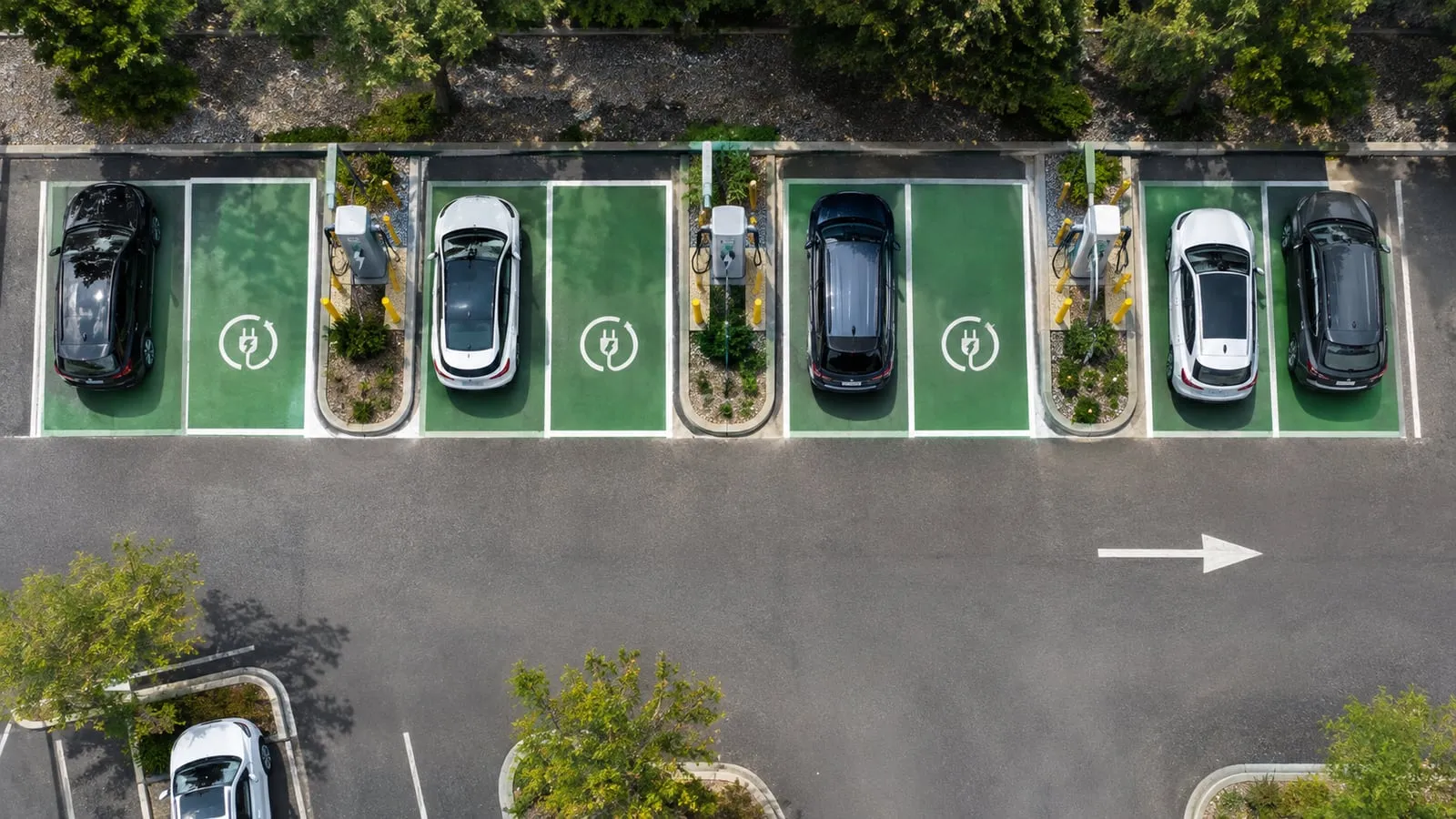
Short answer: put one charger between two bays, keep the cable within reach of any inlet, protect the charger with bollards or a raised kerb, mark and sign the bays clearly, light the area, and leave ducts for expansion. Typical car bay: 2.5–2.7 m wide, 5–5.5 m long — check local rules.
Layout types
| Layout | Description | Pros | Cons |
|---|---|---|---|
| Perpendicular, charger between bays | Charger on an island between two bays, cars head in | Efficient: one charger per two bays | Cable must reach both sides |
| Perpendicular, wall charger | Chargers on the wall at the head of each bay | Cheap; simple | One bay per unit; cars reverse in or out |
| Angled | Bays at 45–60° | Easy entry | Needs more space per bay |
| Parallel (kerb-side) | Cars park along a kerb | Suits streets | Charger placement matters; cable crossing the pavement |
| Pull-through | Bays open at both ends | Good for trucks and trailers | More space |
Dimensions (guide)
| Item | Typical value |
|---|---|
| Bay width | 2.5–2.7 m (3.5 m or more for accessible bays — see accessible bays) |
| Bay length | 5.0–5.5 m |
| Aisle width | 6 m for two-way, per local rules |
| Charger island | 0.8–1.2 m wide, raised kerb |
| Cable length | 5–7 m |
| Clearance to bollards | As per charger and local rules |
Cable reach
Cars have the charging inlet at the front, side or rear. A charger centred between two bays with a 5 m cable usually reaches most cars. Test with the vehicles you expect and place the charger accordingly. See cable management.
Protection
- Bollards, kerbs or raised plinths keep cars from hitting the charger.
- Wheel stops stop cars from rolling over cables.
- Impact rating on the charger itself (IK10 for public sites) — see IP and IK ratings.
- Drainage so the area around the charger does not collect water.
Marking and signage
- Colour or symbol on the bay surface (green is common) to mark charging bays.
- Signs reserving the bays for charging vehicles with instructions on how long to stay.
- Wayfinding at entrances to show where chargers are.
- Charger information: how to start, price, contact number.
- Enforcement by the site operator; some countries have legal rules for bay use.
Lighting and security
Good lighting at the charger and the path to it improves safety and use at night. Add CCTV where theft or vandalism is a risk and ensure there is a clear emergency contact. See accessible bays for reach and clear space.
Plan for growth
- Ducts for extra chargers and cables.
- Space for a transformer or larger board.
- Load management to add chargers without upgrading supply — see load management.
- Flexible bay design for AC now and DC later — see AC vs DC.
Example: 20-bay car park
Ten pedestals on islands between pairs of bays, kerbs and bollards at the head, green bay marking, one accessible pair near the entrance, lighting at every island, ducts to a future second row, load management over the supply.
VULTAE options
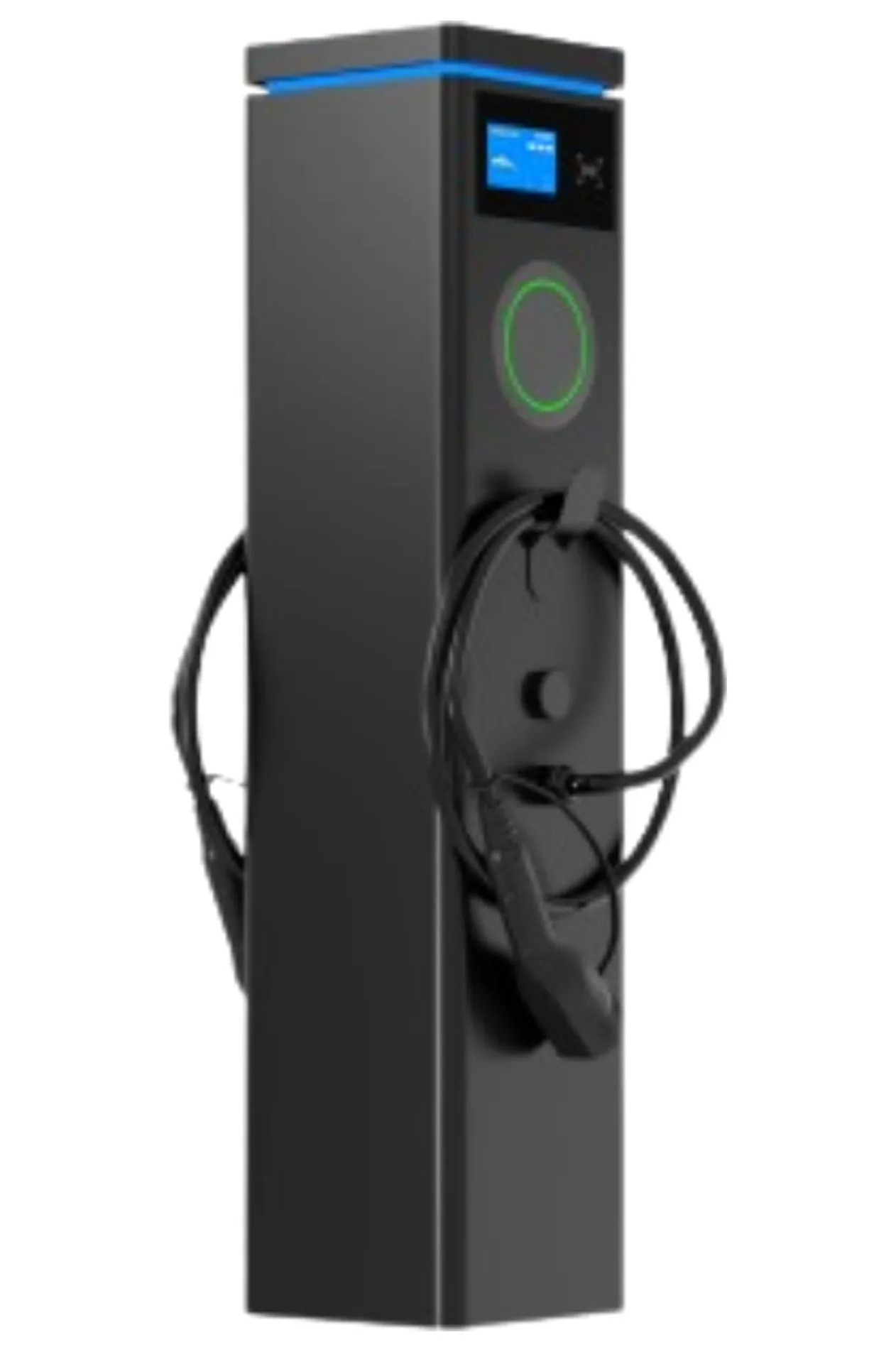
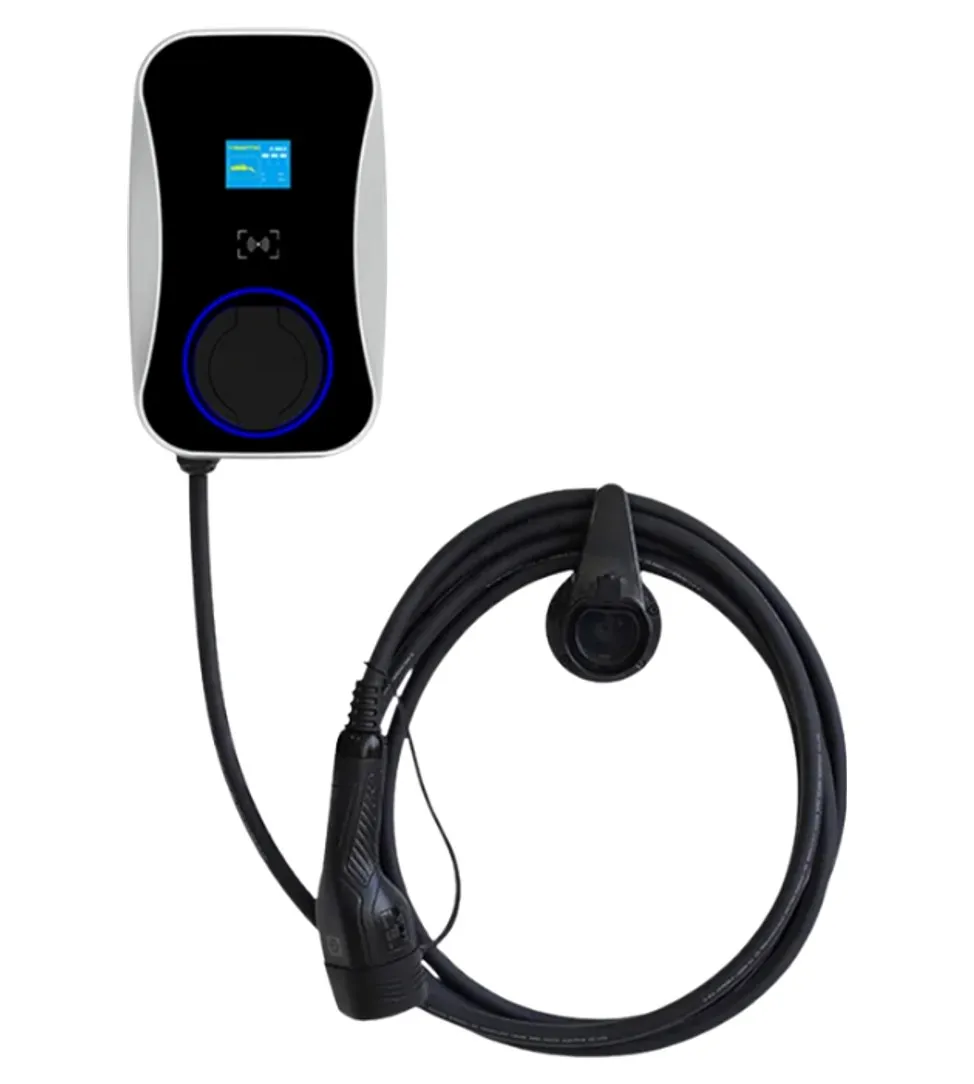
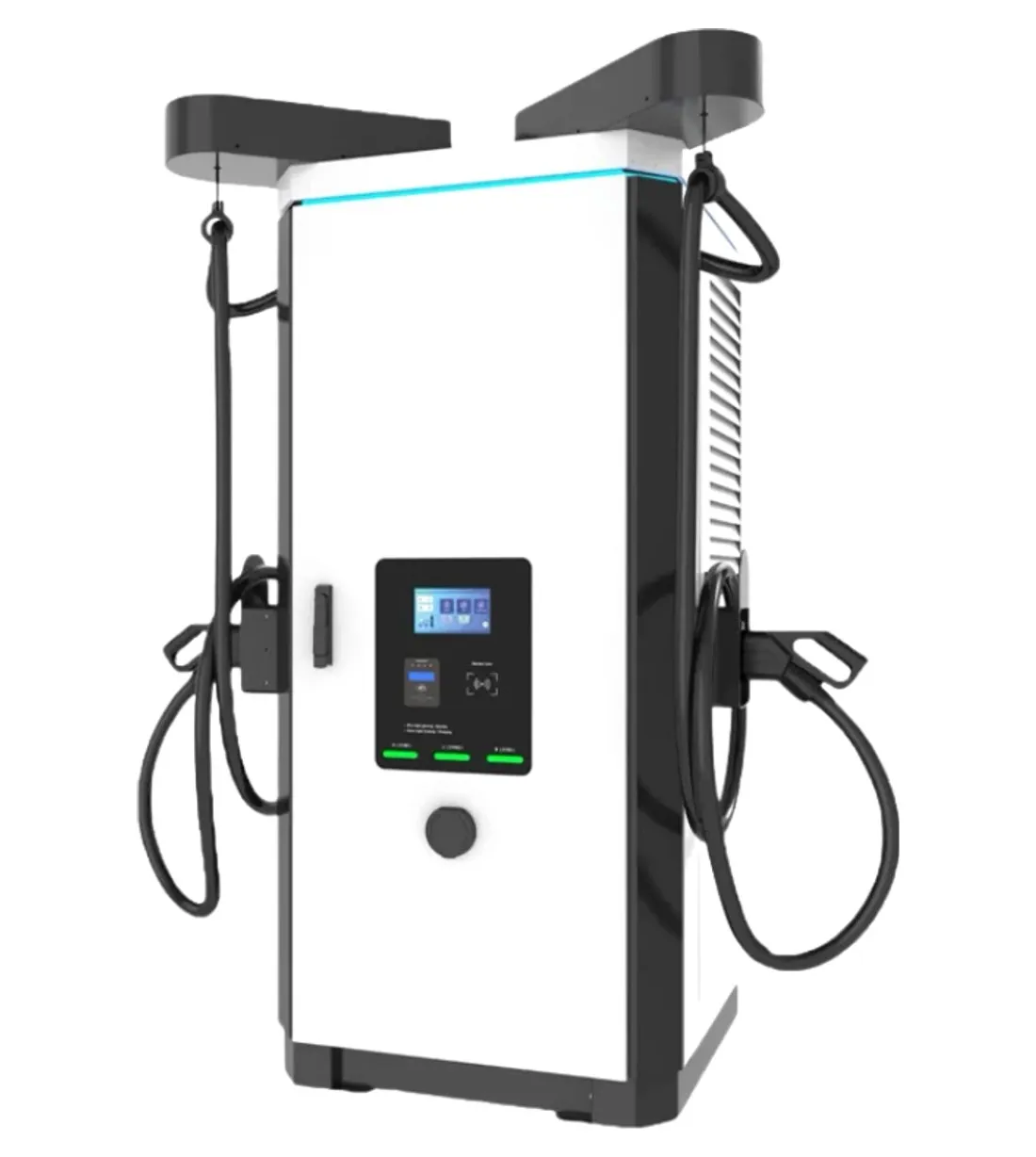
VULTAE offers dual-port pedestals that serve two bays, wall-mounted chargers and DC chargers. Our mounting guide helps choose by site.
Questions buyers ask
- How big should an EV charging bay be?
- A typical car bay is 2.5–2.7 m wide and 5–5.5 m long; allow extra width at accessible bays and for doors to open. Local standards may set exact dimensions.
- Where should the charger be placed relative to the bay?
- Usually centred between two bays on an island, or at the head of the bay on a wall or pedestal, so the cable reaches the inlet of any car. Check that the cable does not cross a walkway.
- Do I need bollards?
- In public and shared car parks, protect chargers with bollards, kerbs or raised plinths. Vehicles reversing into chargers is a common cause of damage.
- What signage is needed?
- Clear bay marking (colour or symbol), signs reserving the bays for charging vehicles, instructions for use and a contact number. Local rules may require specific signs and enforcement.
References
- [1]IEC 60364-7-722:2018 — supplies for electric vehicles. International Electrotechnical Commission.
- [2]The Public Charge Point Regulations 2023. legislation.gov.uk.
- [3]Regulation (EU) 2023/1804 — AFIR. EUR-Lex.