DC Fast Charging
Cable Management for DC Chargers: Retractors, Holsters, Lengths
Cable length, holsters, booms and retractors for DC chargers: how to stop cables dragging on the ground, reach all inlets and last longer.
- Prepared by
- VULTAE Engineering Team
- Published
- Reading time
- 2 min
- Sources
- 2 references
Key takeaways
- 1Cables and connectors are the most frequently replaced parts of a charger. Dragging on the ground, being run over and tight bends are the main causes. Good cable management extends their life and makes the charger easier to use.
- 2Cable length is a trade-off: long enough to reach inlets on any side of any car, short enough not to lie on the ground. A common choice is 5–6 m for DC, with longer or overhead options for trucks and unusual layouts.
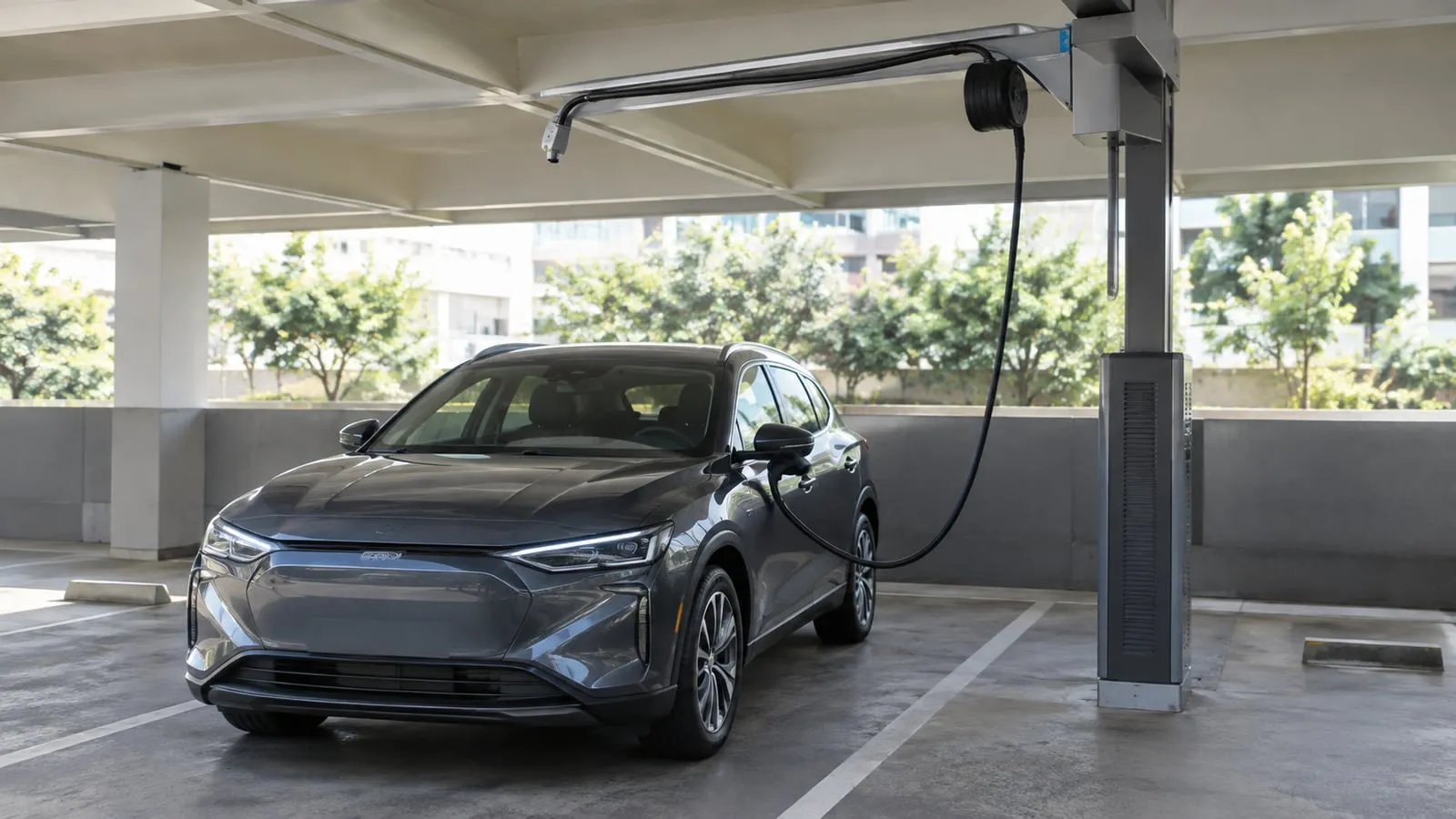
- 3Options, from simple to advanced: holster and hook, spring retractor, overhead boom or gantry, and a cable stand. Choose by site type, climate and vehicle mix.
- 4Plan the bay so the cable reaches without crossing the walkway or other bays, and include wheel stops and bollards to keep cars from rolling over the cable.
Contents
Short answer: most cable damage comes from dragging, run-overs and tight bends. Choose a cable length that reaches any inlet without lying on the ground — usually 5–6 m for cars — and add a holster, and for heavy or high-use cables a retractor or overhead boom. Lay out the bay so the cable does not cross walkways, and protect it with wheel stops.
Options
| Option | How it works | Best for | Limits |
|---|---|---|---|
| Holster and hook | Connector rests in a holder; cable hangs on a hook | Most AC and DC sites | Cable can still touch the ground |
| Spring retractor | Cable is pulled up by a spring balancer | Heavy cables; busy sites | Needs mounting height; more parts |
| Overhead boom or gantry | Cable runs from an arm above the bay | Trucks, wide bays, premium sites | Higher cost; needs civil work |
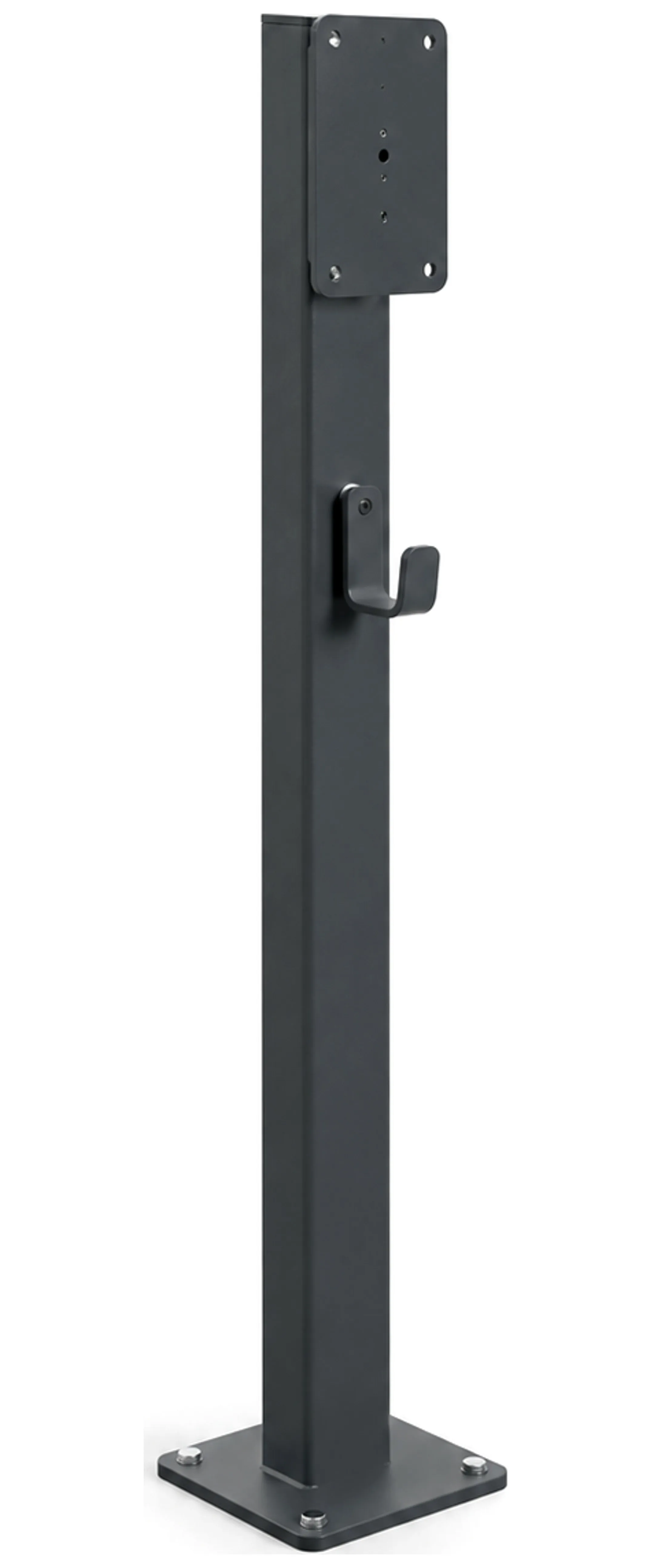
| Cable stand or pole | A separate post holds the cable | Wall-mounted units | Takes space |
| Longer cable (7–8 m) | More reach | Awkward layouts | More chance of dragging |
Choosing the length
Check these points:
- Inlet positions of the cars that will use the bay: front, rear, left, right. Cars park at different angles.
- Bay layout: angled, parallel or head-in bays change the distance.
- Charger position: centred between two bays gives the most flexibility — see bay layout.
- Cable stiffness: thick DC cables need bend radius; do not choose a length that forces a tight loop.
- Vehicle mix: vans, trucks and buses have inlets in different places.
Protecting the cable
- Wheel stops and bollards so vehicles cannot roll over cables.
- Holder at the right height: reachable but off the ground — see accessible bays.
- Drain and cover on the holster to keep water and ice out — see cold climates.
- Dust caps on connectors; sand and dust damage pins — see hot climates.
- Training and signage for users: place the connector back in the holder.
Cable condition checks
During maintenance look for cuts, kinks, flattened sections, exposed conductors, discoloured or soft jackets, and heat marks on the connector. A damaged cable is a safety hazard; replace it and record the date. See the maintenance checklist and keep spare cable assemblies — see the spare parts list.
Heavy and liquid-cooled cables
High-current and liquid-cooled cables are thinner for their current but still heavy; a boom or retractor is often added. For trucks see buses and trucks.
VULTAE cables and accessories
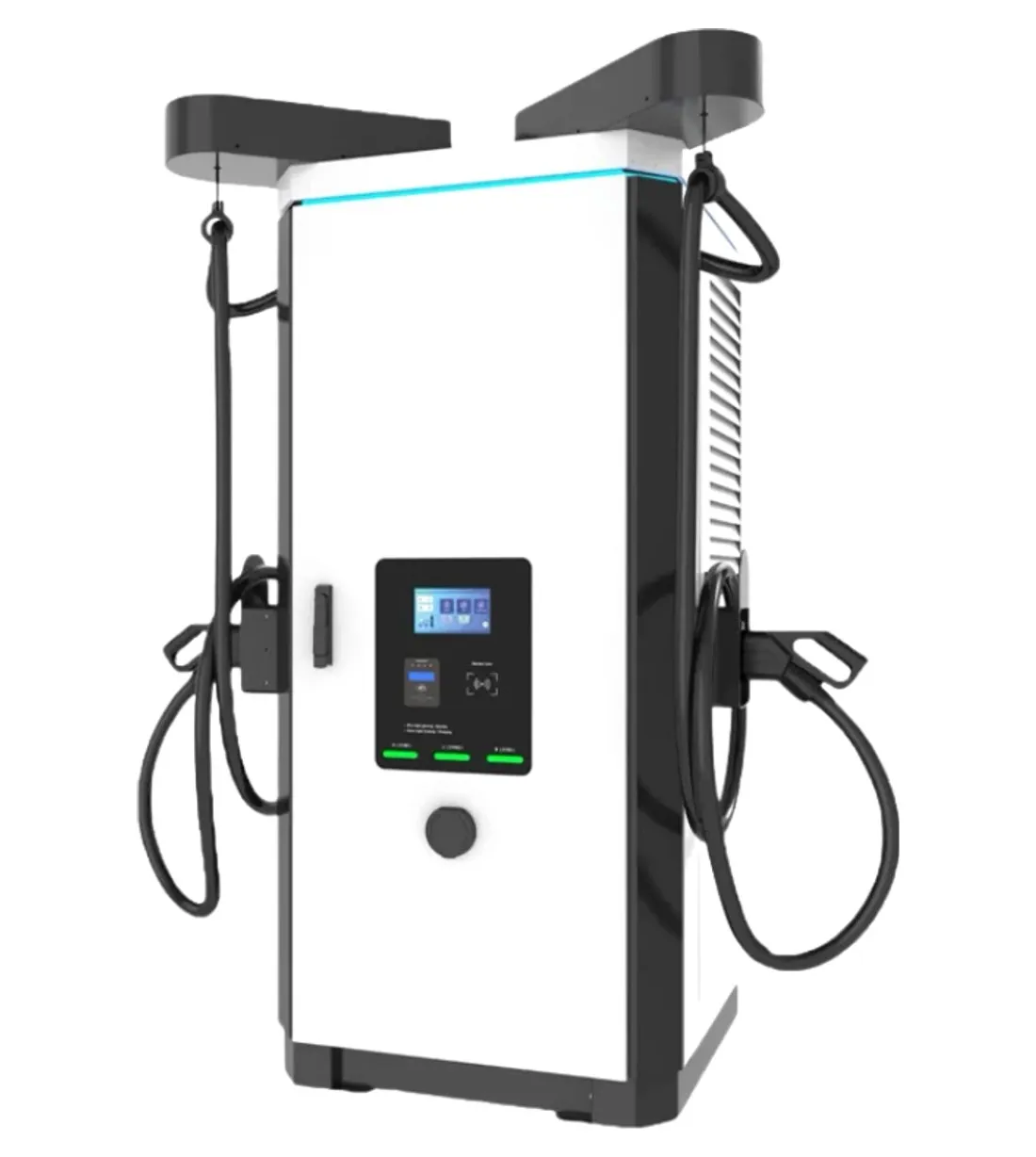
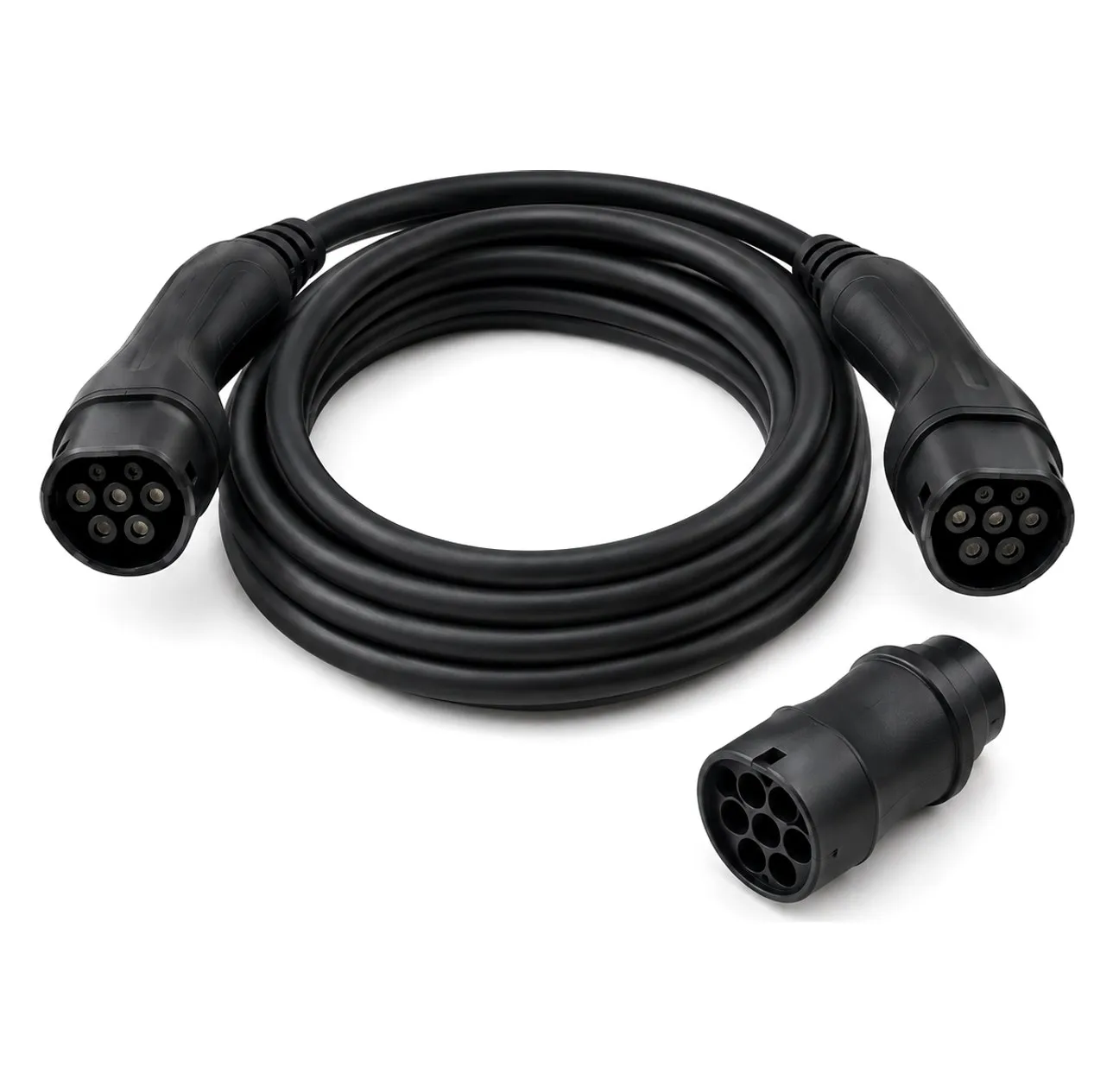
VULTAE DC chargers come with a 6 m cable as standard on the European floor-standing series, with custom lengths available, and we offer payment terminal holders and charger stands in the accessories range. Ask about cable holders and booms for your layout; see the cables and adapters and the DC fast charger.
Questions buyers ask
- How long should a DC charging cable be?
- Five to six metres is common for cars. Check the charge inlet positions of the vehicles you serve — front, side and rear — and the way the bay is laid out. Trucks and buses may need longer cables or overhead systems.
- Do I need a cable retractor or boom?
- Not always. They help where cables are heavy (high-current, liquid-cooled), where snow and mud are common or where a tidy, safe site matters. For small sites a good holster and bay layout may be enough.
- What damages charging cables most?
- Vehicles driving over them, dragging on rough ground, kinking when coiled while hot or very cold, and dropping the connector. A connector left on the ground collects water and dust.
- Can cable management meet accessibility rules?
- Yes, if the connector holder and controls are within reach and the cable is light enough to handle. See the accessible bays article for reach heights and clear space.
References
- [1]IEC 61851-23:2023 — DC electric vehicle supply equipment. International Electrotechnical Commission.
- [2]The Public Charge Point Regulations 2023. legislation.gov.uk.