Solutions · Fuel stations and highways
EV Charging at Fuel Stations and Highway Rest Areas: Power, Grid and Forecourt Layout
Adding EV charging to fuel stations and highway rest areas: 120–300 kW DC, AFIR and NEVI rules, grid connection, forecourt layout, uptime and payment.
- Prepared by
- VULTAE Engineering Team
- Published
- Reading time
- 3 min
- Sources
- 2 references
At a glance
- Typical stop
- 15–30 minutes
- Charger power
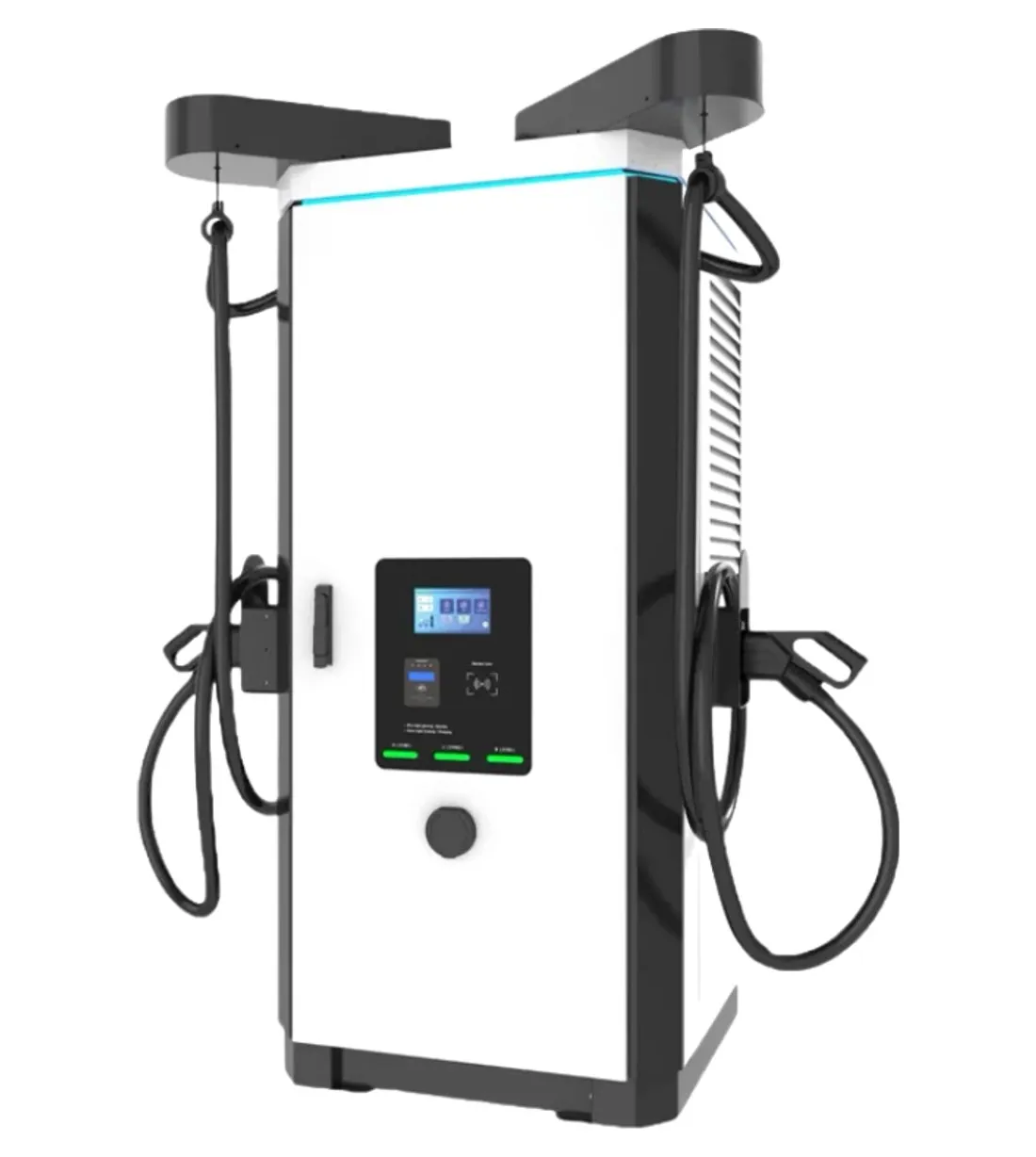
- 120–300 kW DC, dual connector
- EU rule (TEN-T core)
- Pools every 60 km, ≥ 400 kW from 2025
- US NEVI
- 4 × 150 kW CCS ports, 97 % uptime
- Grid
- Medium-voltage connection, transformer
- Payment
- Card terminal required on new public DC (EU)
- Uptime
- Remote monitoring, spare modules
- VULTAE series
- VT-DFC · VT-DF
Key takeaways
- 1Drivers at fuel stations and highway rest areas stop for 15–30 minutes, so the forecourt needs DC fast charging — typically 120–300 kW dual-connector units, so one cabinet serves two bays.
- 2Rules set the minimum: in the EU, AFIR requires charging pools every 60 km on the TEN-T core network with at least 400 kW from the end of 2025 and 600 kW from the end of 2027; in the US, NEVI-funded stations need four 150 kW CCS ports and 97 % uptime.
- 3The grid connection is the longest lead-time item. Apply early for a medium-voltage connection and transformer sized for future chargers, not just the first two.
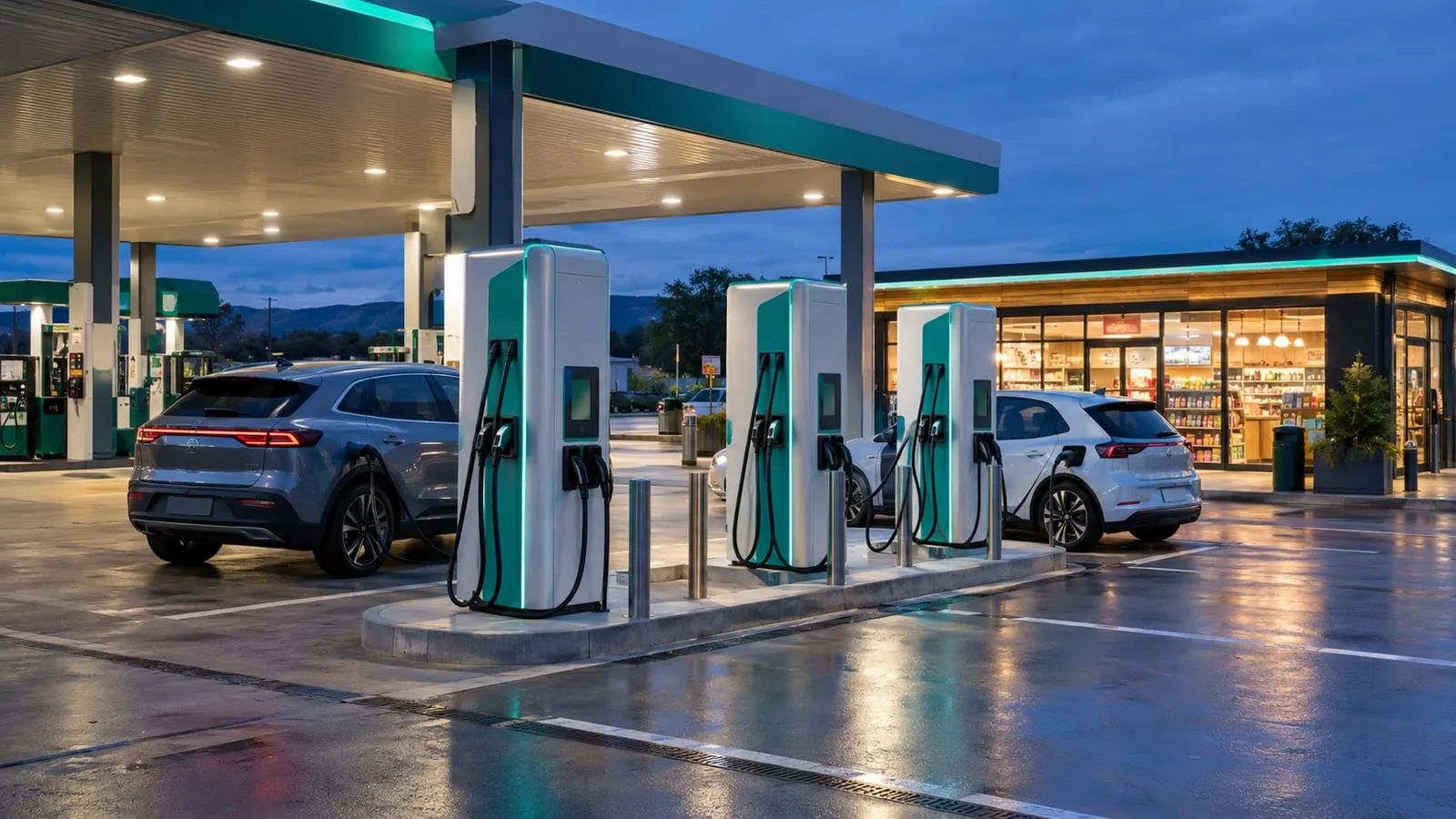
- 4Forecourt layout matters: separate charging bays from fuel pumps, pull-through bays for vans and caravans, shade and lighting, and a route to the shop.
Contents
Short answer: fuel stations and highway rest areas need DC fast charging — typically 120–300 kW dual-connector chargers, one cabinet per two bays — because drivers stop for only 15–30 minutes. In the EU, AFIR requires charging pools every 60 km on the core network with at least 400 kW from the end of 2025 and 600 kW from 2027; in the US, NEVI-funded stations need four 150 kW CCS ports and 97 % uptime. Apply for the grid connection first, and design the forecourt so charging bays do not block fuel traffic.
Power for the stop length
| Site | Typical stop | Recommended |
|---|---|---|
| Urban fuel station | 15–25 min | 120–180 kW dual-connector DC; compact cabinets |
| Secondary roads, regional stations | 20–30 min | 120–180 kW |
| Motorway service area | 20–40 min | 240–300 kW (IEC) or 240–360 kW (North America) |
| Truck stops | 30–45 min breaks | 240–360 kW with pull-through bays — see 360 kW |
Dual-connector cabinets share power between two cars, so a site with four cabinets serves eight bays. For why a given cabinet size suits a vehicle mix, see 160 kW and 240 kW.
The rules: AFIR and NEVI
| EU — AFIR (Regulation 2023/1804) | US — NEVI (23 CFR 680) | |
|---|---|---|
| Spacing | Pools at least every 60 km in each direction on the TEN-T core network | Along designated alternative fuel corridors |
| Minimum power | ≥ 400 kW per pool with ≥ 1 point of 150 kW (end 2025); ≥ 600 kW with ≥ 2 points of 150 kW (end 2027) | ≥ 4 CCS ports, each able to deliver 150 kW at the same time |
| Payment | Ad-hoc payment by card (contactless) on new public points of 50 kW and above | Contactless payment and other requirements |
| Reliability | Price transparency, data availability | Average annual uptime above 97 % per port |
The comprehensive network has later deadlines under AFIR, and the US rules include further requirements on networking, data and staffing. Check the full texts for funded projects.
The grid connection comes first
| Site | Indicative connection |
|---|---|
| Two 180 kW cabinets | ≈ 400 kVA |
| Four 240 kW cabinets | ≈ 1 MVA |
| Six 300 kW cabinets | ≈ 2 MVA |
At these sizes a medium-voltage connection and a dedicated transformer are normal. Apply early; size the connection, ducts and transformer pad for the final number of chargers. Site-level load management and, where it pays, a battery can cap the peak and the demand charges — see demand charges.
Forecourt layout
- Separate charging from fuelling: a dedicated charging island or bays at the side, so a 30-minute charge does not block a pump.
- Pull-through bays for vans, cars with trailers and caravans.
- Cable reach: inlets are front, rear or side — 5–6 m cables and cable management reduce damage.
- Protection: bollards and kerbs around cabinets.
- Shade and lighting: canopies keep cabinets and drivers out of the sun and rain.
- Walk to the shop: the shop and toilets are where the station earns money while cars charge.
- Space for cooling: keep air paths of forced-air cabinets clear.
Uptime and payment
Highway drivers often have no alternative within 50 km, so a broken charger is a lost customer. Specify remote monitoring over OCPP, modular power that keeps a cabinet running at reduced power when one module fails, a spare-parts kit on site and a maintenance contract with response times. For payment, a card terminal plus QR code covers drivers without an app — see EV charger payment options and uptime.
Recommended VULTAE configuration
| Situation | Model |
|---|---|
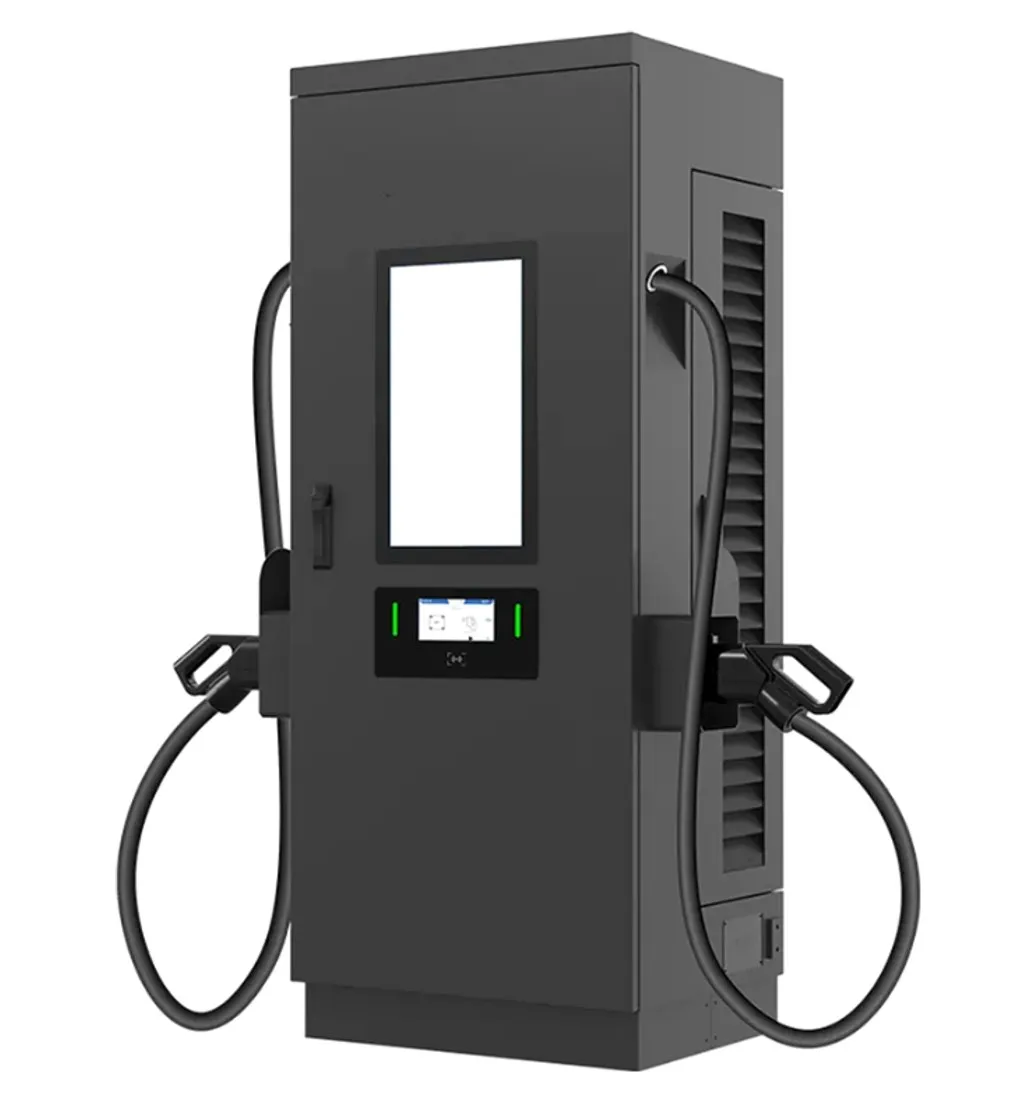
| Tight urban forecourt | VT-DFC compact DC charger, 120 or 180 kW, dual connector, optional 21″ screen |
| Motorway service area | VT-DF dual-connector DC charger, 160–300 kW (IEC) |
| North American corridors | VT-DF-NA, 150–360 kW, 480 V, CCS1 and NACS options |
| Payment | POS card terminal, QR code, RFID; OCPP 1.6J / 2.0.1 |
| Coastal or desert sites | C4 anti-corrosion finish; operation up to +55 °C |
Send us the site plan, traffic estimate and available grid capacity, and we will propose cabinet sizes, layout and a phased build-out.
Questions buyers ask
- What charger power does a fuel station need?
- Usually 120–300 kW DC with two connectors per cabinet. 120–180 kW suits urban stations and secondary roads; 240–300 kW suits motorways with many 800 V cars. Compact 120–180 kW cabinets help where forecourt space is tight.
- What does AFIR require on European motorways?
- On the TEN-T core network, AFIR requires charging pools at least every 60 km in each direction: from the end of 2025 at least 400 kW per pool with at least one 150 kW point, and from the end of 2027 at least 600 kW with at least two 150 kW points. New public chargers of 50 kW and above must also accept ad-hoc card payment.
- What are the NEVI requirements in the United States?
- Stations funded under the National Electric Vehicle Infrastructure programme must, among other requirements in 23 CFR 680, provide at least four CCS ports that can each deliver 150 kW simultaneously, and each port must meet an average annual uptime above 97 %.
- How long does a grid connection take for a fuel station?
- It depends on the utility and the local network. A new medium-voltage connection and transformer can take months, sometimes longer than the charger production time. Apply early and size the connection for the chargers you plan in later phases.
References
- [1]Regulation (EU) 2023/1804 on the deployment of alternative fuels infrastructure (AFIR). EUR-Lex.
- [2]23 CFR Part 680 — National Electric Vehicle Infrastructure standards and requirements. Electronic Code of Federal Regulations.