Charging Business
EV Charger Uptime: What Operators Should Demand From a Hardware Supplier
What drives EV charger uptime and how to write it into a supply contract: design for repair, diagnostics, spare parts, response times, 97 %.
- Prepared by
- VULTAE Engineering Team
- Published
- Reading time
- 3 min
- Sources
- 3 references
Key takeaways
- 1Uptime is revenue and reputation: a charger that is down earns nothing, and drivers who find it broken may not come back. In J.D. Power’s 2026 US study, 12 % of public charging visits still ended without a charge.
- 2US NEVI-funded chargers must average more than 97 % uptime per port per year — a useful benchmark everywhere. It allows only about 11 days of downtime a year.
- 3Uptime is designed in before it is managed: modular power, accessible parts, detailed error codes, remote reset and firmware updates, and robust connectors and cables.
- 4Write it into the contract: spare-parts kit, response and repair times, availability of parts for the product’s life, firmware support and how uptime is measured.
Contents
Short answer: uptime is the share of time a charger can actually charge. It decides revenue and whether drivers come back — in J.D. Power’s 2026 US study, 12 % of public charging visits still ended without a charge. Use 97 % per connector per year (the US NEVI requirement) as a minimum benchmark. Uptime is designed in — modular power, accessible parts, detailed diagnostics, remote fixes — and then managed through monitoring, spare parts and service contracts. Write the supplier’s part of it into the contract.
What 97 % actually allows
| Uptime per connector | Downtime per year | Downtime per month |
|---|---|---|
| 99 % | ≈ 3.7 days | ≈ 7 hours |
| 97 % | ≈ 11 days | ≈ 22 hours |
| 95 % | ≈ 18 days | ≈ 1.5 days |
| 90 % | ≈ 36.5 days | ≈ 3 days |
A single DC fault that waits two weeks for a part from abroad uses more than a year’s allowance at 97 %. That is why spare parts close to the site matter as much as hardware quality.
Why chargers go down
| Cause | Typical fix | Prevent with |
|---|---|---|
| Lost communication (4G, back end) | Remote reset, SIM or router check | Ethernet + 4G fallback; local authorisation list |
| Damaged cable or connector | Replace cable or connector | Cable management, holsters, inspections |
| Payment terminal fault | Replace or reset terminal | Certified terminals, remote monitoring |
| Power module failure (DC) | Swap the module | Modular design, spare modules on site |
| Contactor, fan or filter problems (DC) | Replace part, clean filters | Preventive maintenance |
| Firmware or software bugs | Update firmware | Tested OCPP integration, OTA updates |
| Grid or site supply issues | Utility or electrician | Surge protection, good earthing |
| Vehicle compatibility problems | Firmware update | Interoperability testing |
Uptime is designed in
Ask the supplier how the charger is built for availability:
| Design feature | Why it matters |
|---|---|
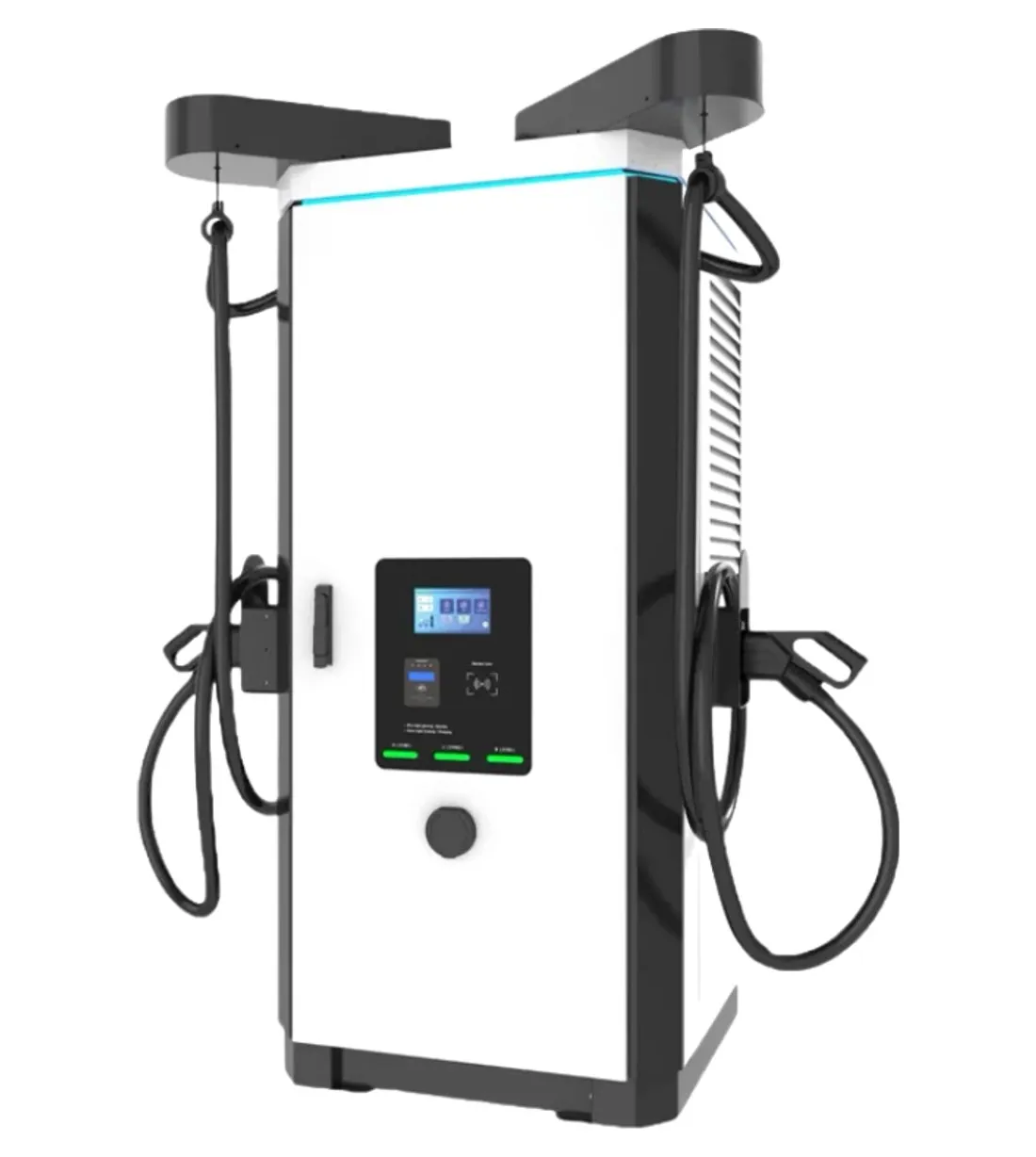
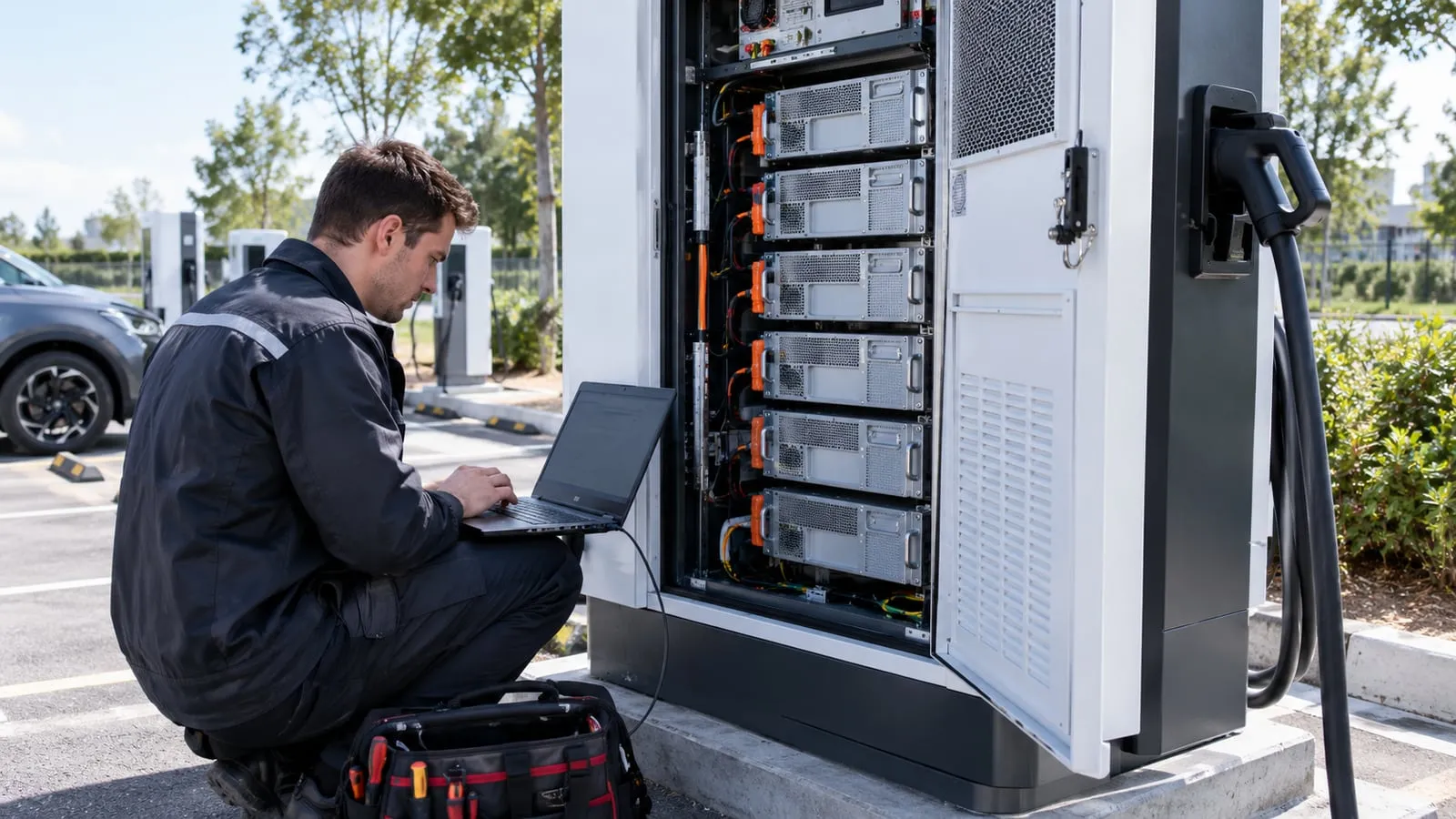
| Modular DC power | One failed module reduces power instead of stopping the charger — see power modules |
| Front access to parts | Faster repairs, fewer specialist tools |
| Detailed error codes over OCPP | Remote diagnosis before sending a technician |
| Remote reset and configuration | Many faults fixed without a visit |
| Over-the-air firmware updates | Bugs fixed across the fleet at once |
| Robust cables and connectors | The most-handled parts; replaceable on site |
| Two communication paths | Ethernet plus 4G keeps the charger online |
| Environmental protection | IP and IK ratings, corrosion class, temperature range for the site — see IP and IK ratings |
Then it is managed
- Monitor every connector in the CPMS with alarms — see CPMS software.
- Keep a spare-parts kit at or near each region: cables, connectors, a power module, contactor, fans, filters, control board, payment terminal — see the spare-parts list.
- Train local technicians on the supplier’s diagnostics.
- Preventive maintenance: inspect cables, clean filters, check torque on terminals, test RCDs.
- Track the numbers: uptime per connector, session success rate, mean time to repair — see network KPIs.
What to write into the supply contract
| Clause | What to ask for |
|---|---|
| Spare parts | List and prices of spare parts; availability for at least the product’s expected life |
| First-order spares | A recommended kit delivered with the first shipment |
| Technical support | Response time for remote support, languages, time zones |
| Warranty process | How faults are reported, evidence needed, replacement part shipping times |
| Firmware | Support and update period; security patches |
| Training | For your technicians, on site or online |
| Documentation | Service manual, error-code list, wiring diagrams |
How VULTAE supports uptime
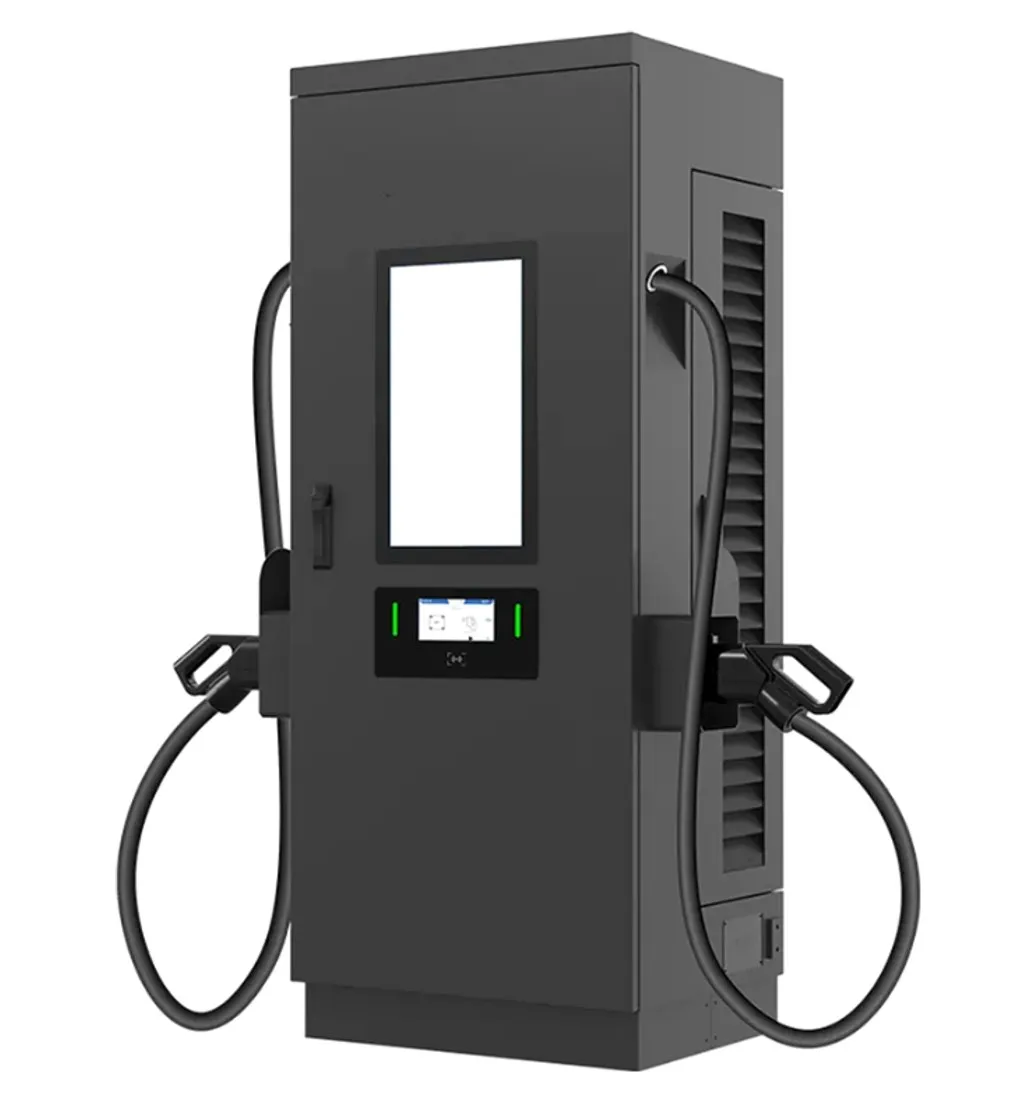
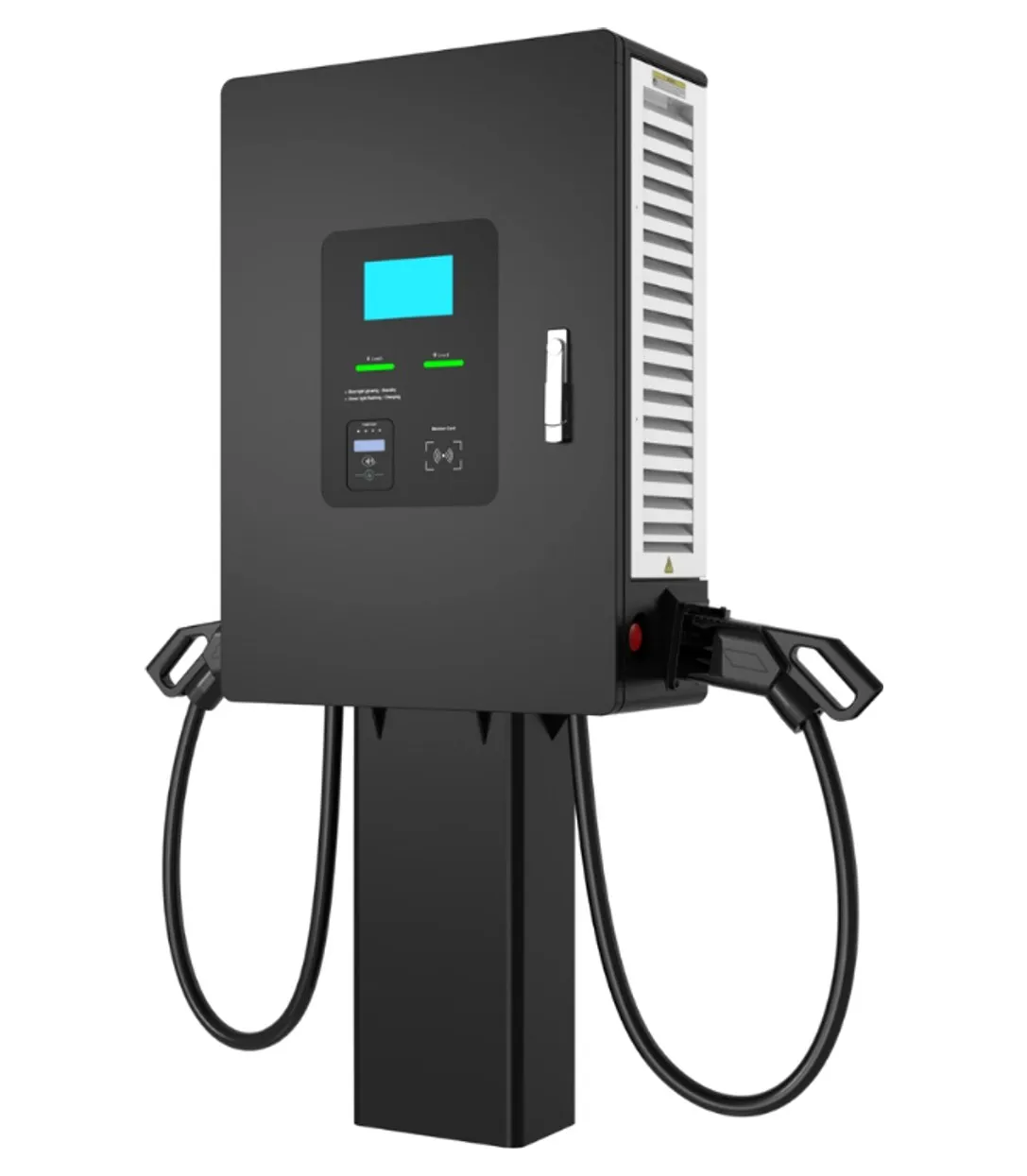
Our DC chargers are built from power modules, report detailed fault codes over OCPP 1.6J / 2.0.1, support remote reset and over-the-air firmware updates, and connect by Ethernet, Wi-Fi or 4G. We recommend a first-year spare-parts kit with every order and support remote diagnosis with your technicians. See our warranty and service terms.
Questions buyers ask
- What is a good uptime for EV chargers?
- Above 97 % per connector per year is a common benchmark — it is the requirement for NEVI-funded chargers in the United States. Leading networks aim higher. Measure uptime per connector, not per site, and agree how planned maintenance is counted.
- What causes EV charger downtime?
- Common causes are communication failures (lost 4G or back-end connection), damaged cables and connectors, payment terminal faults, power module or contactor failures in DC chargers, software and firmware bugs, and problems with the grid supply.
- How can I improve the uptime of my chargers?
- Choose chargers designed for repair and remote diagnostics, keep a spare-parts kit on site or nearby, monitor every connector in real time, agree response times with your service partner, keep firmware up to date and inspect cables and connectors regularly.
- What should a supplier guarantee about uptime?
- Suppliers rarely guarantee site uptime, which also depends on the grid, communications and use. Ask instead for guaranteed spare-parts availability and prices, response times for technical support, firmware support periods, and repair or replacement times under warranty.
References
- [1]23 CFR Part 680 — National Electric Vehicle Infrastructure standards and requirements. Electronic Code of Federal Regulations.
- [2]Electric Vehicle Experience (EVX) Public Charging Study. J.D. Power.
- [3]Public EV charging reliability improves as newer fast-charging networks raise the bar. EC&M.