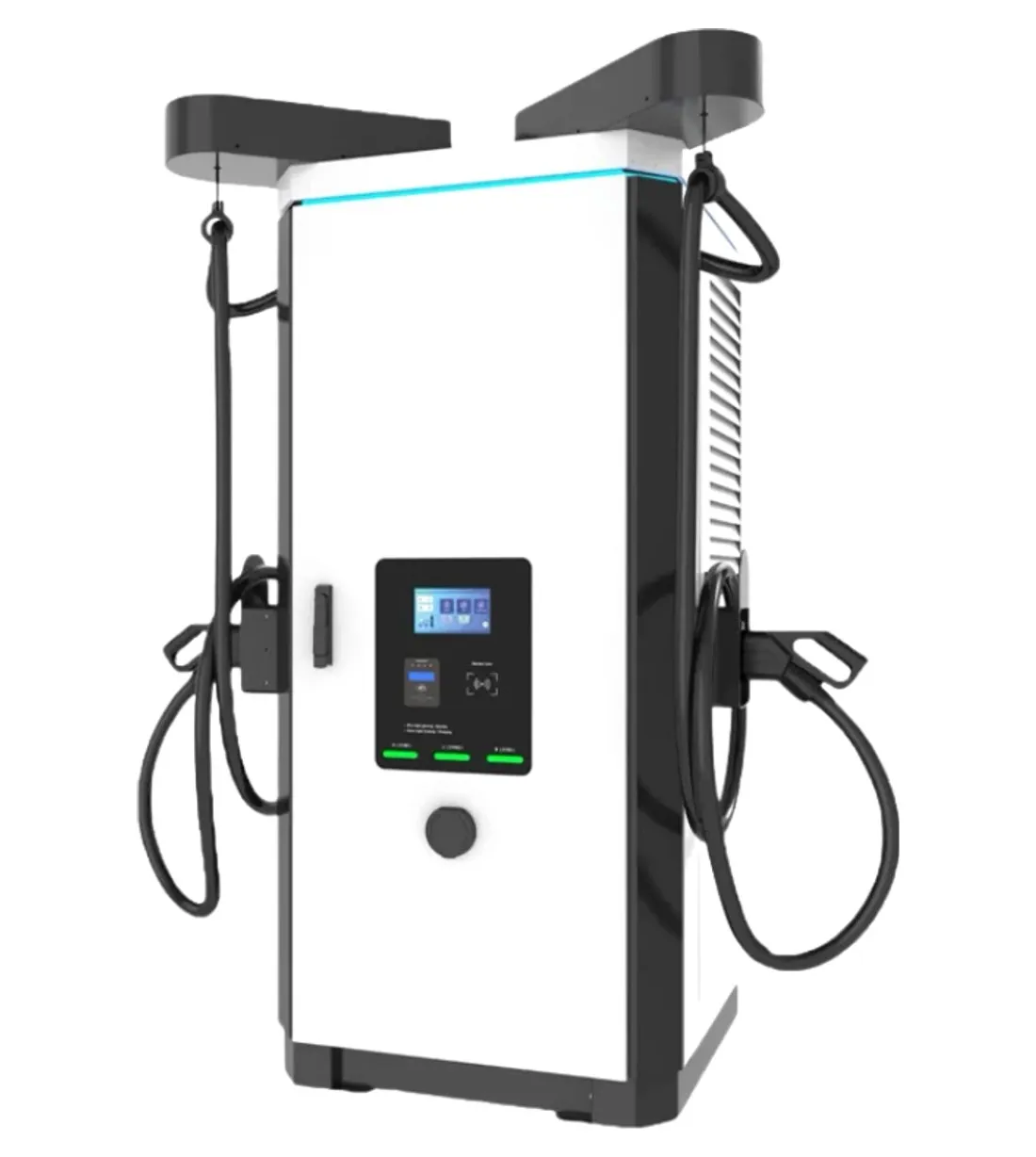
DC fast chargers · 120 kW
120 kW DC Fast Charger: Dual-Gun Sharing, Site Power and Real Charging Speed
What a 120 kW DC charger really delivers: per-connector current limits, power sharing between two cars, supply size, charging times and alternatives.
- Prepared by
- VULTAE Engineering Team
- Published
- Reading time
- 10 min
- Sources
- 3 references
At a glance
- Rated output
- 120 kW DC
- Connectors
- CCS2 + CCS2 / CHAdeMO (IEC) · CCS1, NACS (NA)
- Output voltage
- 150–1,000 V DC (IEC)
- Current per CCS connector
- Up to 200 A
- Input (IEC version)
- 400 V 3-phase, 186 A per phase
- Input (North America)
- 480 V 3-phase, 155 A per phase
- Efficiency
- ≥ 95.2 % at full load
- Footprint
- 850 × 840 mm or compact 700 × 500 mm
Key takeaways
- 1A 120 kW charger is a cabinet limit, not a promise per car. With a 200 A air-cooled CCS cable, a 400 V-class car can draw roughly 70–90 kW; only higher-voltage (around 600 V and above) vehicles can take the full 120 kW from one connector.
- 2Its real advantage on most sites is serving two cars at once: the cabinet shares power between its two connectors, so two vehicles can each charge at about 60 kW instead of one waiting.
- 3Supply: the IEC version draws up to 186 A per phase at 400 V — about 130 kVA per charger. Two chargers need roughly 260 kVA before diversity or load management.
- 4Choose 120 kW for retail, dealerships, fuel stations and fleet depots with 30–60 minute stops. Highway hubs serving 800 V vehicles justify 160–240 kW; depots with longer dwell times can often use 60 kW.

Contents
Short answer: a 120 kW DC fast charger is a cabinet with about 120 kW of power modules and, usually, two CCS connectors that share that power. One car gets up to 120 kW only if it can accept it — in practice that means a higher-voltage vehicle, because a standard 200 A cable limits a 400 V-class car to roughly 80 kW. The bigger benefit on most sites is that two cars can fast-charge at the same time. A 120 kW unit needs about 130 kVA of supply (186 A per phase at 400 V).
What “120 kW” actually means
The power rating describes what the cabinet can convert from AC to DC at full load. Inside, the cabinet is built from several power modules — typically in steps of 20 to 40 kW — that are switched between the two connectors as cars arrive and leave.
How much of that power reaches a car is limited by three things, and the lowest one wins:
- The cabinet — 120 kW in total, shared between connectors.
- The connector and cable — current is the limit. Standard air-cooled CCS cables on chargers in this class are rated up to 200 A; CHAdeMO connectors on the same cabinet carry up to 150 A.
- The vehicle — its maximum charging power, battery voltage, battery temperature and state of charge. Every car follows a charging curve that drops as the battery fills.
The current limit: why one car rarely gets 120 kW
DC power is voltage multiplied by current. With the cable limited to 200 A, the power one connector can deliver depends on the battery voltage of the car plugged into it:
| Battery voltage while charging | Max. power at 200 A | Typical vehicles |
|---|---|---|
| 350 V | 70 kW | Smaller 400 V-class cars at low state of charge |
| 400 V | 80 kW | Most 400 V-class cars |
| 450 V | 90 kW | 400 V-class cars near full charge |
| 600 V | 120 kW | Vans and buses with higher-voltage packs |
| 750 V | 120 kW (cabinet limit; current ≈ 160 A) | 800 V-class cars |
This is the most common misunderstanding in fast-charger purchases: a site owner buys 120 kW expecting each car to charge at 120 kW, and drivers of 400 V-class cars see about 80 kW. The charger is not faulty — it is physics. If the fleet you serve is mostly 400 V-class, extra cabinet power beyond about 80–90 kW per connector only helps when two cars share the cabinet.
Two cars, one cabinet: how power sharing works
Our 120 kW cabinets have two connectors and allocate power modules automatically:
| Situation | Connector A | Connector B |
|---|---|---|
| One car connected, high-voltage vehicle | up to 120 kW | — |
| One car connected, 400 V-class vehicle | about 80 kW (cable current limit) | — |
| Two cars connected | about 60 kW | about 60 kW |
| Two cars, one nearly full | power shifts to the car still charging fast | tapering car keeps what it needs |
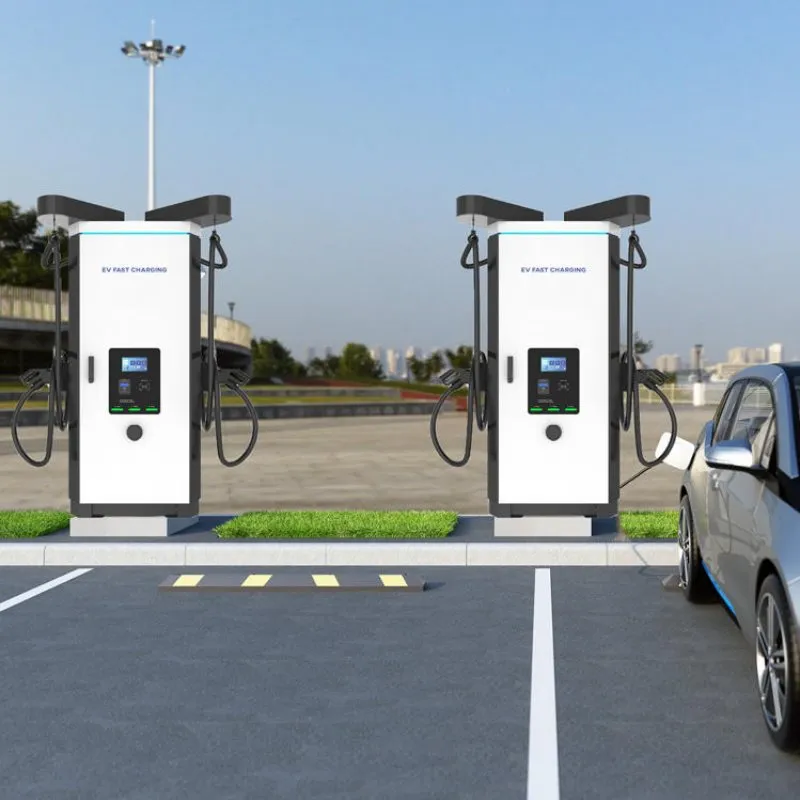
For a retail car park or fuel station this matters more than peak power. Two cars at 60 kW each move more energy per hour than one car at 80 kW while a second waits — and the site needs one foundation, one grid connection and one cabinet to maintain.
Charging time: what to tell drivers
The time for a 10–80 % charge is the energy added divided by the average power over the session, which is always below the peak. The table uses a 60 kWh and an 80 kWh battery and ignores small losses; treat the figures as estimates.
| Scenario | Average power | 60 kWh battery, 10→80 % (42 kWh) | 80 kWh battery, 10→80 % (56 kWh) |
|---|---|---|---|
| 400 V-class car, alone on the charger | ≈ 70 kW | ≈ 36 min | ≈ 48 min |
| 800 V-class car, alone on the charger | ≈ 100 kW | ≈ 25 min | ≈ 34 min |
| Two cars sharing the charger | ≈ 55–60 kW each | ≈ 45 min | ≈ 60 min |
Battery temperature has a large effect. In cold weather a battery that is not pre-conditioned can charge at a fraction of these rates; in very hot weather both the car and the charger may limit power to protect themselves.
Site power: what the grid connection must supply
| VT-DF120 / VT-DFC120 (IEC) | VT-DF120-NA (North America) | |
|---|---|---|
| Supply | 400 V AC, 3-phase, 50/60 Hz | 480 V AC, 3-phase + N + PE, 60 Hz |
| Input current per phase (max.) | 186 A | 155 A |
| Apparent power (√3 × V × I) | ≈ 129 kVA | ≈ 129 kVA |
| Two chargers, no load management | ≈ 258 kVA | ≈ 258 kVA |
How to use these figures:
- Transformer and connection. Add your other site loads and the planned chargers for the next few years. Many sites add a third or fourth charger within two years; sizing ducts and the transformer for that now is cheaper than digging twice.
- Load management. If the available capacity is lower than the sum of the chargers, a site controller or the CPMS can cap total power and share it — at the cost of slower charging at peak times.
- Protection and cable. The electrical designer selects the breaker, residual current protection and cable size from the input current, the cable length and the installation method under local rules (for example BS 7671, IEC 60364 or NEC Article 625). Do not size them from the kW rating alone.
- Demand charges. Where the utility bills peak demand, two 120 kW chargers can add a large monthly demand charge even with few sessions. Model the tariff before choosing between 120 and 180 kW.
60, 120 or 180 kW?
| 60 kW | 120 kW | 180 kW | |
|---|---|---|---|
| IEC input current per phase | 93 A | 186 A | 279 A |
| One 400 V-class car (200 A cable) | ≈ 60 kW | ≈ 80 kW | ≈ 80 kW |
| One 800 V-class car | 60 kW | up to 120 kW | up to 180 kW (current-limited around 750 V and below) |
| Two cars at once | ≈ 30 kW each | ≈ 60 kW each | ≈ 80–90 kW each |
| Typical sites | Fleet depots, hotels, offices with 1–2 h stays | Retail, dealerships, fuel stations, city hubs | Highway hubs, high-turnover city hubs |
Read the table from the bottom up: start with how long vehicles stay and how many arrive at once, then pick the cabinet. A 120 kW unit is often the best value point for sites where two cars may arrive together and most stops last 30–60 minutes.
Our 120 kW models
| VT-DF120 | VT-DFC120 | VT-DF120-NA | |
|---|---|---|---|
| Market | IEC (Europe, UK, Asia-Pacific, Middle East) | IEC | USA, Canada |
| Connectors | CCS2 + CCS2 or CCS2 + CHAdeMO | CCS2 + CCS2 or CCS2 + CHAdeMO | CCS1, NACS, CHAdeMO |
| Cabinet (W × D × H) | 850 × 840 × 1850 mm | 700 × 500 × 1700 mm | 850 × 840 × 1850 mm |
| Cable length | 6 m | 5 m | 6 m |
| Enclosure | IP54 · IK10 | IP54 · IK10 | NEMA Type 3R · IK10 |
| Operating temperature | −20 to +55 °C | −20 to +55 °C | −25 to +55 °C |
| Back end | OCPP 1.6J · 2.0.1 | OCPP 1.6J · 2.0.1 | OCPP 1.6J · 2.0.1 |
| Options | 21” advertising screen, POS payment, 22 kW AC output, 4G | 21” advertising screen, cable hanger, POS payment | POS payment, 4G |
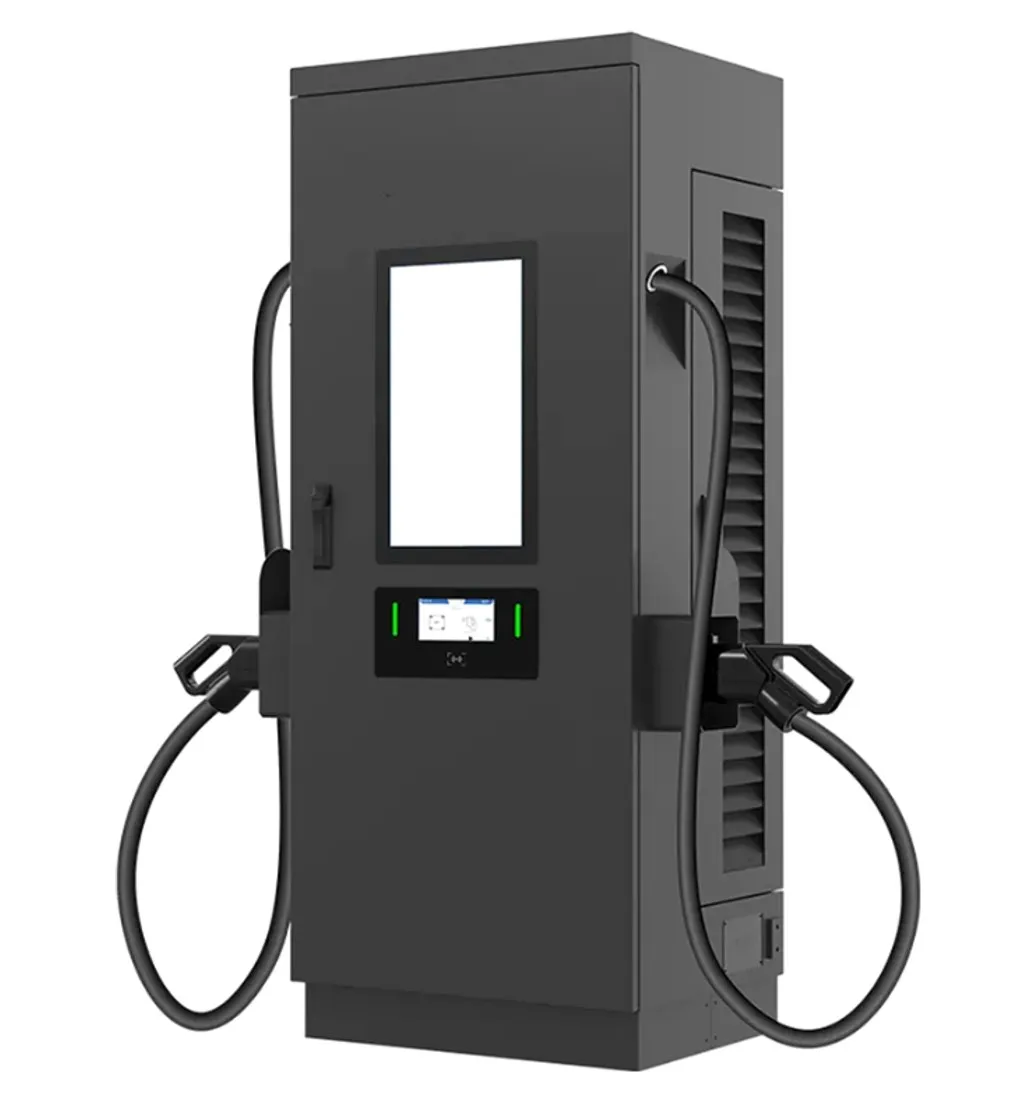
Choose the VT-DFC120 where space between bays is tight — city car parks and forecourts — and the VT-DF120 where you may want to upgrade the same cabinet family to higher power later. IEC versions are supplied with CE, UKCA and TÜV certification and North American versions with ETL and ENERGY STAR; we send the certificates for the exact model you order.
Before you order: six questions
- What share of the vehicles you serve are 400 V-class and 800 V-class?
- How often will two vehicles arrive at the same time?
- How much capacity does the site connection have today, and what does the utility charge for peak demand?
- Which connectors does the market require (CCS2 only for public sites in some markets, such as Dubai)?
- Which CPMS will run the chargers, and has the model been tested with it over OCPP?
- What is the upper temperature at full output, and how is the cabinet protected against dust or salt on your site?
Send us these answers through the contact form and an engineer will reply with a configuration.
Questions buyers ask
- How fast does a 120 kW charger charge a car?
- It depends on the car more than the charger. As a guide, taking a 60 kWh battery from 10 % to 80 % (42 kWh) takes roughly 35–40 minutes for a 400 V-class car limited to about 70 kW on average, and roughly 25 minutes for a higher-voltage car that averages about 100 kW. If two cars share the charger at 60 kW each, allow about 45 minutes.
- Why does my car only get 80 kW from a 120 kW charger?
- Power is voltage times current. A standard air-cooled CCS cable carries up to 200 A, and a 400 V-class battery charging at around 400 V can therefore take about 80 kW from it. The car’s own charging curve, battery temperature and state of charge can reduce this further.
- What size supply does a 120 kW DC charger need?
- The IEC version (VT-DF120) draws up to 186 A per phase at 400 V, which is about 130 kVA. The North American version (VT-DF120-NA) draws up to 155 A per phase at 480 V. Your electrical engineer sizes the transformer, cable and protection from these figures and local rules.
- Can one 120 kW charger charge two cars at the same time?
- Yes. The VT-DF120 and VT-DFC120 have two connectors and share the cabinet power automatically. One car can use the full output; with two cars connected the power is divided between them.
- Is 120 kW or 180 kW better for a public site?
- 120 kW suits sites where most visitors stay 30–60 minutes and many vehicles are 400 V-class. 180 kW and above make sense where 800 V vehicles are common and stops are short, such as highway hubs, or where two cars should each get close to 90 kW at the same time.
- Does a 120 kW charger need liquid-cooled cables?
- No. A 120 kW cabinet works with standard air-cooled CCS cables rated up to 200 A. Liquid cooling is used for higher currents, typically above about 250–300 A, on high-power chargers.
References
- [1]IEC 61851-23:2023 — DC electric vehicle supply equipment. International Electrotechnical Commission.
- [2]IEC 61851-1:2017 — Electric vehicle conductive charging system, general requirements. International Electrotechnical Commission.
- [3]Procurement and installation for electric vehicle charging infrastructure. U.S. Department of Energy.