Installation & Power
How Much Grid Power Does a DC Fast Charging Site Need?
How to estimate grid capacity for a DC fast charging site: power per charger, diversity, transformer sizing, medium-voltage connection, storage and timeline.
- Prepared by
- VULTAE Engineering Team
- Published
- Reading time
- 3 min
- Sources
- 3 references
Key takeaways
- 1Start from the charger input, not the output: a 120 kW DC charger draws roughly 125–130 kW from the grid after losses. Four 120 kW chargers at full output need about 500 kW.
- 2Not all chargers run at full power at once. Power sharing between connectors and a utility-agreed site limit (diversity) allow a smaller connection — often 60–80% of the sum of the nameplates, depending on site traffic.
- 3Above roughly 200–300 kW many utilities require a dedicated transformer, and sites beyond about 1 MW typically connect at medium voltage. The utility process, not the equipment, is usually the longest part of the project.
- 4Battery storage can reduce peak demand and connection size, at extra capex. Compare the cost with the grid upgrade and the demand charges.
Contents
Short answer: add up the input power of all chargers (output ÷ efficiency of about 0.95, plus auxiliaries), then apply a diversity factor for the chance that they will not all run at full output together. Four 120 kW chargers need about 500 kW at full load. Most utilities want a dedicated transformer from about 200–300 kW upward, and the grid application is often the longest step of the project.
Step 1: Input power per charger
| Charger output | Approx. grid input at full output | Approx. current at 400 V |
|---|---|---|
| 30 kW | 32 kW | 46 A |
| 60 kW | 63 kW | 91 A |
| 120 kW | 126 kW | 182 A |
| 240 kW | 253 kW | 365 A |
| 360 kW | 380 kW | 548 A |
These are planning numbers: efficiency is around 94–96% for modern power modules, and standby and cooling add a little. Ask the supplier for the exact input current of the model.
Step 2: Site total and diversity
| Site | Nameplate sum | Realistic site limit |
|---|---|---|
| 2 × 60 kW | 126 kW | 126 kW (small site; run both fully) |
| 4 × 120 kW | 504 kW | 400–500 kW |
| 8 × 180 kW | 1,500 kW | 1,000–1,300 kW |
| 12 × 360 kW | 4,500 kW | 2,500–3,500 kW |
Power sharing on floor-standing dual-connector chargers and site-level power management allow a site limit below the nameplate sum. The right factor depends on traffic: highway sites at holiday peaks run close to the sum; city sites usually run well below it. Ask the utility if it accepts a managed connection (a contract limit enforced by the charger controller).
Step 3: Connection level
| Site load | Typical connection | Notes |
|---|---|---|
| Up to ~100–150 kW | Existing low-voltage supply, possibly upgraded | Check the main fuse and cable |
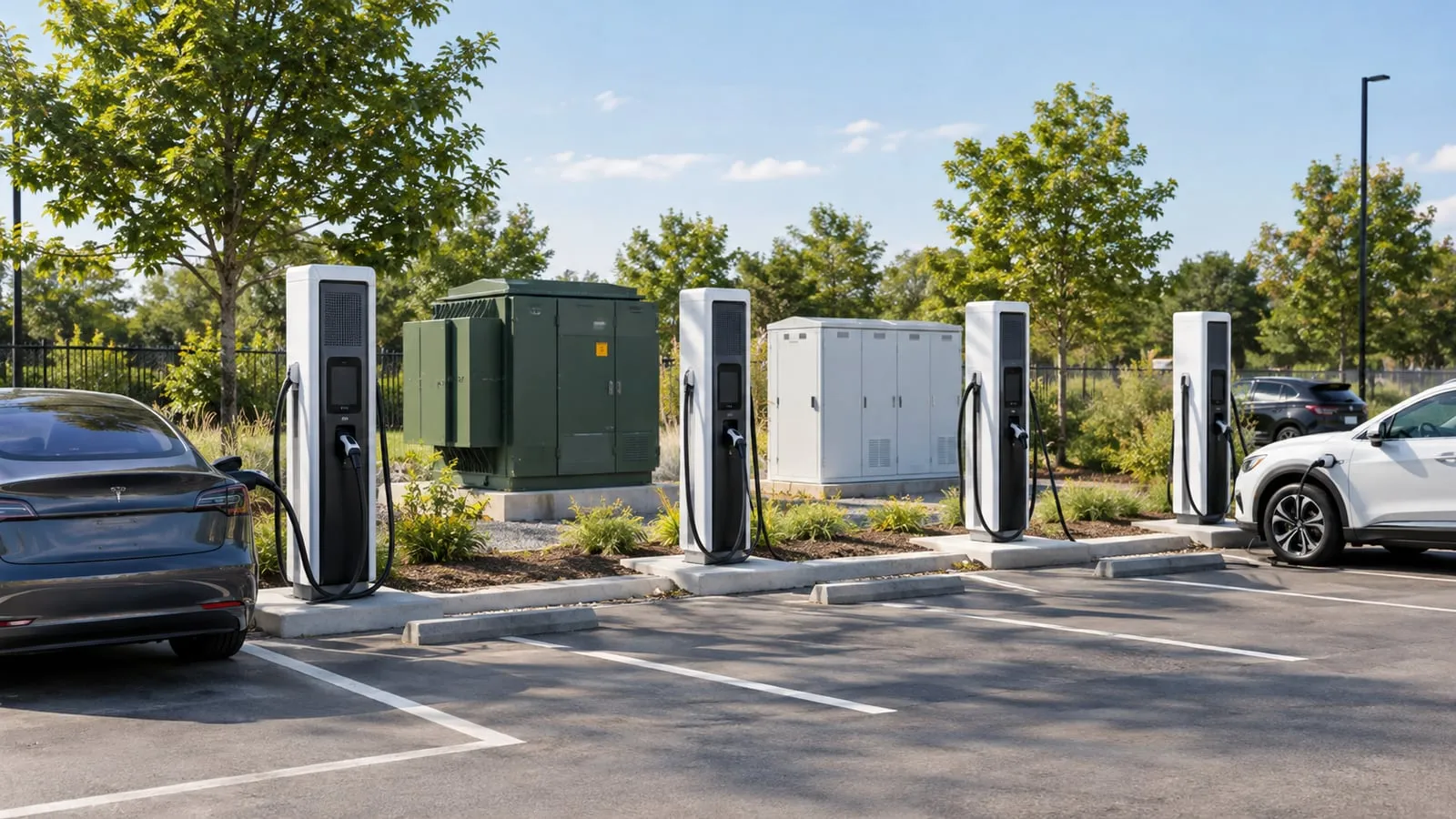
| ~150–1,000 kW | Dedicated transformer on low-voltage side | Pad-mounted transformer, switchgear |
| Above ~1 MW | Medium-voltage connection | Longer lead time; customer substation |
Rules and thresholds vary by country and utility.
Step 4: The utility process
- Pre-application: location, load, schedule.
- Capacity study: the utility checks the local network.
- Offer: costs, works, timeline, and your contribution.
- Works: trenching, transformer, metering.
- Energisation: inspection and commissioning.
This process can take from a few months to over a year. Start early and send complete information, including the charging profile (not just the nameplate).
Reducing the connection size
- Power sharing and a site limit — managed by the charger controller. See dynamic load management.
- Battery storage — a battery handles peaks and recharges from a smaller connection. Compare with the upgrade fee; the answer depends on tariff and utilisation.
- On-site solar — reduces energy cost more than peak demand.
- Time-of-use limits — lower the site limit at expensive hours.
Demand charges and the business case
The size of the connection also decides the fixed monthly fees in many tariffs, and demand charges punish peaks. For the economics see demand charges and the cost structure of a charging station.
Practical checklist
| Item | Question |
|---|---|
| Input current | Which current per charger, at what power factor? |
| Harmonics | Total harmonic distortion limit set by the utility? |
| Cable and distance | Distance from transformer to chargers — see wire size |
| Protection | Short-circuit rating of switchgear; surge protection |
| Space | Transformer pad, clearances, access for trucks |
| Civil | Foundations and trenches — see DC charger installation |
VULTAE DC chargers
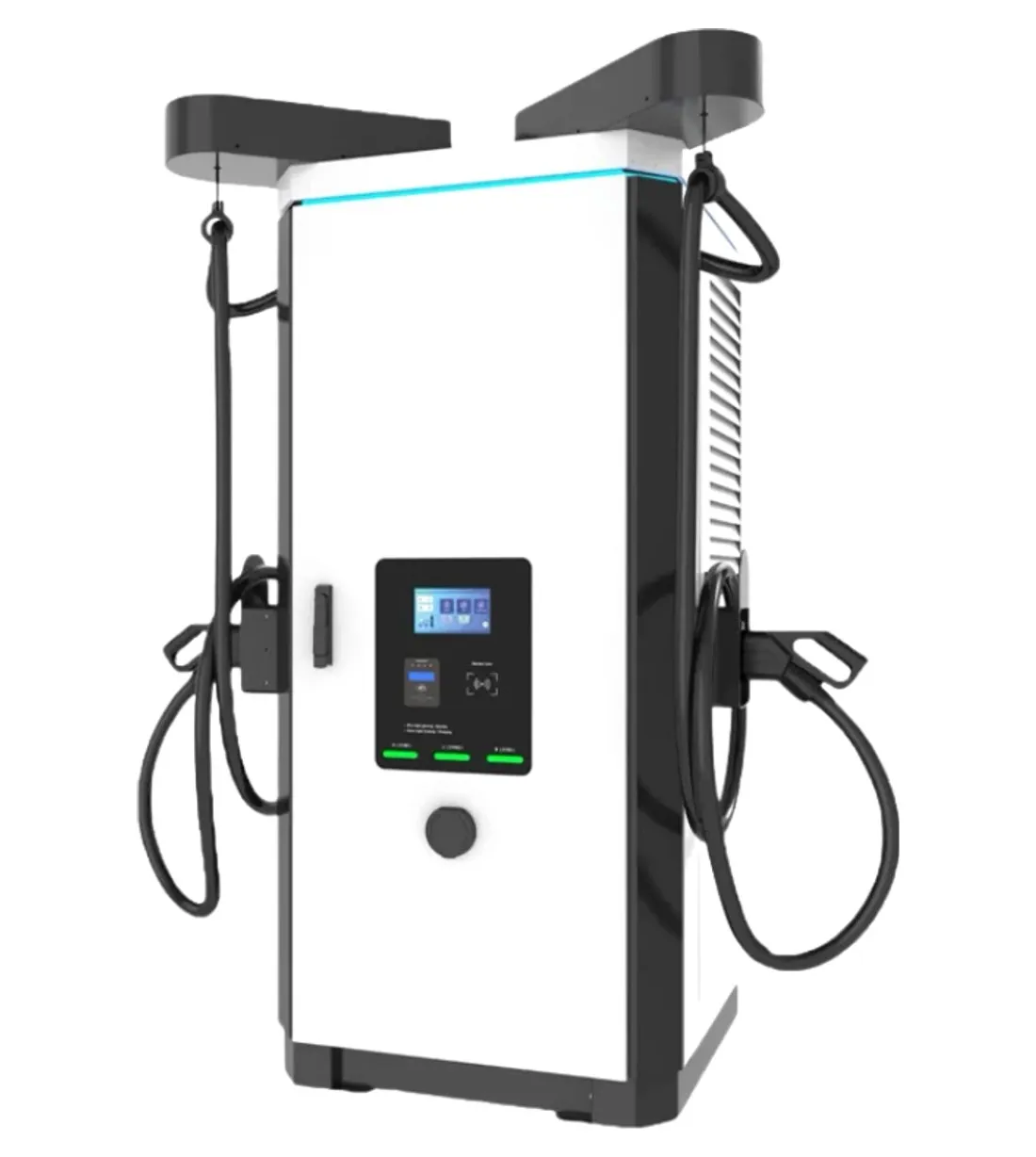
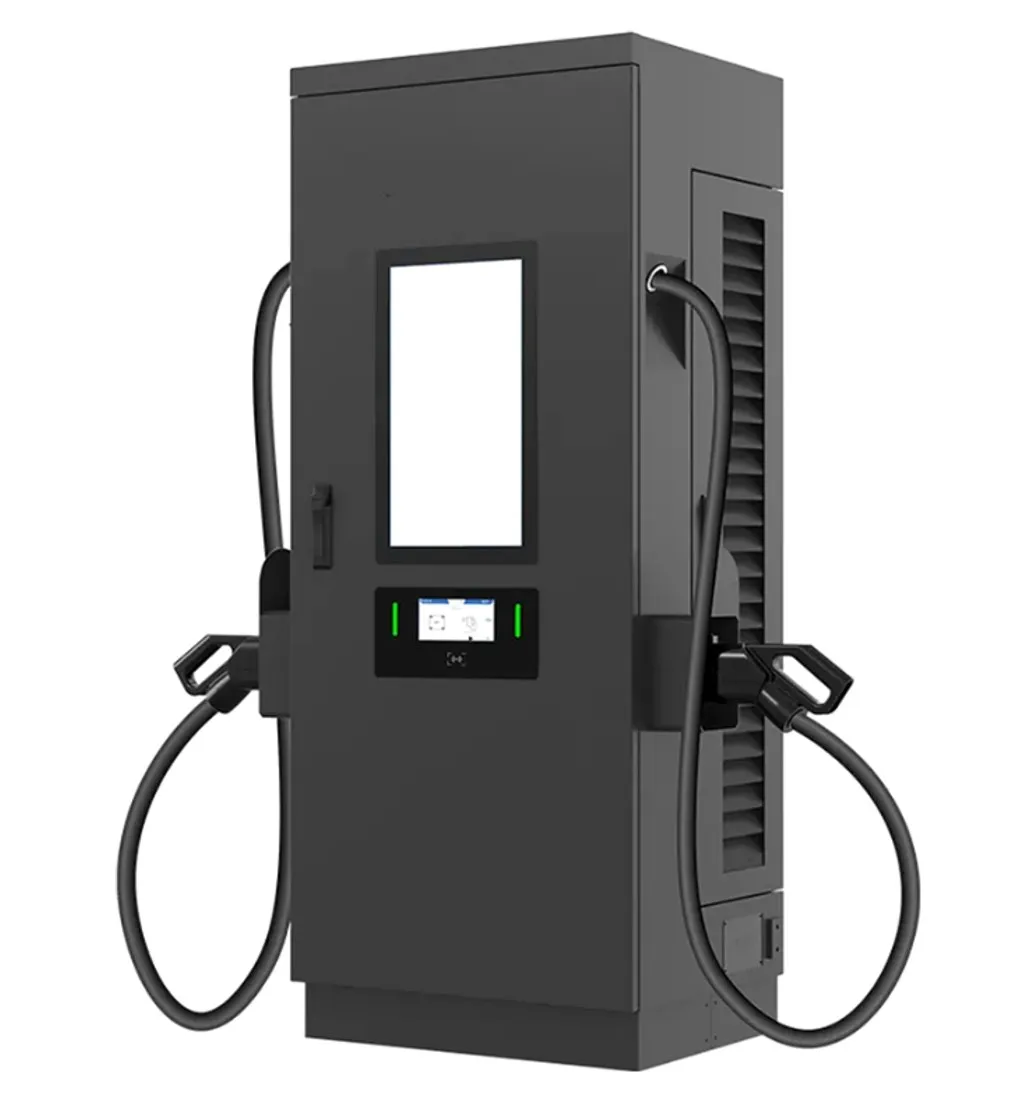
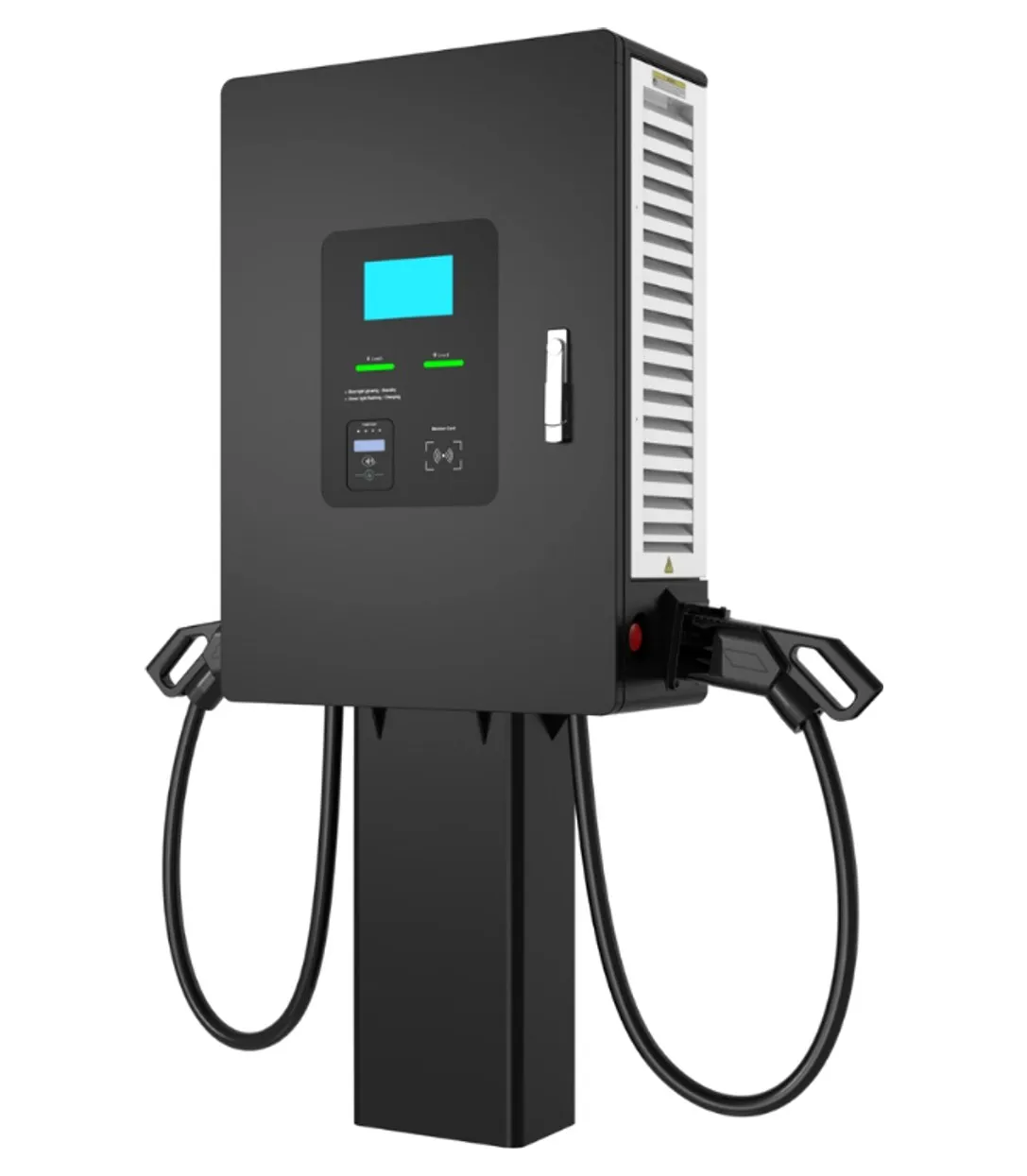
VULTAE DC chargers range from 20 kW wall-mounted to 360 kW floor-standing with dual connectors and dynamic power sharing; power on the floor-standing series can be expanded from 60 kW to 300 kW. Send us the model and the utility’s questions, and we will provide the input current and other electrical data for the exact model for your utility application. See the DC fast charger and the compact DC charger.
Questions buyers ask
- How much power does a 120 kW DC fast charger draw?
- About 125–130 kW from the grid at full output, since efficiency is around 94–96%. Plan the transformer and cabling on the input power, plus auxiliaries such as cooling and the display.
- Do I need a transformer for a DC charger?
- If the site’s existing low-voltage supply cannot carry the load, yes. A single 60 kW charger can often be fed from an existing 400 V supply; several high-power chargers need their own transformer, usually supplied by the utility or by you, depending on the country.
- How long does a grid connection take?
- It varies widely by country and utility, from a few months for a small low-voltage upgrade to a year or more for medium-voltage works. Apply early; it is usually the critical path.
- Can battery storage replace a grid upgrade?
- It can reduce it. A battery supplies peak power and recharges slowly from a smaller connection. It adds capital cost and complexity, so compare it with the upgrade fee and the demand charges at your site.
References
- [1]IEC 61851-23:2023 — DC electric vehicle supply equipment. International Electrotechnical Commission.
- [2]Alternative Fuels Data Center: electricity infrastructure development. U.S. Department of Energy.
- [3]DC fast charging rate design study. RMI.