DC Fast Charging
Why a 150 kW Charger Rarely Delivers 150 kW: The Charging Curve
Why DC fast chargers deliver less than their rated power: the car’s charging curve, battery temperature, voltage class, shared power and cable limits.
- Prepared by
- VULTAE Engineering Team
- Published
- Reading time
- 3 min
- Sources
- 2 references
Key takeaways
- 1The car, not the charger, decides the power. The battery management system requests a current at each moment; the charger supplies up to its limit. A 150 kW charger gives 150 kW only if the car asks for it.
- 2Power usually peaks early (at a low state of charge) and falls as the battery fills. Most cars charge from 10% to 80% in the time the last 20% takes — the 80–100% part is slow on purpose.
- 3Other limits: battery temperature (cold or hot), the car’s maximum current, its voltage class (400 V or 800 V), the charger’s cable rating, shared power with another car and the charger’s own derating.
- 4For a site, plan with average power per session, not the nameplate: typically 40–60% of the charger’s rating for many cars, depending on the fleet.
Contents
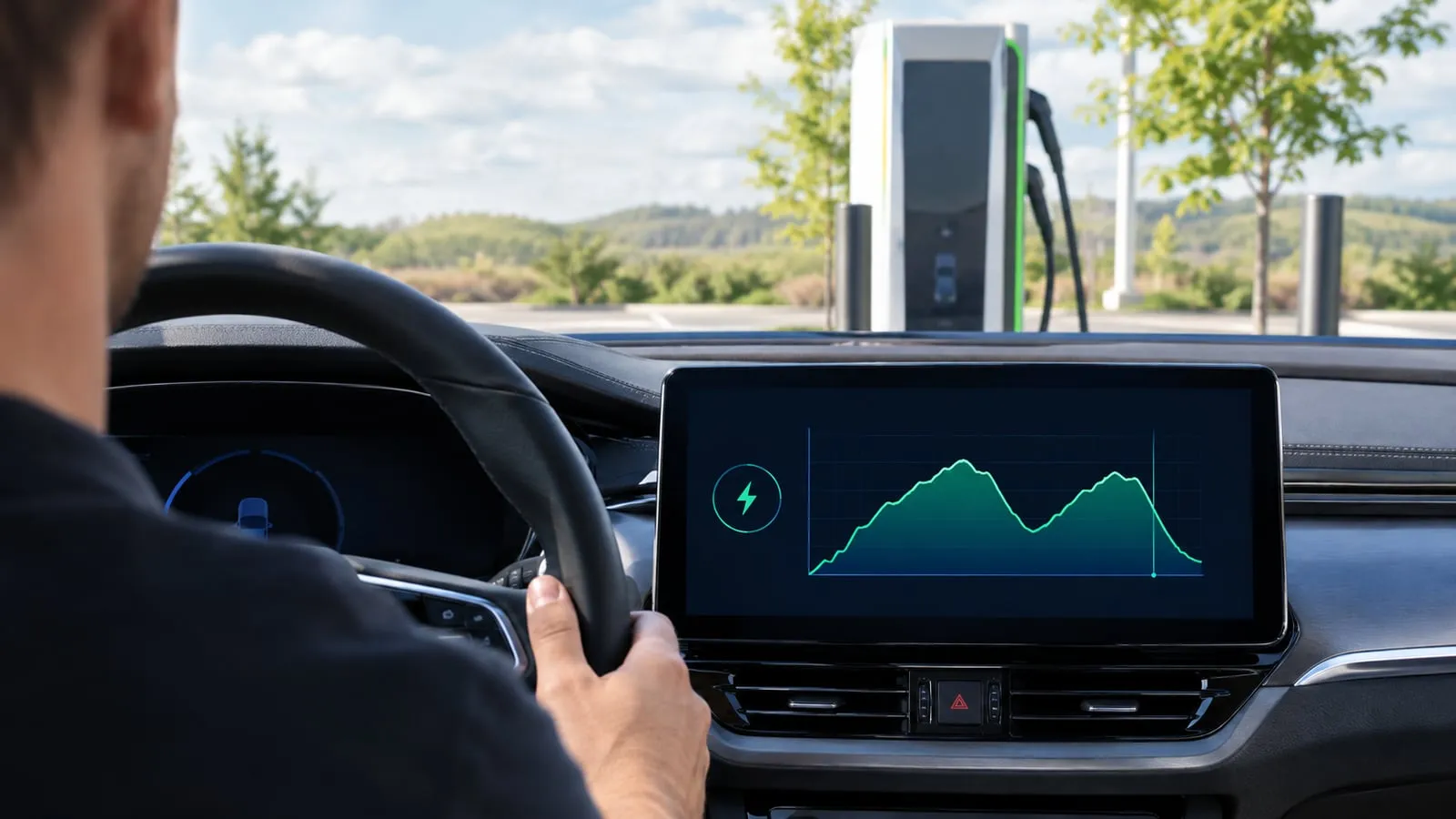
Short answer: the car sets the power, not the charger. Its battery management system requests current and the charger supplies up to its limit. Power is highest at a low state of charge and tapers as the battery fills, so a 150 kW charger delivers 150 kW only briefly, and only to cars that can take it.
What a curve looks like
For a typical 400 V car with a 150 kW peak (illustrative values):
| State of charge | Power the car accepts |
|---|---|
| 10% | about 120 kW (rising) |
| 20–40% | about 150 kW (peak) |
| 50–60% | about 110 kW |
| 70–80% | about 70 kW |
| 90% | about 30 kW |
| 100% | falls to near zero |
The average from 10% to 80% is well below the peak. That is why charging companies quote time from 10% to 80% and not “power”.
Seven limits on real power
| Limit | Explanation |
|---|---|
| Battery state of charge | Taper near full to protect cells |
| Battery temperature | Cold batteries accept less; hot batteries are limited too |
| Car’s maximum current or power | Many cars peak well below 150 kW |
| Voltage class | 800 V cars reach high power at lower current; 400 V cars need higher current for the same power |
| Charger and cable rating | Air-cooled cables are limited to about 200–250 A; see liquid-cooled cables |
| Shared power | A second car on a dual-gun charger reduces what each gets — see power sharing |
| Derating | A hot charger lowers its output — see hot climates |
Voltage and current
Power = voltage × current. A 400 V car at 250 A gets 100 kW; an 800 V car at 250 A gets 200 kW. A charger rated 150 kW with a 200 A limit therefore gives a 400 V car at most 80 kW unless the charger’s power range extends to the voltage and current the car wants. Read the charger’s power vs voltage envelope, not only the headline kW.
What it means for a site owner
- Plan on average power. A 150 kW charger may average 60–90 kW per session for mixed cars. Estimate from your own fleet.
- Match to the vehicles. Trucks and 800 V cars can use 240–360 kW; many city cars cannot use more than 50–100 kW.
- Do not oversize for the sticker. A larger supply and a larger charger do not make slow cars faster.
- Think about dwell time. Customers stay as long as it takes; sessions are shorter on higher-power chargers if the cars can use them.
- Use data. The back end records power per session; use it to see which cars and conditions limit power.
What a driver can do
- Precondition the battery on the way to the charger.
- Arrive at low state of charge (10–20%).
- Stop at 80% unless the extra range is needed.
- Choose the right connector and charger for the car’s voltage.
Checking a charger
Ask the supplier for the output envelope (kW at 200–1000 V and at several currents), the liquid- or air-cooled cable rating and the sharing rules. During sample testing test with the vehicles you expect, not only a simulator.
VULTAE DC chargers
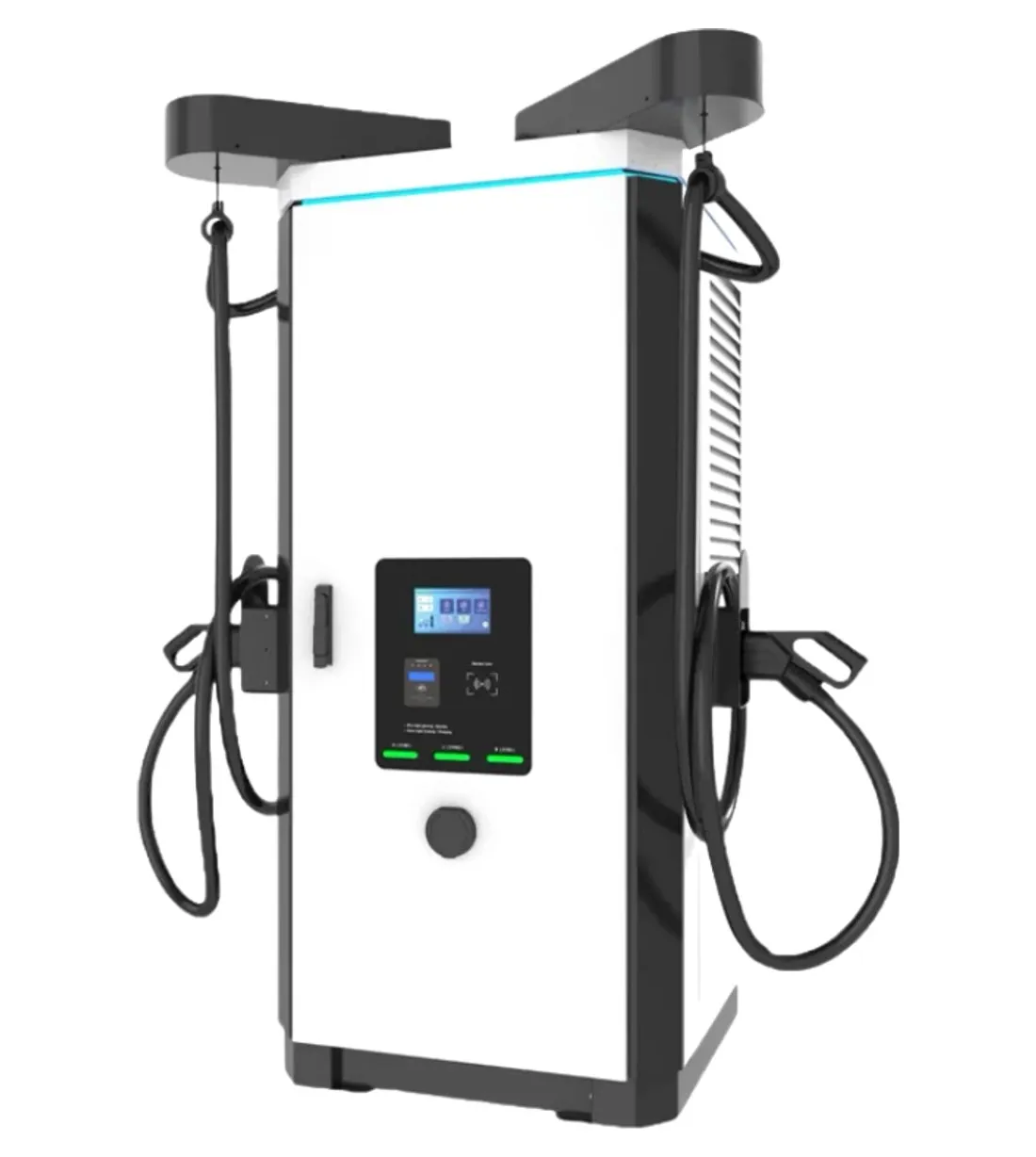
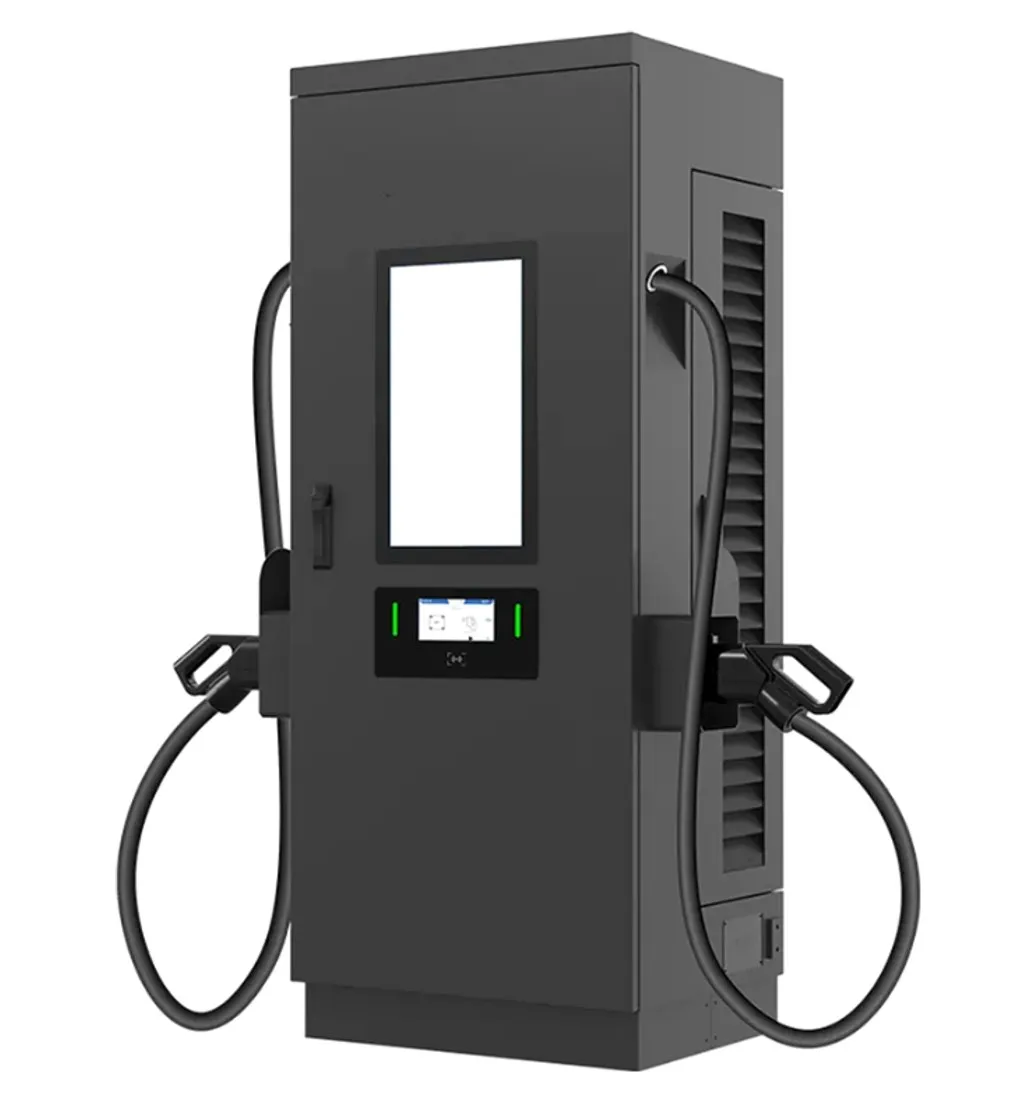
VULTAE’s floor-standing DC chargers cover 60–360 kW with output voltage ranges up to 1,000 V and current up to 200 A per CCS connector on the European series. See the DC fast charger and the compact DC fast charger, and use the charging calculator to estimate times for your vehicles.
Questions buyers ask
- Why is my car charging slower than the charger’s rating?
- The car limits the power: its battery may be cold, nearly full, or the car may not support the charger’s full current. Another car sharing the charger, a hot charger or a thin cable can also lower the power. Look at the session data to see which limit applies.
- What is a charging curve?
- A graph of charging power against battery state of charge. It rises quickly to a peak at low state of charge, holds for a while, then tapers as the battery fills.
- Is a 360 kW charger useful if cars only take 150 kW?
- For cars that take 150 kW, a 360 kW charger gives no extra speed to one car. It is useful when power is shared between several cars or for 800 V vehicles and trucks that can take more. Size the charger to your vehicles.
- How can I charge faster?
- Precondition the battery before arriving, arrive at a low state of charge, choose a charger that matches the car’s voltage and current, and stop at 80% unless you need the extra range.
References
- [1]IEC 61851-23:2023 — DC electric vehicle supply equipment. International Electrotechnical Commission.
- [2]Alternative Fuels Data Center: electricity infrastructure development. U.S. Department of Energy.