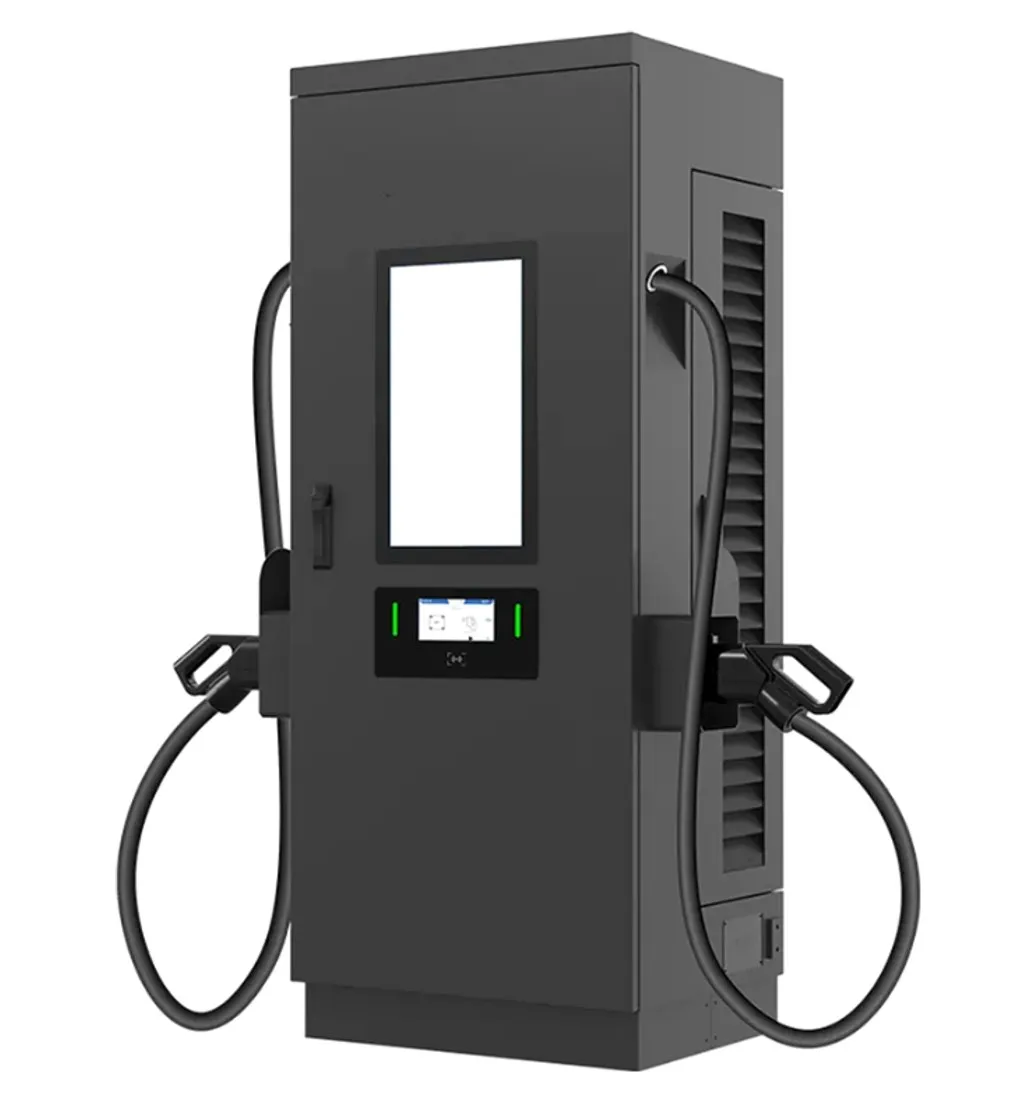
DC Fast Charging
Single-Gun vs Dual-Gun DC Chargers and Power Sharing
What a dual-gun DC charger really delivers: static and dynamic power sharing, when two connectors beat two single chargers, and how to read the spec sheet.
- Prepared by
- VULTAE Engineering Team
- Published
- Reading time
- 3 min
- Sources
- 2 references
Key takeaways
- 1A dual-gun DC charger has one power cabinet and two connectors. The cabinet’s power is shared: a 180 kW dual-gun charger gives one car up to 180 kW, or about 90 kW each when two cars charge — unless the sharing is fixed.
- 2Dynamic power sharing assigns power to the connectors as needed; static sharing splits it fixed. Dynamic gives the better experience and uses power modules efficiently.
- 3Dual-gun units cost less per connector and use less space and cabling than two single-gun units, but if the cabinet fails both bays are down.
- 4Read the spec carefully: “2 × 120 kW” on a data sheet may mean a 120 kW cabinet shared between two guns, not 240 kW in total.
Contents
Short answer: a dual-gun DC charger has one power cabinet and two connectors. The cabinet’s power is shared: 180 kW can go to one car, or about 90 kW each to two. Dynamic sharing moves power as needed, static sharing splits it fixed. It is cheaper per connector than two chargers, but a cabinet fault takes both bays out of service.
How power sharing works
| Mode | One car connected | Two cars connected | Comment |
|---|---|---|---|
| Static (fixed) | Half the power or less | Half each | Simple; one car cannot use the full cabinet |
| Dynamic | Full cabinet power | Shared by demand | Best use of power modules; the better experience |
| Fixed per gun, no sharing | Full power on each gun | Full power on each gun | Needs two cabinets of full power; effectively two chargers |
In a typical dynamic design a 180 kW cabinet is made of several power modules (for example six of 30 kW). A switching matrix assigns modules to each connector. Car A arrives and takes all six; when car B arrives, three are re-assigned. When one car’s charging curve tapers, the freed modules go to the other.
Reading the spec sheet
| What the sheet says | What it may mean |
|---|---|
| “180 kW, dual gun” | 180 kW total, shared |
| “2 × 120 kW” | Maybe 120 kW per gun with 240 kW cabinet, maybe 120 kW shared — ask |
| “Max 200 A per gun” | Current limit of each connector, not what the cabinet delivers to both |
| “Dynamic power distribution” | Power moves between guns; ask for the allocation rule |
| “Expandable from 60 to 300 kW” | Modules can be added to the same cabinet |
Ask the supplier for a table: output of each gun when one car charges and when two cars charge, at 400 V and at 800 V vehicle voltages. See also the charging curve.
Single-gun or dual-gun
| Single-gun | Dual-gun | |
|---|---|---|
| Cost per connector | Higher | Lower |
| Footprint and cabling | One cabinet and foundation per connector | One for two connectors |
| Full power per car | Yes | Only if the other gun is idle |
| Redundancy | One failure takes one connector | One failure takes two connectors |
| Best for | Trucks, high-power sites, redundancy | Most public and business sites |
Layout choices
- Dual-gun cabinet: the common choice for public sites. Each connector on one side serves a bay.
- Power cabinet with satellites: a central power unit and several dispensers; powerful, flexible and suited to hubs.
- Pairs of dual-gun units: gives four connectors and redundancy between cabinets.
For bays and cables see cable management and bay layout.
Connector combinations
Dual-gun units commonly combine CCS2 + CCS2, or CCS2 + CHAdeMO for markets with older cars; in North America CCS1 + CCS1 or CCS1 with NACS or CHAdeMO. Check which combination is available for the power level you want. For connector background, see EV connector types.
What affects real-world speed
Beyond the cabinet power, the car’s charging curve, the battery temperature, the cable rating and the state of charge limit the actual power. A 360 kW sign does not mean 360 kW for every car. For a fleet or for trucks the curve matters even more.
VULTAE dual-gun chargers
VULTAE floor-standing DC chargers have two charging points with automatic internal load balancing (dynamic power sharing), and power can be expanded from 60 kW to 300 kW in the European series. Combinations include CCS2 + CCS2 and CCS2 + CHAdeMO. Ask for the per-gun output table for your voltage. See the DC fast charger and the compact DC charger.
Questions buyers ask
- What does dual-gun mean on a DC charger?
- The charger has two charging connectors, usually CCS2 plus CCS2 or CCS2 plus CHAdeMO, so that two cars can charge at the same time from one cabinet.
- Do two cars charge at full power on a dual-gun charger?
- Not unless the cabinet has enough power for both. In most designs the power is shared between the two connectors, so each gets a part when both are in use. Look for dynamic power sharing.
- Is dual-gun better than two single-gun chargers?
- It depends. Dual-gun costs less per connector and uses less space and cable, and power sharing is flexible. Two single-gun units give redundancy and full power per car, at a higher price and footprint.
- What is a power cabinet and satellite (dispenser) layout?
- A central cabinet holds the power electronics and feeds several dispensers, each with a connector. Power is shared dynamically across all dispensers. It suits large sites and reduces the number of expensive cabinets.
References
- [1]IEC 61851-23:2023 — DC electric vehicle supply equipment. International Electrotechnical Commission.
- [2]IEC 61851-1:2017 — general requirements. International Electrotechnical Commission.