Country guide · Vietnam
EV Chargers in Vietnam: TCVN 13078, the Coming QCVN, 220/380 V Supply and Apartment Charging
Supplying EV chargers to Vietnam: TCVN 13078 (IEC 61851) standards, the national regulation due in 2026, 220/380 V supply, CCS2 and Type 2, apartments.
- Prepared by
- VULTAE Engineering Team
- Published
- Reading time
- 5 min
- Sources
- 5 references
At a glance
- Grid supply
- 220 / 380 V, 50 Hz (EVN)
- Connectors
- Type 2 (AC) · CCS2 (DC)
- Product standards
- TCVN 13078 series (from IEC 61851)
- Mandatory regulation
- QCVN for chargers — due 2026
- Electric cars on the road
- ≈ 350,000 (mid-2025)
- Electric motorbikes
- ≈ 2.5 million (mid-2025)
- Largest network
- V-Green, 150,000+ ports
- Charging price range
- VND 3,651–7,436 per kWh
Key takeaways
- 1Vietnam’s charger standards are the TCVN 13078 series, adopted from IEC 61851 — so IEC-tested chargers are the right base. Until now they have been voluntary; a mandatory national technical regulation (QCVN) for charging equipment is being finalised, with the government setting 30 September 2026 as the deadline for the charging-station standards.
- 2Once the QCVN applies, chargers will need conformity certification and the CR mark before sale. Ask the importer to plan certification for each model now rather than after the regulation takes effect.
- 3Demand is real and fast-growing: about 350,000 electric cars and 2.5 million electric motorbikes were on the road by mid-2025. One network, V-Green, dominates public charging, so independent opportunities lie in apartments, offices, hotels, fleets and highway sites served by other operators.
- 4New rules push charging into apartment buildings and independent car parks — the most promising segment for AC chargers with load management and per-user billing.
Contents
Short answer: Vietnam’s EV charger standards are the TCVN 13078 series, adopted from IEC 61851, so an IEC-tested charger is the right starting point. A mandatory national technical regulation (QCVN) for charging equipment is being finalised in 2026; when it applies, chargers will need conformity certification and the CR mark. The supply is 220/380 V at 50 Hz from EVN, and the connectors are Type 2 for AC and CCS2 for DC. The biggest open segment is apartment buildings, offices and fleets, outside the dominant public network.
For importers, distributors, developers and operators supplying chargers to Vietnam. Rules are changing during 2026 — this guide reflects public information as of October 2026; confirm the final QCVN text and effective date before you sign.
Standards now, regulation next
| Document | Based on | Covers | Status |
|---|---|---|---|
| TCVN 13078-1:2020 | IEC 61851-1:2017 | General requirements for conductive charging | Voluntary national standard |
| TCVN 13078-21-2:2020 | IEC 61851-21-2 | EMC requirements for off-board chargers | Voluntary national standard |
| TCVN 13078-23:2020 | IEC 61851-23:2014 | DC charging stations | Voluntary national standard |
| QCVN for EV charging equipment | Draft by the Ministry of Science and Technology | Mandatory requirements, conformity certification, CR mark | Being finalised in 2026 |
By the end of 2025 Vietnam had issued 28 standards and technical regulations on charging stations, charging equipment and batteries. In mid-2026 the government gave the Ministry of Industry and Trade, with the Ministry of Science and Technology, until 30 September 2026 to complete national technical standards for charging stations, covering station design, grid connection, metering, operation and electrical safety. The Ministry of Construction handles requirements for charging in apartment buildings.
What this means for buyers: choose chargers tested to the current IEC 61851 editions — TCVN follows them — and ask your importer to plan certification under the QCVN as soon as the final text is published. Products already installed may face transition rules; new projects should not assume they are exempt.
A market led by one network
| Indicator | Detail | Source |
|---|---|---|
| Electric cars on the road | About 350,000 (mid-2025), expected to double by 2030 | Viet Nam News |
| Electric motorbikes | About 2.5 million (mid-2025) | Viet Nam News |
| V-Green network | More than 150,000 charging ports; target 500,000 | Tuoi Tre News |
| V-Green 2026 plan | 99 ultra-fast stations on national and provincial highways, US$380 million | electrive / Tuoi Tre News |
| Other operators | TMT EGreen targets 2,100 stations by end-2026 and 30,000 by 2030 | Tuoi Tre News |
| Public charging prices | VND 3,651–7,436 per kWh | Tuoi Tre News |
V-Green, part of the Vingroup ecosystem, builds most public charging for VinFast vehicles. For independent buyers, the openings are elsewhere: apartment buildings and offices that must provide charging, hotels and resorts, taxi and ride-hailing fleets, logistics depots, and regional operators building highway and city networks.
Supply and site
| Supply | Typical charger |
|---|---|
| Single-phase 220 V, homes and villas | 7 kW wallbox (32 A), Type 2 |
| Three-phase 380 V, buildings and offices | 11–22 kW AC wall units or dual-port posts |
| Commercial building or car park | AC posts plus 30–60 kW DC |
| Highway and city fast-charging | 120–180 kW dual-connector DC with a dedicated transformer |
Chargers rated for 230/400 V usually accept 220/380 V within their input tolerance — check the datasheet. In older city districts, transformer capacity is often the limit; load management lets more chargers share a fixed connection.
Apartments: the segment to watch
Vietnam’s cities are dense and many car owners live in apartment towers. New rules require charging (and battery-swapping for motorbikes) in apartment buildings and independent car parks. A workable building setup looks like this:
| Need | Solution |
|---|---|
| Limited building supply | Dynamic load management across all chargers |
| Fair billing between residents | RFID or app per user, OCPP back end, per-user energy reports |
| Basement fire safety | Placement, fire separation and emergency shut-off agreed with the fire authority — see parking garage fire safety |
| Mixed users | Dual-port AC posts for residents; one DC unit for taxis or visitors |
Climate
| Region | Main stress | What to specify |
|---|---|---|
| North (Hanoi) | Hot, humid summers; cool, damp winters with condensation | Anti-condensation heating in DC cabinets |
| Centre (Da Nang, Hue) | Typhoons and flooding | Anchoring for wind; raised plinths above flood level |
| South (Ho Chi Minh City, Mekong) | Heat, heavy rain, flooding | IP55 for exposed posts; drainage; raised plinths |
| Coast everywhere | Salt air | C4–C5 corrosion-resistant finish, stainless fixings |
Recommended configurations
| Site | Typical choice |
|---|---|
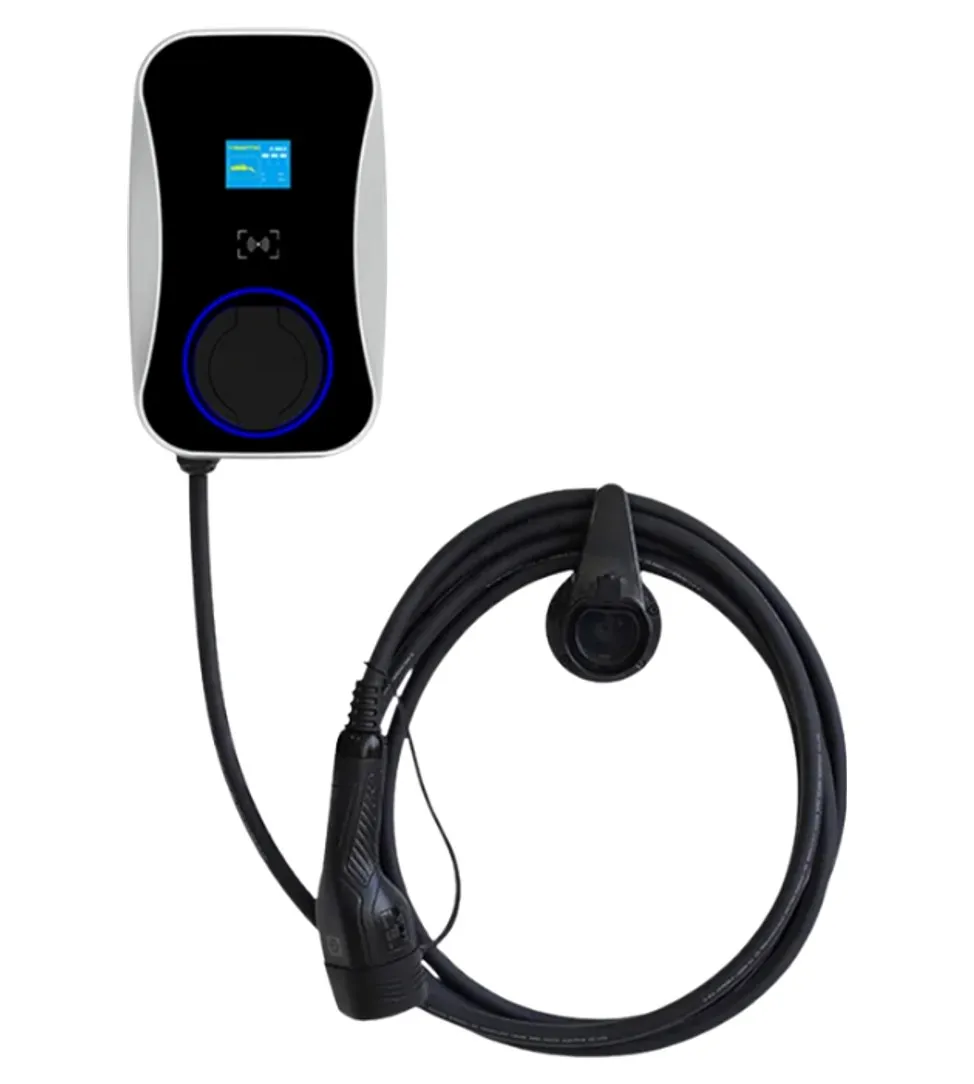
| Villas and townhouses | 7 kW wallbox, Type 2 |
| Apartment buildings | Load-managed dual-port AC posts or wall units with per-user billing |
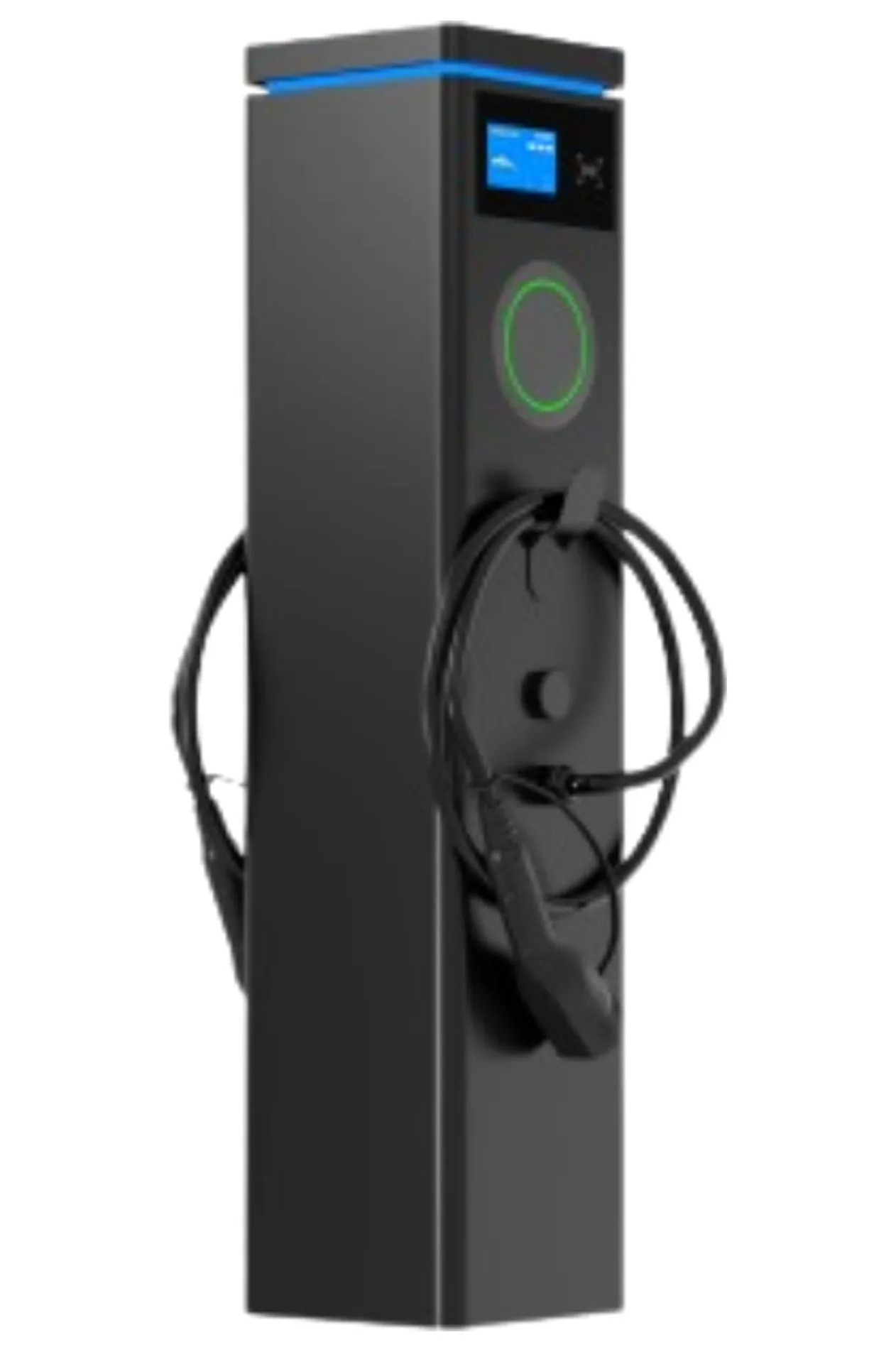
| Offices and hotels | 2 × 7–22 kW dual-port AC; one 30–60 kW DC unit |
| Taxi and ride-hailing depots | 60–120 kW dual DC, sized by daily energy per car |
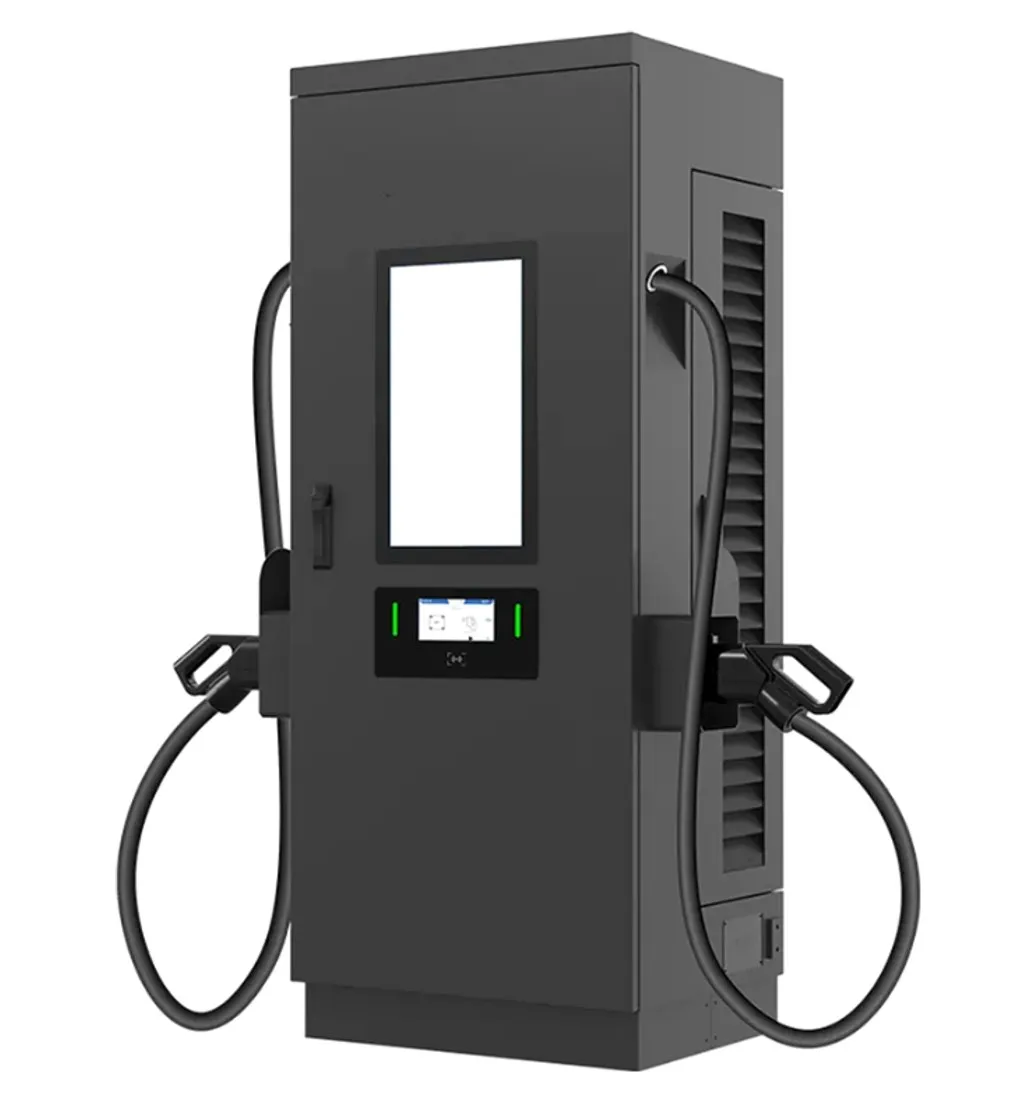
| Highway service areas | 120–180 kW dual-connector DC |
Where VULTAE fits. Our IEC series are built for 230/400 V at 50/60 Hz — we confirm the input range for 220/380 V sites on the datasheet of each model — and operate up to +55 °C: VT-HW wallboxes for villas, VT-CW and VT-CP dual-port AC chargers with RFID and OCPP for apartments, offices and hotels, VT-DW DC wallboxes for depots, and VT-DFC and VT-DF dual-connector DC chargers for highway and city fast charging — Type 2 and CCS2, OCPP 1.6J / 2.0.1, IP54–IP55 and a C4 anti-corrosion option. When Vietnam’s QCVN applies, certification is carried by the Vietnamese importer for a specific model; we supply the IEC test reports and technical documents.
Checklist before you order
- IEC 61851 test reports for the exact model — the basis for TCVN and the coming QCVN.
- Importer’s plan for conformity certification and CR marking once the QCVN takes effect.
- 220/380 V within the charger’s input tolerance; transformer capacity at the site.
- Type 2 and CCS2 connectors.
- Load management and per-user billing for apartments.
- Flood, typhoon and corrosion protection for the region.
- Spare parts and trained local technicians — see our spare-parts list.
Questions buyers ask
- Which standards apply to EV chargers in Vietnam?
- The Vietnamese standards are the TCVN 13078 series, adopted from IEC 61851: TCVN 13078-1:2020 (general requirements, from IEC 61851-1:2017), TCVN 13078-21-2:2020 (EMC) and TCVN 13078-23:2020 (DC charging stations, from IEC 61851-23:2014). A mandatory national technical regulation (QCVN) for charging equipment is being finalised in 2026.
- Will EV chargers need certification in Vietnam?
- Yes, once the national technical regulation applies. A QCVN gives the legal basis for conformity certification and CR marking, so chargers sold after it takes effect will need them. Check the final text and its effective date with the Ministry of Science and Technology and the Ministry of Industry and Trade.
- What voltage do chargers need in Vietnam?
- Vietnam’s low-voltage supply is 220 V single-phase and 380 V three-phase at 50 Hz from EVN. Chargers designed for 230/400 V with a normal input tolerance work on this supply; confirm the tolerance on the datasheet.
- Which connectors are used in Vietnam?
- Type 2 for AC and CCS2 for DC, the connectors used by the cars sold in Vietnam, including local brand VinFast. Some imported models use other standards, so check your users’ vehicles.
- How much does public charging cost in Vietnam?
- Reported prices range from about VND 3,651 to VND 7,436 per kWh (roughly US$0.13–0.28), depending on the operator and time of day.
References
- [1]Vietnam moves to standardize EV charging infrastructure. Tuoi Tre News.
- [2]Charging standard needed before rapid expansion. Viet Nam News.
- [3]Draft national technical regulation on EV charging equipment — request for comments (56/BKHCN-TĐC). Ministry of Science and Technology via LuatVietnam.
- [4]V-Green to build 99 fast-charging stations in Vietnam. electrive.
- [5]V-Green to spend $380mn on 99 ultra-fast EV charging stations across Vietnam. Tuoi Tre News.