Country guide · Indonesia
EV Chargers in Indonesia: SPKLU Rules, PLN Partnerships, SNI and SLO
Supplying EV chargers to Indonesia: Permen ESDM 1/2023 SPKLU rules, IUPTLU licence or PLN partnership, SNI and SLO, Type 2, CCS2 and CHAdeMO, tropical sites.
- Prepared by
- VULTAE Engineering Team
- Published
- Reading time
- 5 min
- Sources
- 8 references
At a glance
- Grid supply
- 230 / 400 V, 50 Hz (PLN)
- Public station term
- SPKLU
- Regulation
- Permen ESDM No. 1 of 2023
- Connectors in the rules
- Type 2 · CCS2 · CHAdeMO
- Operating route
- IUPTLU licence or PLN partnership
- Installation
- SLO certificate, certified technicians
- Foreign ownership
- Up to 100 % (KBLI 35133)
- Equipment standards
- SNI (IEC 61851-based)
Key takeaways
- 1Public charging stations in Indonesia are called SPKLU and are governed by Minister of Energy and Mineral Resources Regulation No. 1 of 2023, which lists Type 2 for AC and CHAdeMO and CCS2 for DC, and groups chargers into power classes from slow (up to 7 kW) to fast.
- 2There are two ways to run SPKLU: your own electricity-supply business licence (IUPTLU) through the OSS system, or a partnership with PLN in which PLN holds the supply licence and the partner provides land and/or equipment. The partnership route is usually faster.
- 3Equipment must meet the Indonesian National Standards (SNI) adopted from IEC 61851, and every installation needs a Certificate of Operational Worthiness (SLO) and certified technical staff.
- 4The network is concentrated in Java and Bali; distances between islands make spare parts, remote monitoring and local service partners as important as the charger itself.
Contents
Short answer: public chargers in Indonesia are SPKLU, governed by Permen ESDM No. 1 of 2023, which names Type 2 for AC and CHAdeMO and CCS2 for DC. You either hold your own IUPTLU electricity-supply licence or partner with PLN; each installation needs an SLO certificate, and equipment must meet SNI standards based on IEC 61851. The supply is 230/400 V at 50 Hz from PLN. Plan for humidity, heavy rain, flooding and long logistics between islands.
For investors, distributors, contractors and hotel or property owners supplying chargers to Indonesia. It summarises public information as of October 2026 — confirm current rules with ESDM, PLN and your local partner before you sign.
Two ways to run public charging
The biggest decision in Indonesia is not which charger to buy but who holds the electricity-supply licence.
| Independent (IUPTLU) | PLN partnership | |
|---|---|---|
| Supply licence | Your company, through OSS, with a feasibility study | Held by PLN |
| What you provide | Everything: site, equipment, operation | Land and/or charging equipment, depending on the scheme |
| Speed | Slower — licence and connection agreement first | Usually faster |
| Control of pricing and brand | Full, within regulated tariffs | Shared with PLN |
| Suits | Networks, large developers, fuel retailers | Hotels, malls, landowners, equipment owners starting out |
Operating EV charging facilities is classified as KBLI 35133, open to 100 % foreign ownership. Charging tariffs and service fees at SPKLU are set by the government, so check the current rules before building a business case — see how to price EV charging.
What the regulation says about equipment
| Item | Permen ESDM 1/2023 |
|---|---|
| AC connector | Type 2 |
| DC connectors | CHAdeMO and CCS2 (Combo 2) |
| Power classes | Slow (up to 7 kW), medium (7–22 kW) and fast (above 22 kW up to 50 kW); PLN also operates higher-power ultra-fast chargers on toll roads |
| Minimum system content | Power equipment, current-control system, voltage and communication system, protection and safety system |
| Standards | SNI standards adopted from the IEC 61851 series; SNI certification of SPKLU equipment is offered by bodies such as PLN Pusertif |
Before shipping, ask your importer which SNI certification route the project needs and whether test reports to the IEC 61851 series are accepted as the basis.
The network today
| Indicator | Detail | Source |
|---|---|---|
| SPKLU (public charging stations) | 1,575 in June 2024 | PLN data via Listrik Indonesia |
| Battery-swap stations (SPBKLU) | 1,882 in June 2024, mainly for two-wheelers | PLN data via Listrik Indonesia |
| Largest concentrations | Java (836 SPKLU across West, Central and East Java and Yogyakarta) and Jakarta (262) | Listrik Indonesia |
| 2030 plan | 31,859 SPKLU | SIP Law Firm |
| Trans-Java toll road | Ultra-fast chargers at rest areas | PLN via RRI |
Demand is still concentrated in Jakarta, West Java and Bali, where electric cars, taxis and ride-hailing fleets are growing fastest. Outside Java and Bali, sites are far apart and service visits are expensive — choose equipment with remote diagnostics and keep spare parts on the island.
Climate and site
| Condition | What to specify |
|---|---|
| Humidity all year | Anti-condensation heating in DC cabinets; sealed cable glands |
| Heavy rain and flooding (Jakarta, coastal cities) | IP55 for exposed posts; raised plinths above local flood level |
| Thunderstorms | Surge protection at the board and in the charger; good earthing |
| Salt air (Bali, coastal resorts) | C4–C5 corrosion-resistant finish, stainless fixings |
| Unstable rural supply | Wide input voltage tolerance; under- and over-voltage protection |
Recommended configurations
| Site | Typical choice |
|---|---|
| Homes | 7 kW single-phase wallbox (PLN power upgrade often needed) |
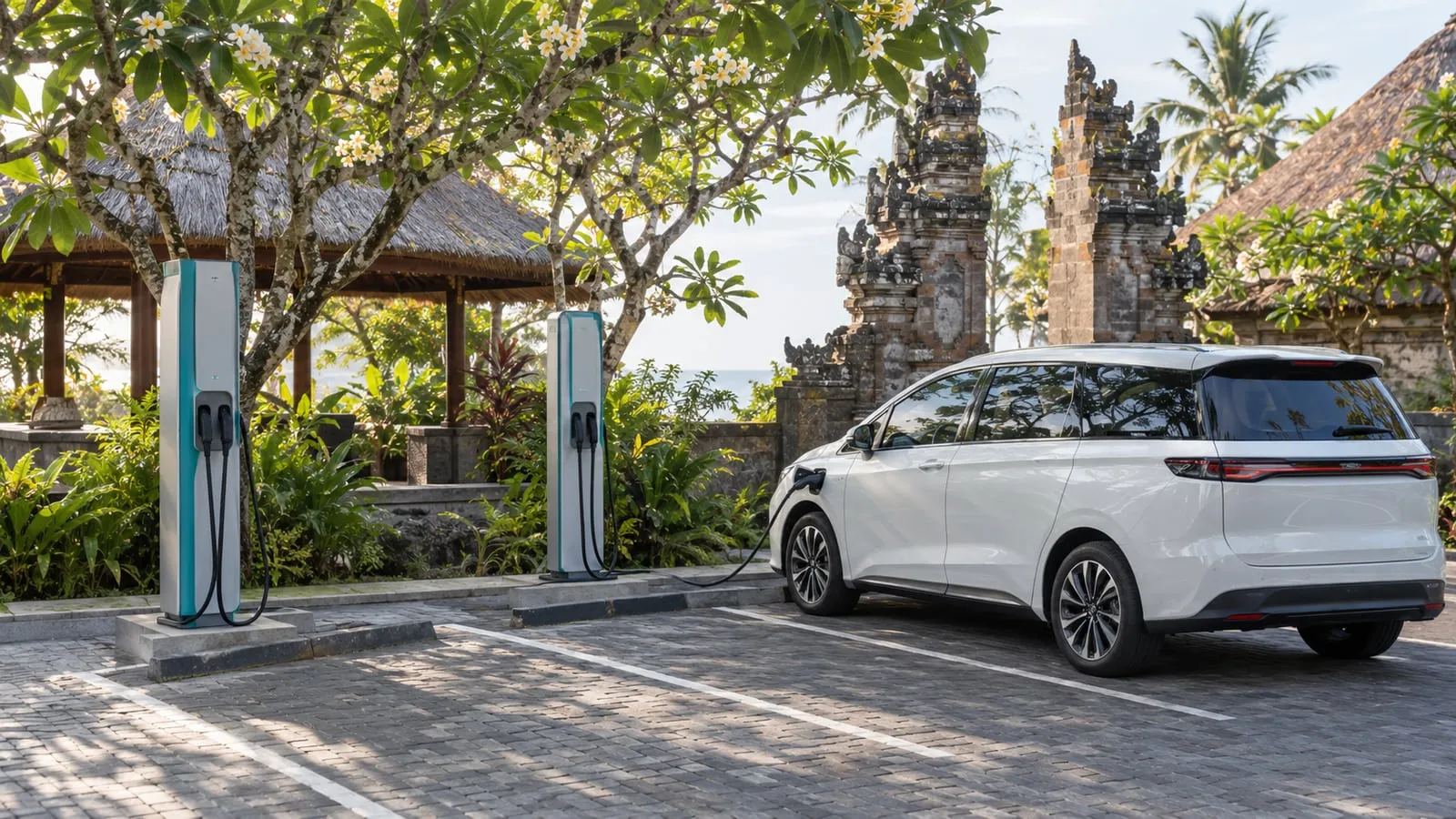
| Hotels and resorts | Dual-port AC posts, 2 × 7–22 kW, plus one 30–60 kW DC unit for day visitors |
| Malls and offices | AC posts for long stays; 60–120 kW DC near entrances |
| Toll-road rest areas | 120–180 kW dual-connector DC |
| Taxi and ride-hailing depots | 30–60 kW DC wallboxes or 120 kW dual DC, sized by daily energy |
| Remote islands and events | Mobile DC charger as a flexible first step |
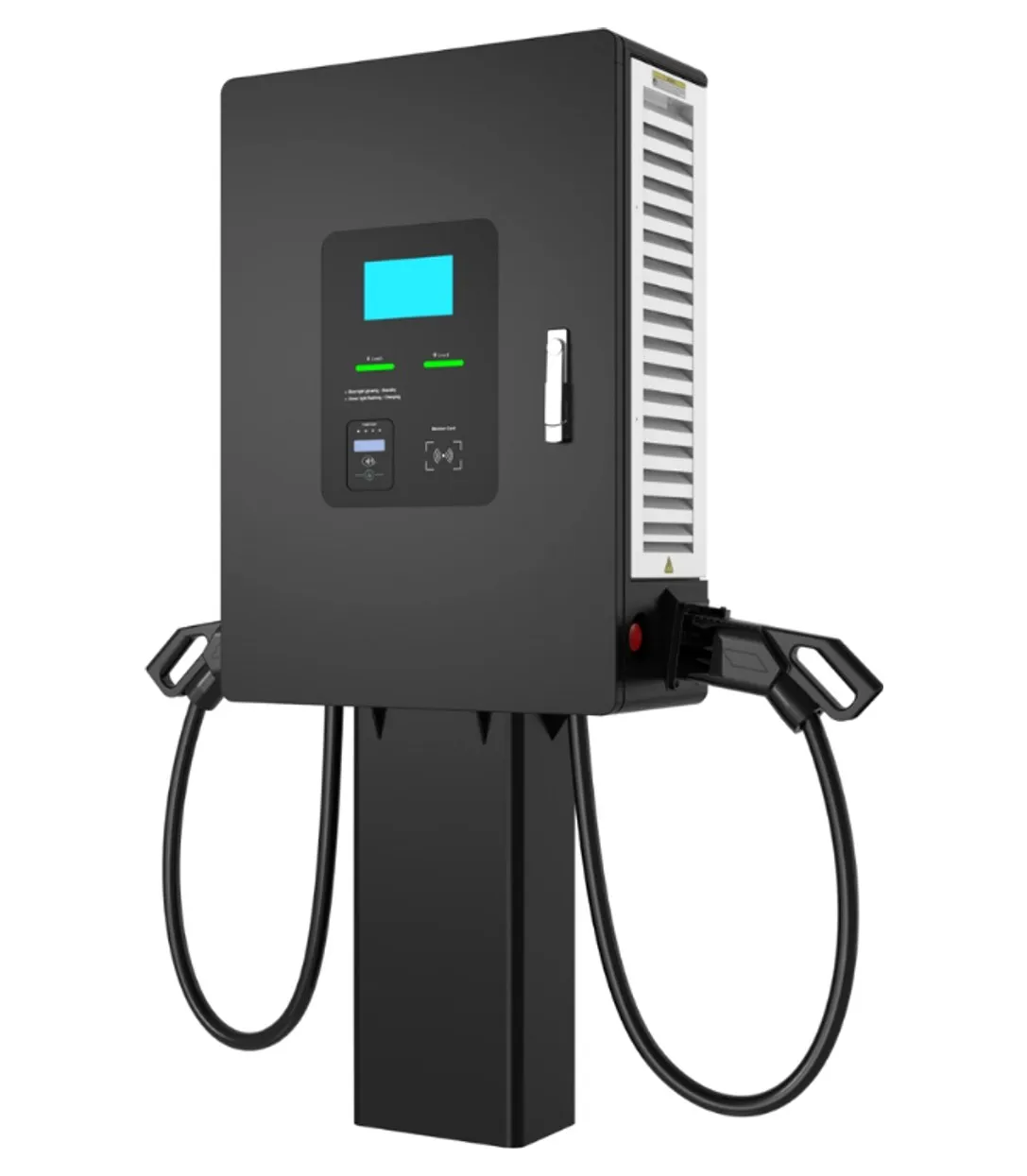
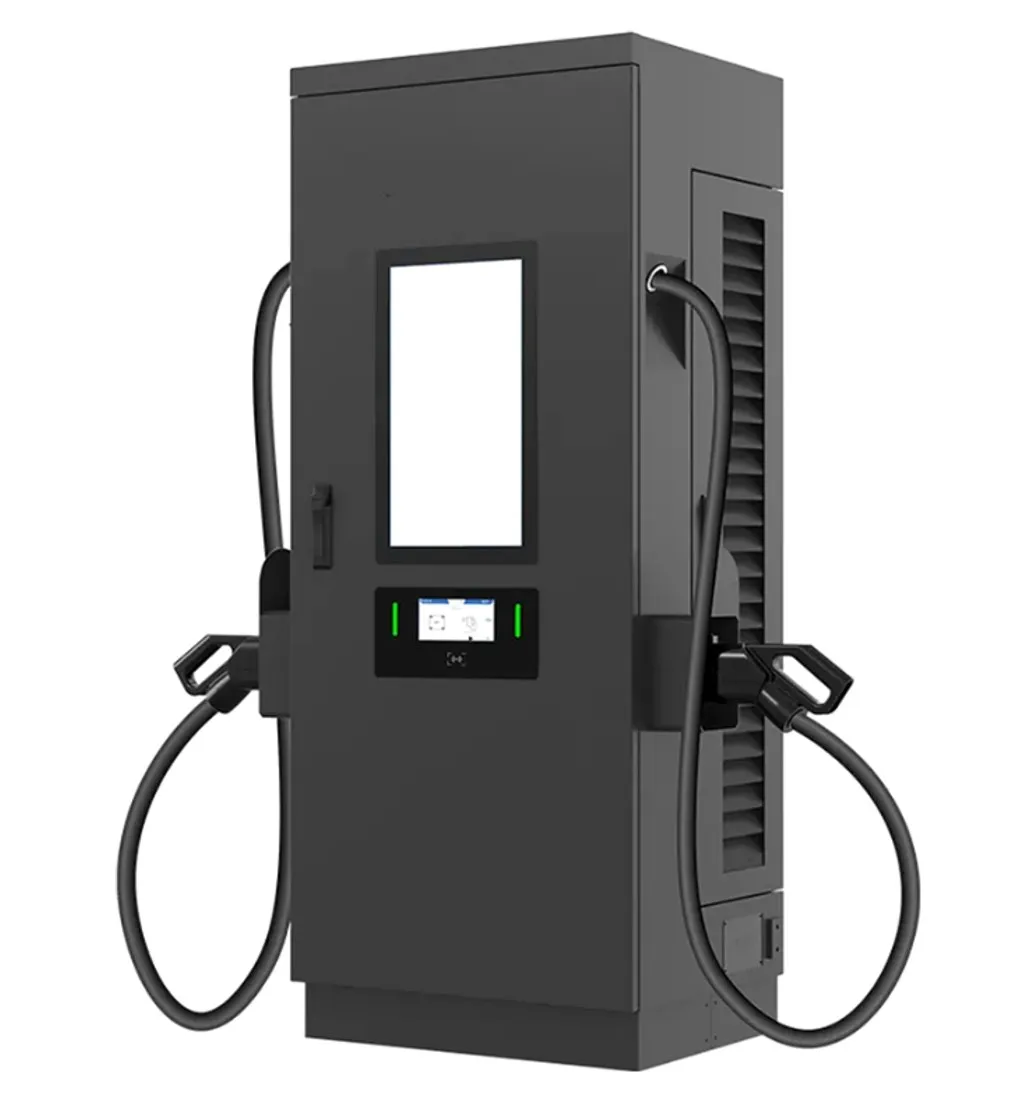
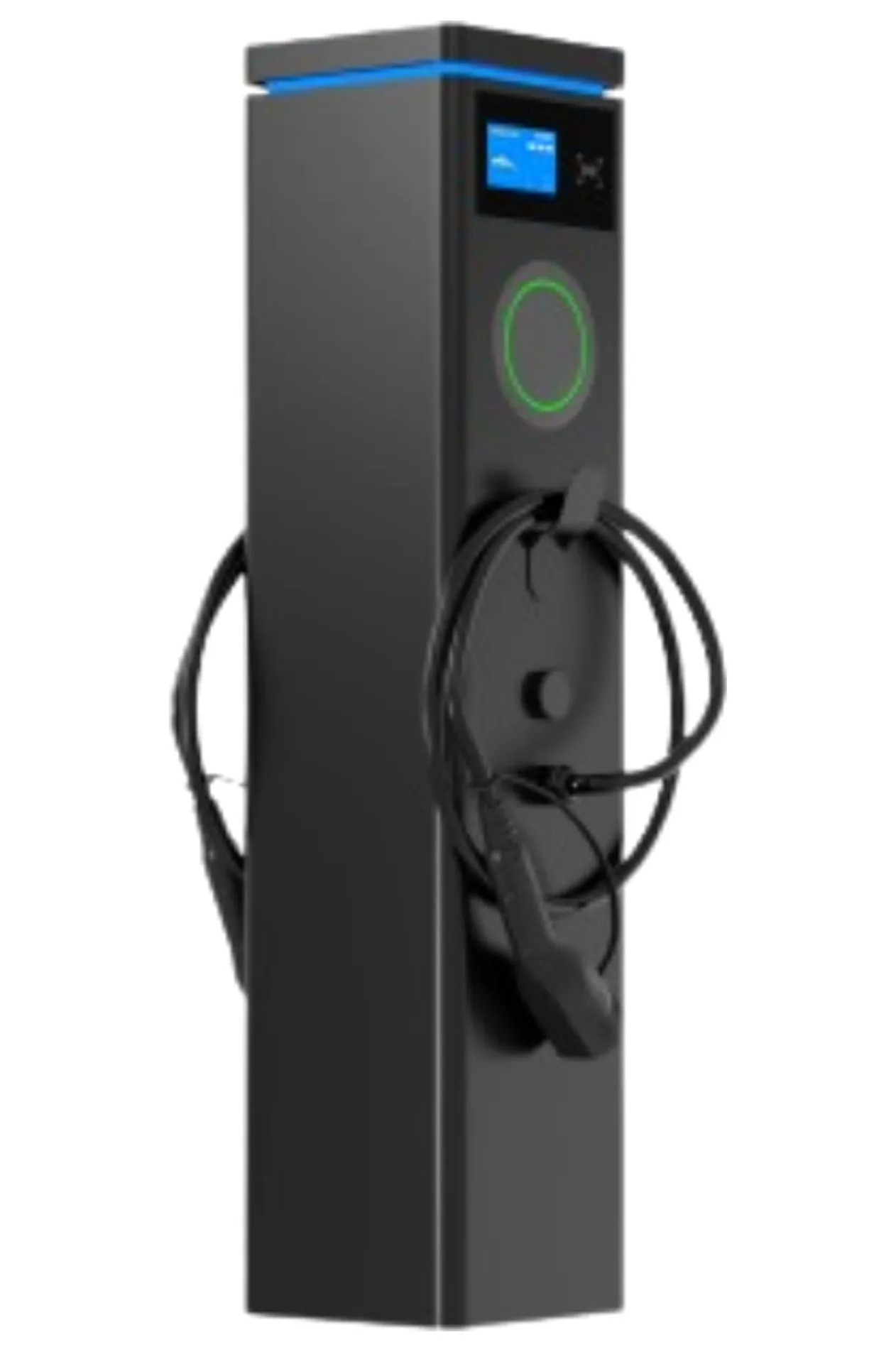
Where VULTAE fits. Our IEC series run on 230/400 V at 50/60 Hz up to +55 °C: VT-HW wallboxes for homes, VT-CW and VT-CP dual-port AC chargers for hotels, malls and offices, VT-DW DC wallboxes (20–60 kW) for fleet depots, VT-DFC and VT-DF dual-connector DC chargers (with CCS2 + CHAdeMO options) for toll roads, and the VT-DM mobile DC charger — OCPP 1.6J / 2.0.1, IP54–IP55 and a C4 anti-corrosion option. SNI certification and SLO are handled in Indonesia by the importer and the operator; we provide the IEC test reports and technical documents they need.
Checklist before you order
- Independent IUPTLU or PLN partnership — who holds the supply licence?
- Connectors per Permen ESDM 1/2023: Type 2, CCS2 and, where needed, CHAdeMO.
- SNI certification route for the exact model, agreed with the importer.
- PLN supply capacity at the site; transformer for DC.
- SLO inspection and certified technicians on the installer’s team.
- Humidity, flood and corrosion protection for the site.
- OCPP 1.6J or 2.0.1 and remote monitoring; spare parts stocked on the island — see our spare-parts list.
Questions buyers ask
- What is an SPKLU?
- SPKLU (Stasiun Pengisian Kendaraan Listrik Umum) is the Indonesian term for a public EV charging station. SPKLU are regulated by the Ministry of Energy and Mineral Resources under Regulation No. 1 of 2023 on charging infrastructure for battery electric vehicles.
- Which connectors are required in Indonesia?
- Permen ESDM 1/2023 lists Type 2 for AC charging and CHAdeMO and CCS2 (Combo 2) for DC charging. Most new cars sold in Indonesia use Type 2 and CCS2; some imported models use other standards, so check your users’ vehicles.
- Do I need a licence to operate EV chargers in Indonesia?
- Public charging is an electricity-supply business. You can apply for your own electricity-supply business licence (IUPTLU) through the OSS system, or partner with PLN, which holds the licence while you provide land and/or charging equipment. Each installation also needs an SLO certificate of operational worthiness.
- Can a foreign company own EV charging stations in Indonesia?
- The business classification for operating EV charging facilities (KBLI 35133) is open to 100 % foreign ownership. Confirm current investment rules with the Investment Ministry / BKPM before structuring the company.
- How many public charging stations does Indonesia have?
- PLN data reported in June 2024 showed 1,575 SPKLU, alongside 1,882 battery-swap stations (SPBKLU) mainly for two-wheelers. The government has planned 31,859 SPKLU by 2030, so the network is expected to grow many times over.
References
- [1]Permen ESDM No. 1 of 2023 — provision of charging infrastructure for battery electric vehicles. JDIH Kemenko Infrastruktur.
- [2]Scheme for providing EV charging infrastructure. Directorate General of Electricity.
- [3]How to open an electric vehicle charging station in Indonesia. Emerhub.
- [4]PLN partnership to open an EV charging station in Indonesia. Emerhub.
- [5]Number of SPKLU soars, users still limited. Listrik Indonesia.
- [6]Towards 2030: government prepares 31,859 SPKLU. SIP Law Firm.
- [7]PLN Pusertif becomes the first body to grant SNI certification to SPKLU. Listrik Indonesia.
- [8]Government sets tariffs and service fees for charging at SPKLU. Listrik Indonesia.