Country guide · Philippines
EV Chargers in the Philippines: PS Mark, DOE Accreditation, 60 Hz Supply and Typhoon-Ready Sites
Supplying EV chargers to the Philippines: DTI PS mark and ICC, DOE accreditation under EVIDA, 230 V at 60 Hz, CCS2 and Type 2, typhoon-proof installs.
- Prepared by
- VULTAE Engineering Team
- Published
- Reading time
- 5 min
- Sources
- 7 references
At a glance
- Grid supply
- 230 V, 60 Hz (three-phase varies by site)
- Charging standard
- Type 2 (AC) · CCS2 (DC)
- Product certification
- DTI PS mark + ICC sticker (DAO 22-10)
- Charging providers
- DOE accreditation (DC2023-05-0011)
- Law
- EVIDA — Republic Act 11697 (2022)
- Public network
- A little above 1,000 (mid-2026)
- Main utility (Metro Manila)
- Meralco
- Climate
- Typhoons, heavy rain, salt air
Key takeaways
- 1EV charging equipment is a mandatory-certification product in the Philippines: under DTI Department Administrative Order 22-10 (2022), AC chargers up to 1,000 V and DC chargers up to 1,500 V need the PS mark or an ICC sticker, based on product testing and a factory audit.
- 2Companies that provide charging to the public must be accredited by the Department of Energy, and each station registered, under Department Circular DC2023-05-0011, issued under the EVIDA law (Republic Act 11697).
- 3The Philippines is on 60 Hz, unlike its neighbours, and three-phase supplies differ between buildings — confirm the line voltage and frequency before choosing a DC charger.
- 4With a little over 1,000 public chargers nationwide in mid-2026, the network is small; the opening is in condominiums, malls, fuel stations and fleets, built to survive typhoons and salt air.
Contents
Short answer: chargers sold in the Philippines need the DTI PS mark or an ICC sticker under DAO 22-10, based on testing to the PNS IEC 61851 and 62196 standards and a factory audit. Companies that charge the public must be accredited by the Department of Energy and register their stations. The supply is 230 V at 60 Hz, with three-phase voltages that vary by site, and the charging standard is Type 2 for AC and CCS2 for DC. Build every outdoor site for typhoons, heavy rain and salt air.
For distributors, contractors, developers and charge point operators supplying the Philippines. It summarises public information as of October 2026 — confirm current requirements with the DTI Bureau of Philippine Standards, the Department of Energy and your utility.
Three agencies, three questions
| Question | Agency | What applies |
|---|---|---|
| Is this charger model allowed on the market? | DTI — Bureau of Philippine Standards | PS mark (licensing scheme for local and foreign manufacturers) or ICC sticker per import batch, under DAO 22-10 |
| Who may sell charging to the public? | Department of Energy | Accreditation of EV charging station providers and registration of each station, DC2023-05-0011 |
| Can the building take the load? | Distribution utility (Meralco in Metro Manila, electric cooperatives and other utilities elsewhere) | Service application, metering, transformer if needed |
DAO 22-10 covers AC charging equipment up to 1,000 V, DC charging equipment up to 1,500 V and the AC and DC vehicle connectors. Testing references the Philippine National Standards adopted from IEC: PNS IEC 61851-1 (general requirements), PNS IEC 61851-23 (DC charging stations) and the PNS IEC 62196 series (plugs, sockets and connectors). A charger tested to the IEC versions is the right starting point; the importer then handles the PS licence or ICC application.
A small network with clear rules
| Indicator | Detail | Source |
|---|---|---|
| Public charging network | A little above 1,000 nationwide, mid-2026 | Power Philippines |
| Legal basis | EVIDA, Republic Act 11697 (2022) | — |
| Fuel stations | Required to provide EV charging under EVIDA | DOE |
| Buildings | DOE moving to require 5 % of parking for EV charging in buildings with 20 or more spaces | Parking Network |
| Renewable charging | DOE target: 100 % renewable-powered charging by 2040 | Power Philippines |
With a small public network and rules that push charging into buildings and fuel stations, most demand comes from property developers, mall operators, fuel retailers and fleet owners — e-jeepney, e-trike, taxi and delivery fleets included.
Power supply: 60 Hz and site-specific three-phase
The Philippines is the only country in Southeast Asia on 60 Hz. Single-phase supply is 230 V. Three-phase services differ between utilities and buildings, so do not assume a 400 V system:
| Check | Why it matters |
|---|---|
| Frequency | Charger rated for 60 Hz (or 50/60 Hz) |
| Single-phase: line-to-neutral or line-to-line? | Affects the protection and earthing scheme of a wallbox — tell the supplier which one the site has |
| Three-phase line voltage | DC chargers need an input range that covers the site voltage; otherwise a transformer is required |
| Spare capacity | Condo risers and older malls are often near their limits — plan load management |
Typhoons, rain and salt
| Risk | What to specify |
|---|---|
| Typhoon winds and debris | Floor-standing units anchored to a reinforced plinth per the installer’s design; canopies designed for local wind loads; cable holsters that lock the plug |
| Driving rain and flooding | IP55 for exposed posts; DC cabinets on raised plinths above local flood level; cable entries from below sealed |
| Salt air on coasts and islands | C4–C5 corrosion-resistant finish, stainless fixings |
| Thunderstorms | Surge protection at the board and in the charger; good earthing |
| Humid basements | Ventilation and anti-condensation heating for DC units |
Recommended configurations
| Site | Typical choice |
|---|---|
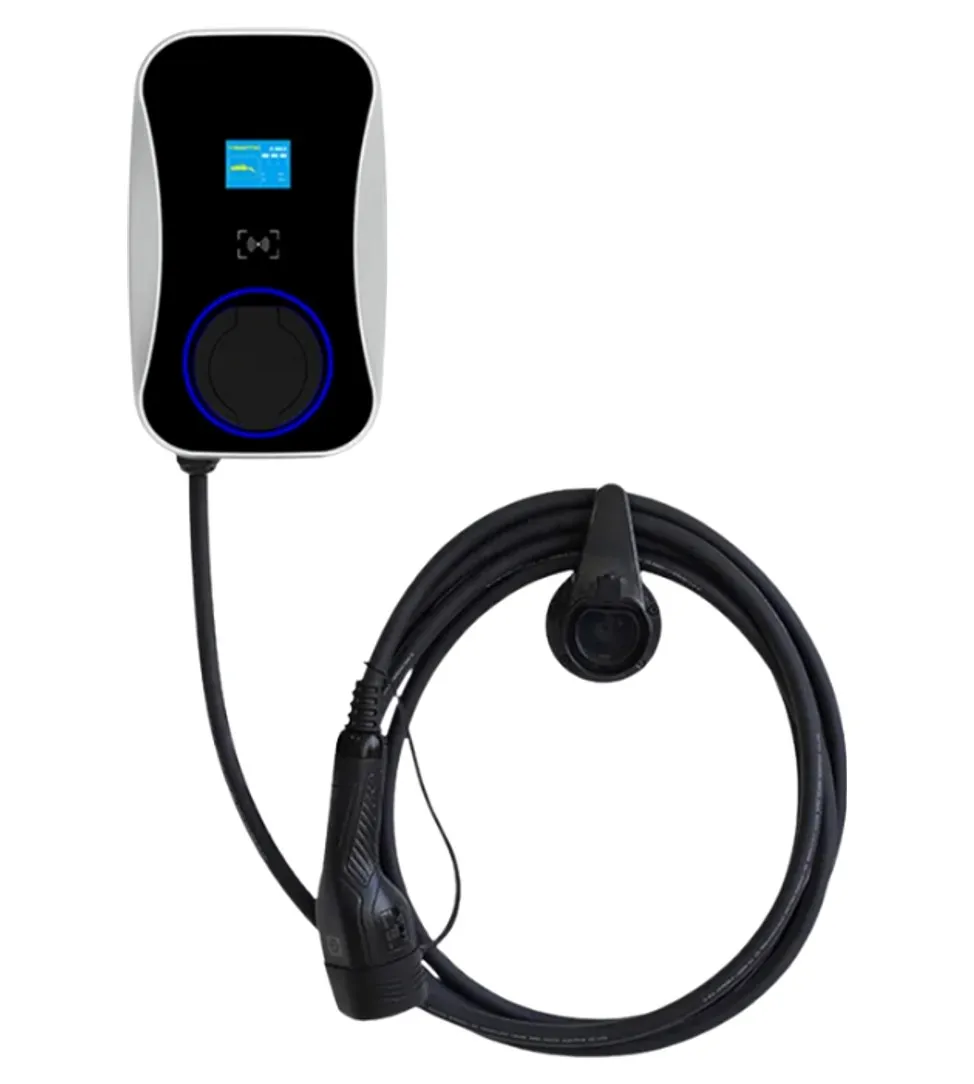
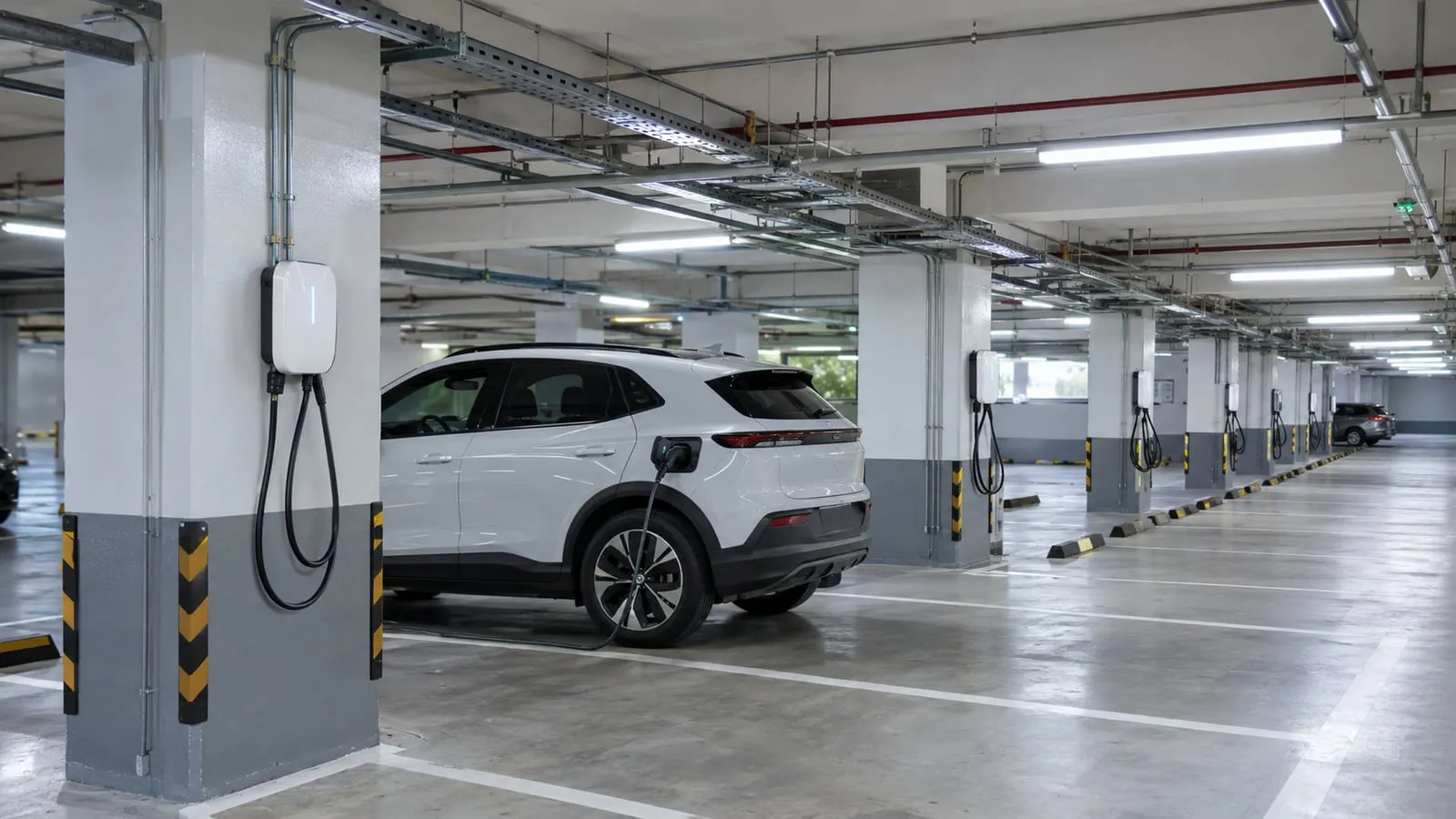
| Condominiums | 7 kW wall units in assigned bays, or dual-port AC with RFID and per-user billing; load management on the building supply |
| Houses and subdivisions | 7 kW single-phase wallbox, Type 2 |
| Malls | AC posts for long visits plus 30–60 kW DC near entrances |
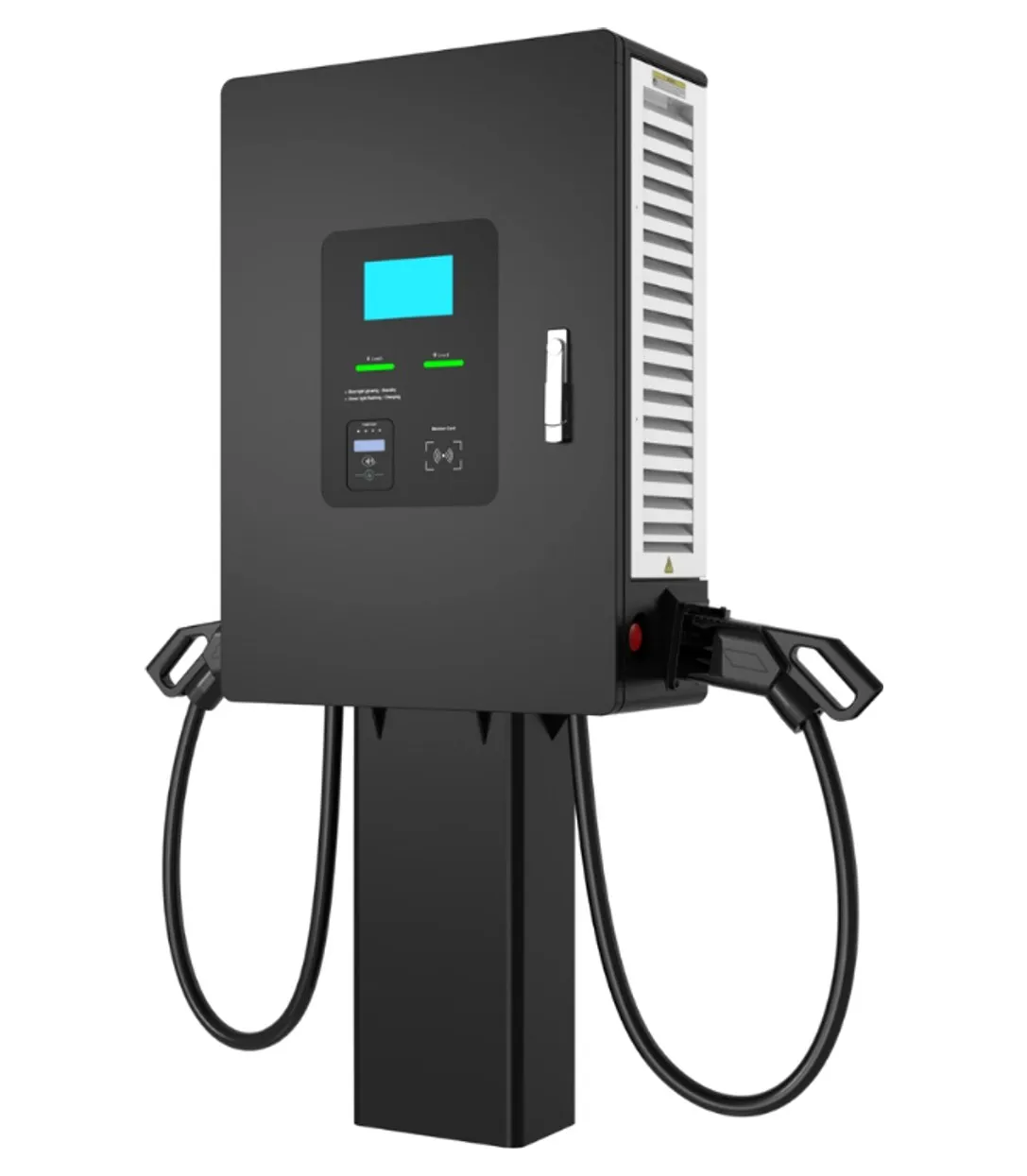
| Fuel stations | 60–120 kW dual-connector DC, compact cabinet where space is tight |
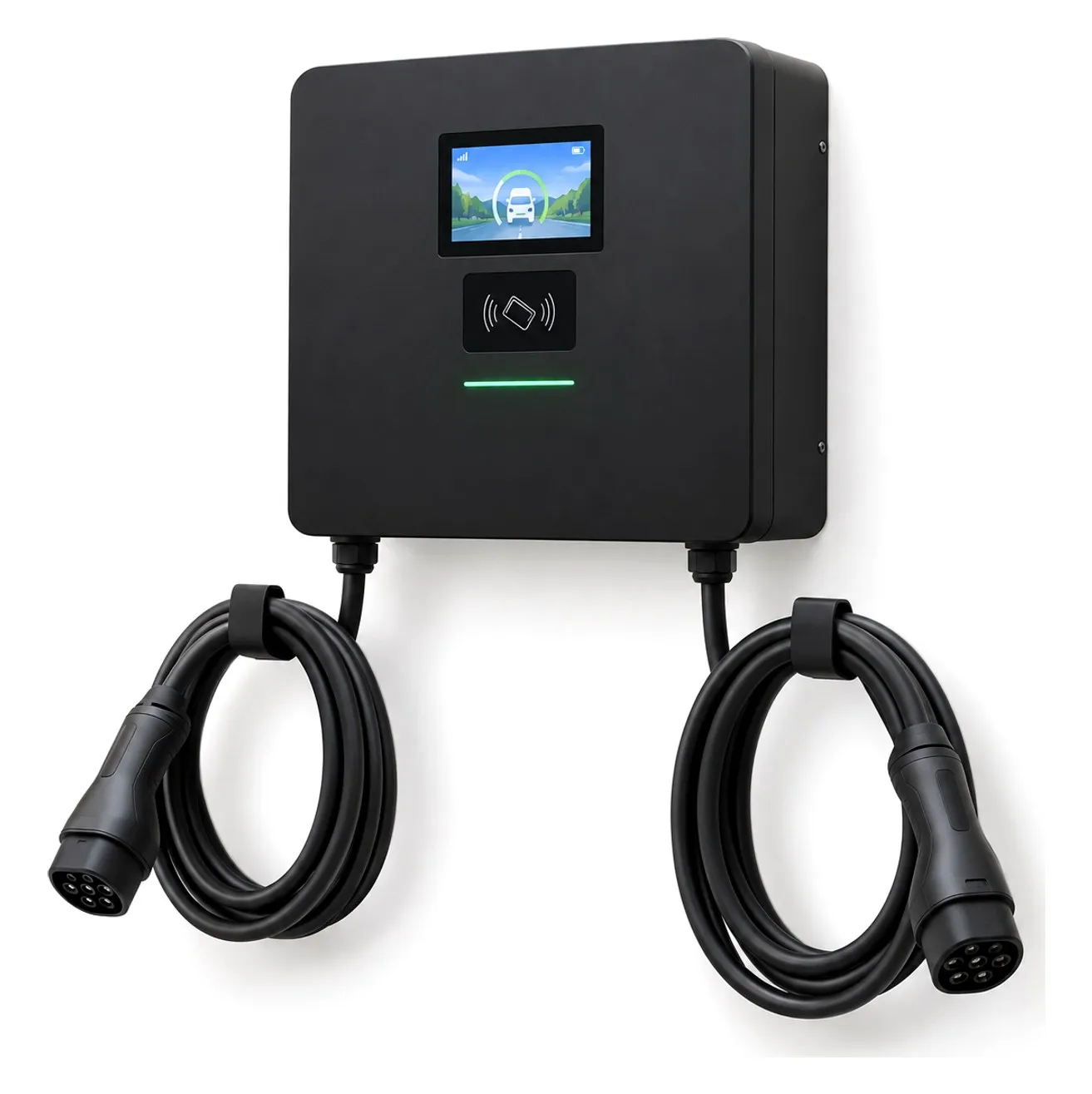
| Fleets (e-jeepneys, taxis, delivery) | 30–60 kW DC wallboxes or 120 kW dual DC at depots; check the vehicle’s connector and voltage range |
| Islands and resorts | Dual-port AC for guests; a mobile DC charger for roadside or event support |
Where VULTAE fits. Our IEC series run on 50/60 Hz and operate up to +55 °C: VT-HW and VT-CW wallboxes for condos and homes, VT-CP dual-port posts for malls, VT-DW DC wallboxes (20–60 kW) for fleets and car parks, VT-DFC and VT-DF DC chargers for fuel stations, and the VT-DM mobile DC charger for sites without fixed infrastructure — Type 2 and CCS2, OCPP 1.6J / 2.0.1, IP54–IP55 and a C4 anti-corrosion option. The PS licence or ICC sticker is applied for by the importer for a specific model; we provide the IEC test reports, the technical file and support for the factory audit.
Checklist before you order
- PS mark or ICC route for the exact model — who is the importer of record?
- DOE accreditation of the charging provider and registration of the station, if the public will charge.
- Site supply: 60 Hz, single-phase type, three-phase line voltage, spare capacity.
- Type 2 and CCS2 connectors.
- Typhoon and flood design: anchoring, raised plinths, IP55, corrosion class.
- OCPP 1.6J or 2.0.1 and per-user billing for multi-tenant buildings — see billing in multi-tenant buildings.
- Local stock of spare parts on each island group you serve — see our spare-parts list.
Questions buyers ask
- Do EV chargers need a PS mark in the Philippines?
- Yes. DTI Department Administrative Order No. 22-10, published in July 2022, made EV charging equipment and stations subject to mandatory product certification. Chargers must carry the PS mark (for products certified through the PS licensing scheme, available to local and foreign manufacturers) or an ICC sticker for imported batches, based on product testing to the Philippine National Standards (PNS IEC 61851 and PNS IEC 62196 series) and a factory audit.
- Who needs DOE accreditation?
- Under the EVIDA law and DOE Department Circular DC2023-05-0011, companies that provide EV charging services must be accredited by the Department of Energy, and their charging stations registered. Private chargers for the owner’s own vehicles are not the focus of the rules; anything offered to the public or for a fee is. Check the current DOE requirements before opening a site.
- What voltage do EV chargers need in the Philippines?
- Single-phase supply is 230 V at 60 Hz. Three-phase supply differs between utilities and buildings, so confirm the line-to-line voltage and whether a neutral is available before ordering. Every charger must be rated for 60 Hz operation.
- Which connector should I choose for the Philippines?
- Type 2 for AC and CCS2 (Combo 2) for DC. The Philippines has adopted these as its charging standard, in line with the PNS IEC 62196 standards used for certification.
- Do buildings in the Philippines have to provide EV charging?
- EVIDA requires designated EV parking with charging in many buildings and establishments, and fuel stations must provide charging. The DOE has moved to require buildings with at least 20 parking spaces to set aside 5 % of them for EV charging; check the current circular for your building type.
References
- [1]Department Administrative Order No. 22-10 — technical regulation on EV charging equipment and stations. Department of Trade and Industry.
- [2]Philippines: new technical regulation concerning EV charging equipment and station. TÜV SÜD.
- [3]Draft department circular on EV charging stations. Department of Energy.
- [4]DC2023-05-0011 — accreditation of EVCS providers and registration of EV charging stations. UP Law Center — Office of the National Administrative Register.
- [5]Philippines moves to expand EV charging through parking requirements. Parking Network.
- [6]DOE targets full renewable energy for EV charging by 2040. Power Philippines.
- [7]Department of Energy clamps down on non-accredited charging providers. CarGuide.PH.