Fleet & Heavy Vehicles
How Many Chargers Does a Fleet Depot Need? A Sizing Method
A step-by-step method to size fleet depot charging: daily energy per vehicle, charging window, power, number of chargers and grid capacity.
- Prepared by
- VULTAE Engineering Team
- Published
- Reading time
- 3 min
- Sources
- 2 references
Key takeaways
- 1Size depot charging from energy and time, not from vehicle count: daily kWh per vehicle ÷ hours available to charge = the minimum power each vehicle needs.
- 2Overnight depots usually need modest power per vehicle — often 7–22 kW AC or 20–40 kW DC is enough — while shift operations with short breaks need high-power DC.
- 3Add a margin for cold weather, battery ageing and unplanned trips, then check the total against the site’s grid capacity. Load management usually lets the depot run on far less than the sum of all chargers.
- 4Plan the layout for parking order, cable reach and future vehicles; adding ducts and capacity later costs much more than doing it now.
Contents
Short answer: size a depot from energy and time. For each vehicle: daily kWh ÷ hours it can charge = minimum power. Add 20–30 % margin, choose AC or DC accordingly, decide whether vehicles get one point each or share chargers in sequence, then check the total against grid capacity — with load management, the depot rarely needs the sum of all chargers’ power.
Step 1: daily energy per vehicle
Daily energy (kWh) = daily distance (km) × consumption (kWh/km)
| Vehicle type | Typical consumption* | 150 km day | 300 km day |
|---|---|---|---|
| Electric car / taxi | 0.15–0.20 kWh/km | 23–30 kWh | 45–60 kWh |
| Electric van (3.5 t) | 0.22–0.30 kWh/km | 33–45 kWh | 66–90 kWh |
| Medium truck | 0.6–0.9 kWh/km | 90–135 kWh | 180–270 kWh |
| City bus | 1.0–1.4 kWh/km | 150–210 kWh | 300–420 kWh |
*Indicative ranges; use your vehicles’ data. Cold weather, heating or cooling, loads and hills increase consumption.
Step 2: the charging window
How long is each vehicle parked at the depot with a charger available? Overnight depots often have 8–12 hours; shift operations may have 30–90 minutes between shifts.
Step 3: power per vehicle
Minimum power (kW) = daily energy × (1 + margin) ÷ charging window (h)
| Example | Energy + 25 % | Window | Minimum power | Charger |
|---|---|---|---|---|
| Delivery van, 200 km | ≈ 63 kWh | 10 h | ≈ 6.3 kW | 7–11 kW AC |
| Taxi, 300 km, overnight | ≈ 70 kWh | 8 h | ≈ 9 kW | 11 kW AC or 20 kW DC |
| Taxi, 300 km, 1 h break | ≈ 70 kWh | 1 h | ≈ 70 kW | 60–120 kW DC |
| Medium truck, 250 km | ≈ 250 kWh | 10 h | ≈ 25 kW | 30–40 kW DC |
| City bus, 250 km | ≈ 375 kWh | 6 h | ≈ 63 kW | 60–120 kW DC |
Remember the vehicle’s own limits: many vans accept only 11 kW AC, and DC power falls as the battery fills — see the DC charging curve.
Step 4: one point per vehicle, or shared?
| Approach | How | Fits |
|---|---|---|
| One point per vehicle | Every bay has a charger; vehicles plug in on arrival | Overnight depots; simplest operations |
| Shared in sequence | Fewer, higher-power chargers; vehicles moved or cables reach two bays | Space or budget limits; DC sites |
| Dual-connector units | One DC cabinet serves two bays, sharing power | Most DC depots |
With dual-port AC or dual-connector DC units, one device serves two vehicles — halving foundations and cable runs.
Step 5: check the grid and add load management
Sum of all chargers at full power is the worst case, not the design case. Load management spreads charging over the window:
Required site power ≈ total daily energy ÷ charging window, plus building load and a margin.
Example: 40 vans × 63 kWh = 2,520 kWh over 10 hours → about 250 kW on average, even if 40 × 11 kW = 440 kW of chargers are installed. Smart scheduling by departure time and state of charge keeps the peak near the average — see dynamic load management and demand charges.
Step 6: layout and growth
- Parking order: vehicles that leave first should not be blocked in.
- Cable reach: 5–7 m cables, inlets on different sides of different models.
- Protection: bollards, wheel stops, overhead cable management for large vehicles.
- Spare capacity: one extra point per group for outages.
- Ducts and capacity for the next phase of the fleet.
Recommended VULTAE configuration
| Depot | Model |
|---|---|
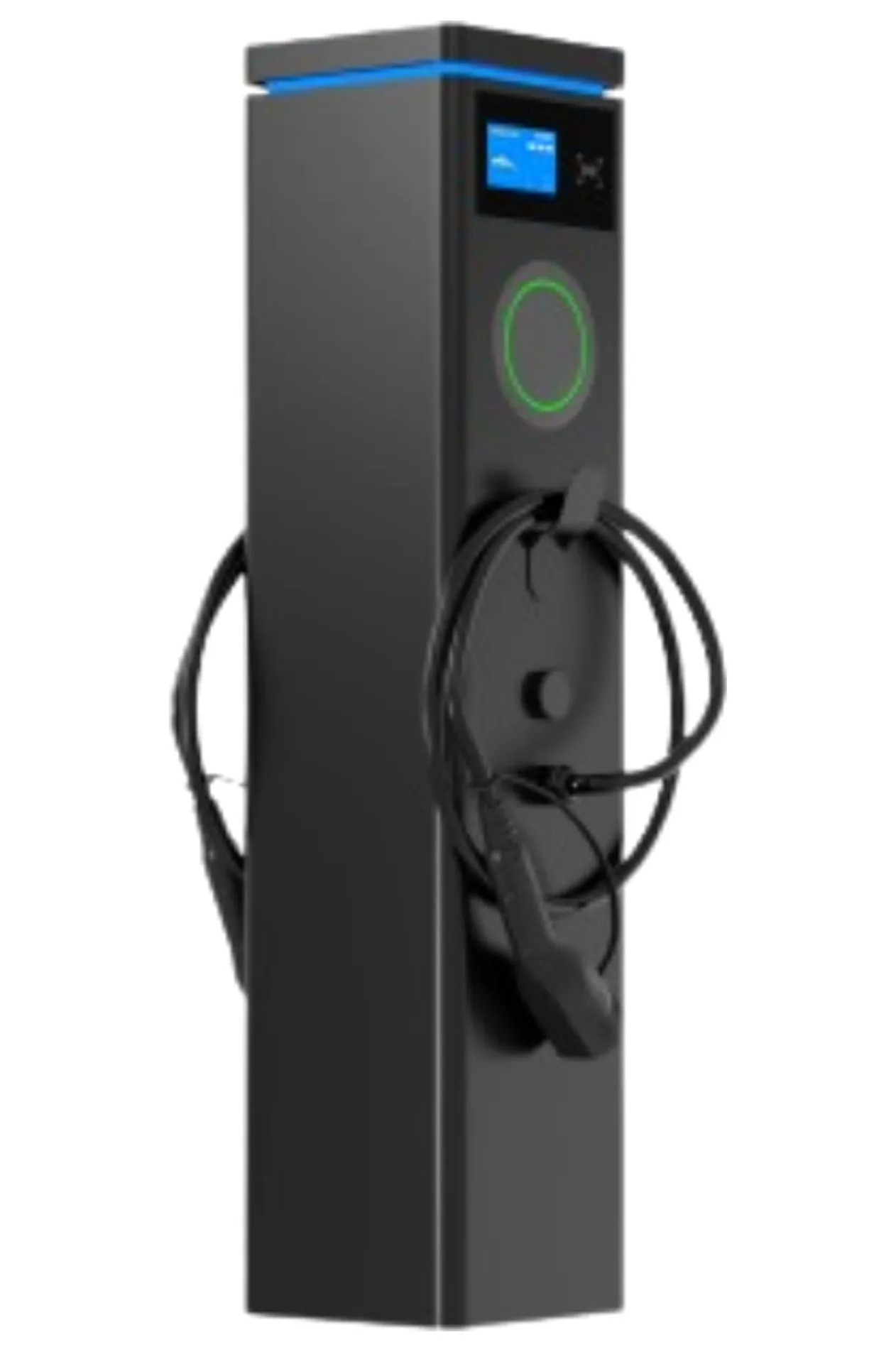
| Vans and cars overnight | VT-CP dual-port pedestal or VT-CW dual-port wall charger, 2 × 7–22 kW |
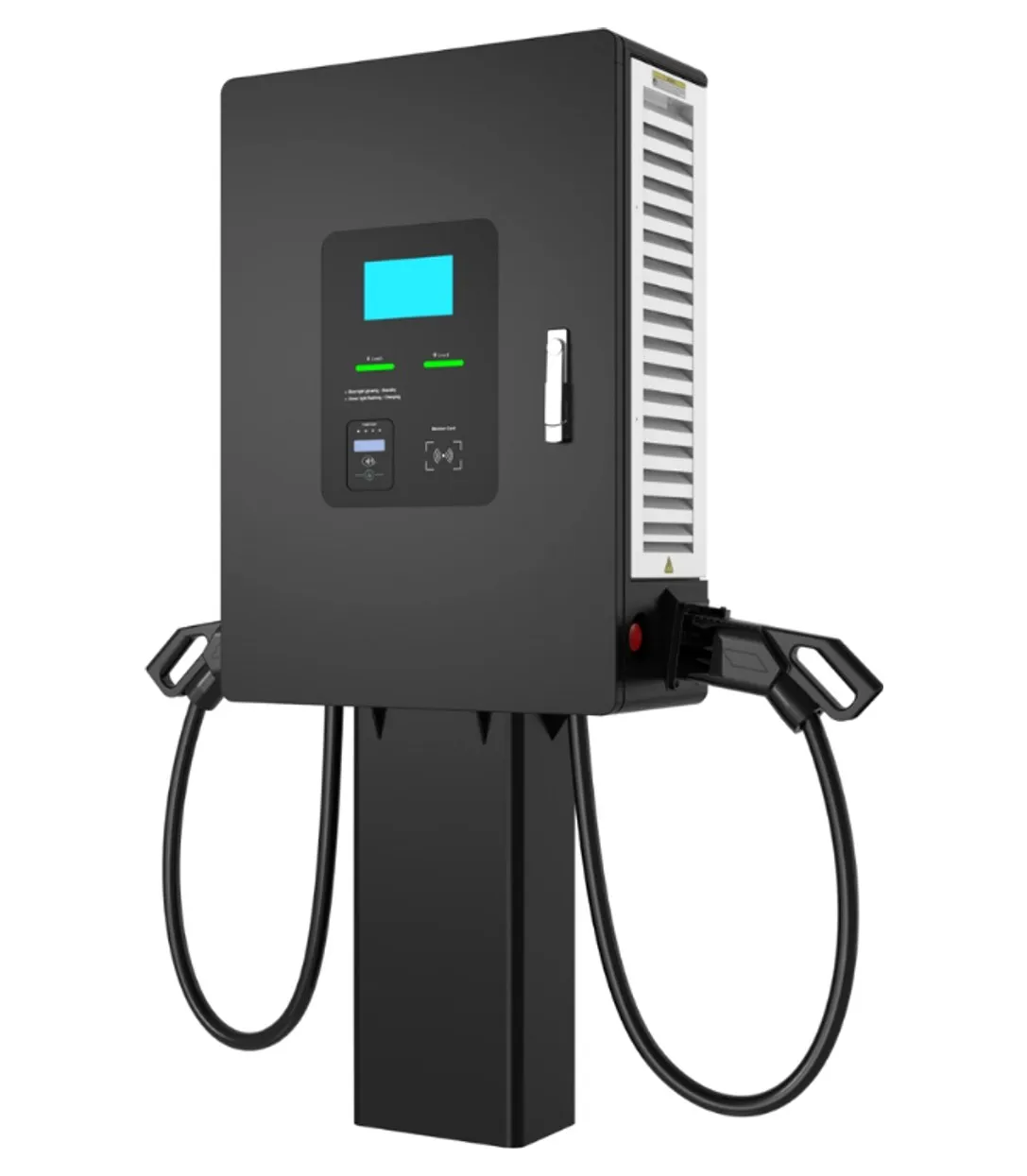
| Mixed fleets, overnight DC | VT-DW DC wallbox, 20–60 kW, single or dual connector |
| Taxis, ride-hailing, short breaks | VT-DF dual-connector DC, 60–180 kW |
| Trucks and buses | VT-DF 160–300 kW (IEC) or up to 360 kW (North America) — see 360 kW |
| Temporary or overflow | VT-DM mobile DC charger |
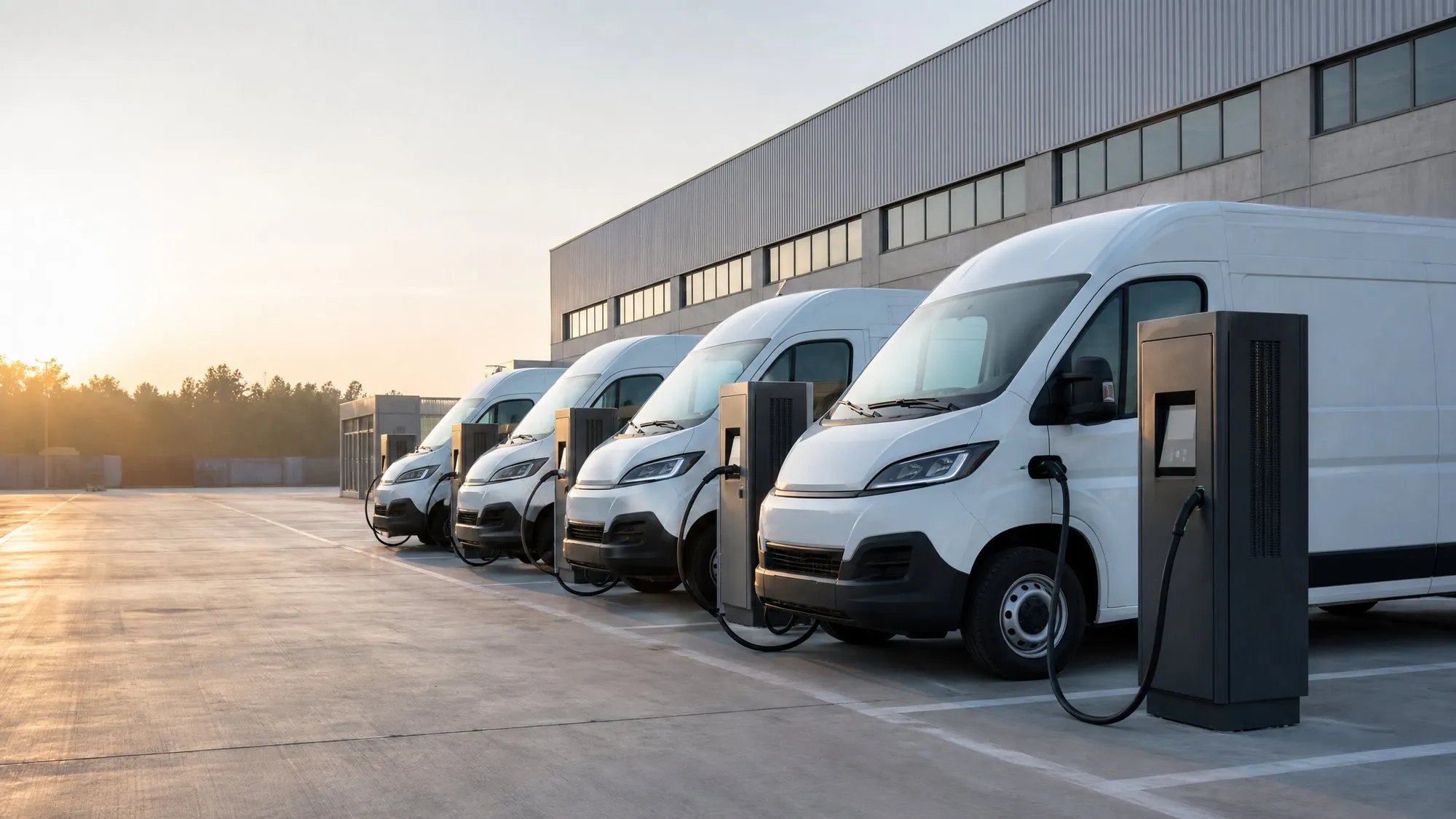
Send us your vehicle list, daily distances and parking windows, and we will calculate the number of chargers and the site power — see also fleet depots.
Questions buyers ask
- How many chargers does a fleet depot need?
- It depends on daily energy per vehicle and the charging window. If every vehicle can charge overnight, one charging point per vehicle at modest power is common; if vehicles share chargers in sequence, fewer, higher-power chargers can serve them. Use the energy-and-time method in this guide to calculate it.
- Should a fleet depot use AC or DC chargers?
- AC for vans and cars that stay 8–12 hours and need under about 100 kWh; DC when the window is short, batteries are large (trucks, buses) or vehicles share chargers in sequence. Many depots combine both.
- How do I avoid a huge grid upgrade for a depot?
- Use load management to spread charging across the whole night, schedule vehicles by departure time and state of charge, and size the connection for the realistic peak rather than the sum of all chargers. Batteries can help where the grid is very constrained.
- How much margin should I add to depot charging calculations?
- Commonly 20–30 % on daily energy to cover winter consumption, battery ageing and unplanned trips, plus one spare charging point per group in case a charger is out of service.
References
- [1]Alternative Fuels Data Center — charging for fleets. U.S. Department of Energy.
- [2]DCFC rate design study (including transit depot cases). RMI.