Sourcing from China
Pre-Shipment Inspection for EV Charger Orders: Who, What and When
How to plan a pre-shipment inspection for EV chargers: when to inspect, which checks to run, sample sizes, who pays and what to do with a failed lot.
- Prepared by
- VULTAE Engineering Team
- Published
- Reading time
- 2 min
- Sources
- —
Key takeaways
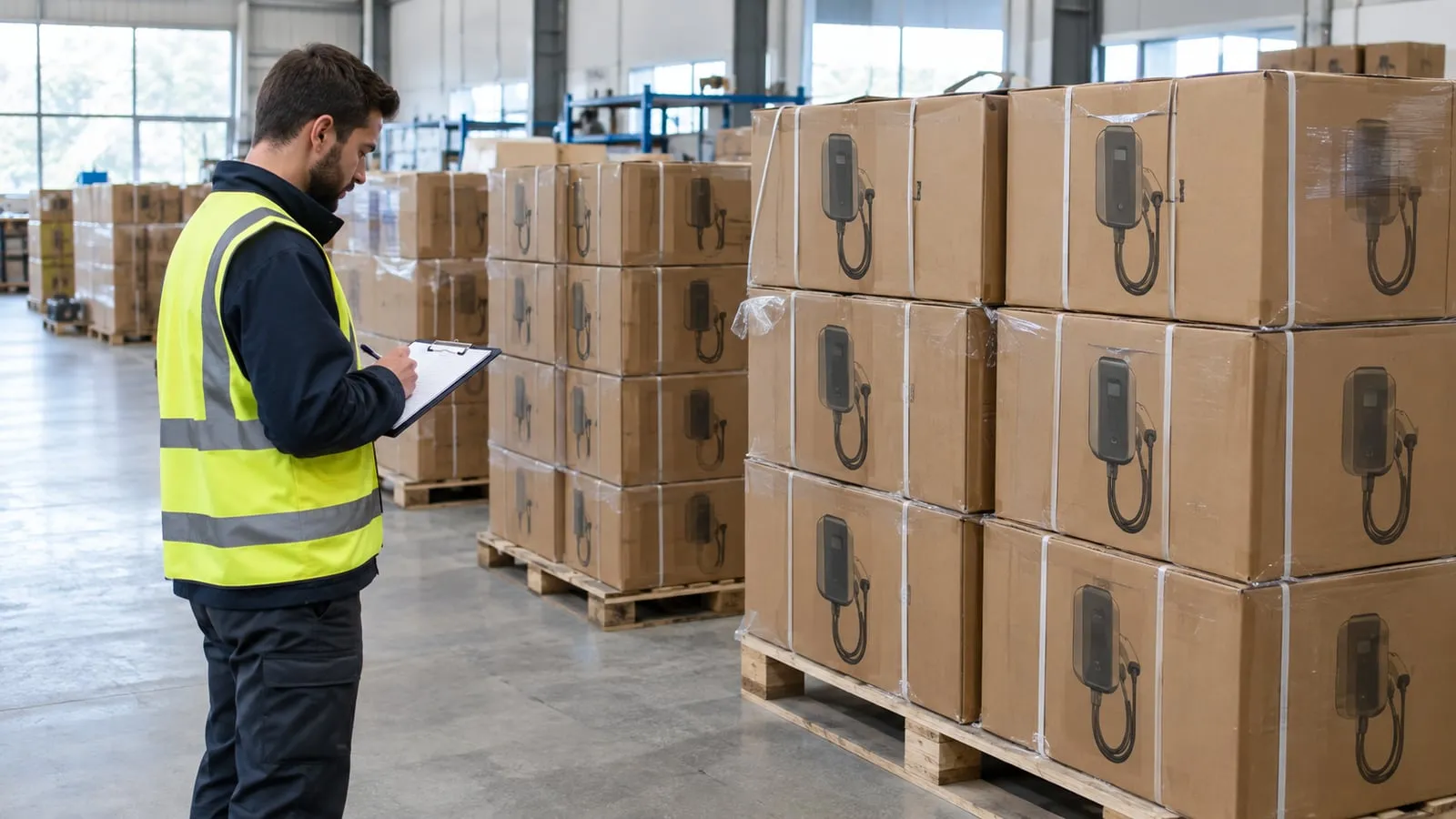
- 1A pre-shipment inspection (PSI) checks the finished, packed order before the balance payment and shipment. It catches wrong labels, missing accessories, packing damage and units that fail a basic power-on test.
- 2Agree the checklist, the sample size and the pass or fail rule in the purchase order, not at the factory gate. Decide who inspects: your own staff, an independent inspection company or a mix.
- 3Inspection does not replace type testing or a good factory. It confirms that this particular shipment matches the approved sample.
Contents
Short answer: agree a written checklist, a sample size and a pass or fail rule before production ends, inspect when the order is packed, and release the balance payment only after the report is accepted.
What a PSI covers
| Area | Typical checks |
|---|---|
| Quantity and models | Counts by model and version match the purchase order |
| Appearance | Scratches, dents, paint, gaps, cable and connector condition |
| Labels and marking | Nameplate, serial number, language, certification marks match the approved sample |
| Accessories | Cable, mounting plate, screws, manual, RFID cards, test report |
| Function | Power-on, display or LED, contactor click, RCD test, load test on a sample |
| Packaging | Carton marking, strength, cushioning, pallet and container plan |
| Drop test | Carton drop on the sample, if specified; see export packaging and drop tests |
Choosing the inspector
| Option | Strength | Weakness |
|---|---|---|
| Your own staff | Knows the product | Travel cost and time |
| Independent inspection company | Neutral, many cities | Needs a very specific checklist |
| Engineer or distributor in the country | Technical depth | Availability |
| Video inspection | Fast and cheap for small lots | Limited test depth |
For video checks and factory audits see verifying a charger factory.
Sampling and the pass rule
Use an agreed plan, often AQL (acceptable quality limit), with separate limits for critical, major and minor defects. A critical defect is one that could cause harm, such as a missing earth connection. Write the following into the order:
- Sampling plan and inspection level.
- Defect classes with examples.
- Pass or fail limits.
- What happens on failure: rework, 100% sorting and re-inspection.
- Who bears the cost of re-inspection.
When to inspect
| Stage | What it tells you | When |
|---|---|---|
| Before production | Materials and approved sample | After order confirmation |
| During production | Early problems | About 20–50% complete |
| Pre-shipment | Finished goods | At least 80% packed |
| Container loading | Loading and sealing | On the loading day |
For larger orders, in-line checks and a pre-shipment inspection together cost less than a rejected container. See shipping EV chargers from China for the loading plan.
After the report
- Pass: release the balance, book shipping and keep the report with the commissioning file.
- Minor defects: agree repair on the line and re-check.
- Major or critical defects: stop shipment and require rework and re-inspection.
- Keep records: photos of labels and serial numbers help later warranty claims; see EV charger warranty and claims.
Related checks
A PSI is only as good as the specification behind it. Use the test report and the sample testing list as the source of your checklist, and ask the supplier for its own factory inspection report.
VULTAE welcomes customer or third-party inspections before shipment; tell us the inspector and the checklist in advance.
Questions buyers ask
- When should the inspection take place?
- When production is complete and at least about 80% is packed, before the balance payment. Inspecting earlier finds problems while there is still time to fix them; see in-line checks.
- How many units should be inspected?
- Use a sampling plan such as AQL, agreed in advance, and always power-test a number of units. For small orders of expensive chargers many buyers test every unit.
- Who pays for the inspection?
- Usually the buyer, as part of the cost of the order. Some contracts share the cost of a re-inspection after a failed lot, with the factory paying for it.