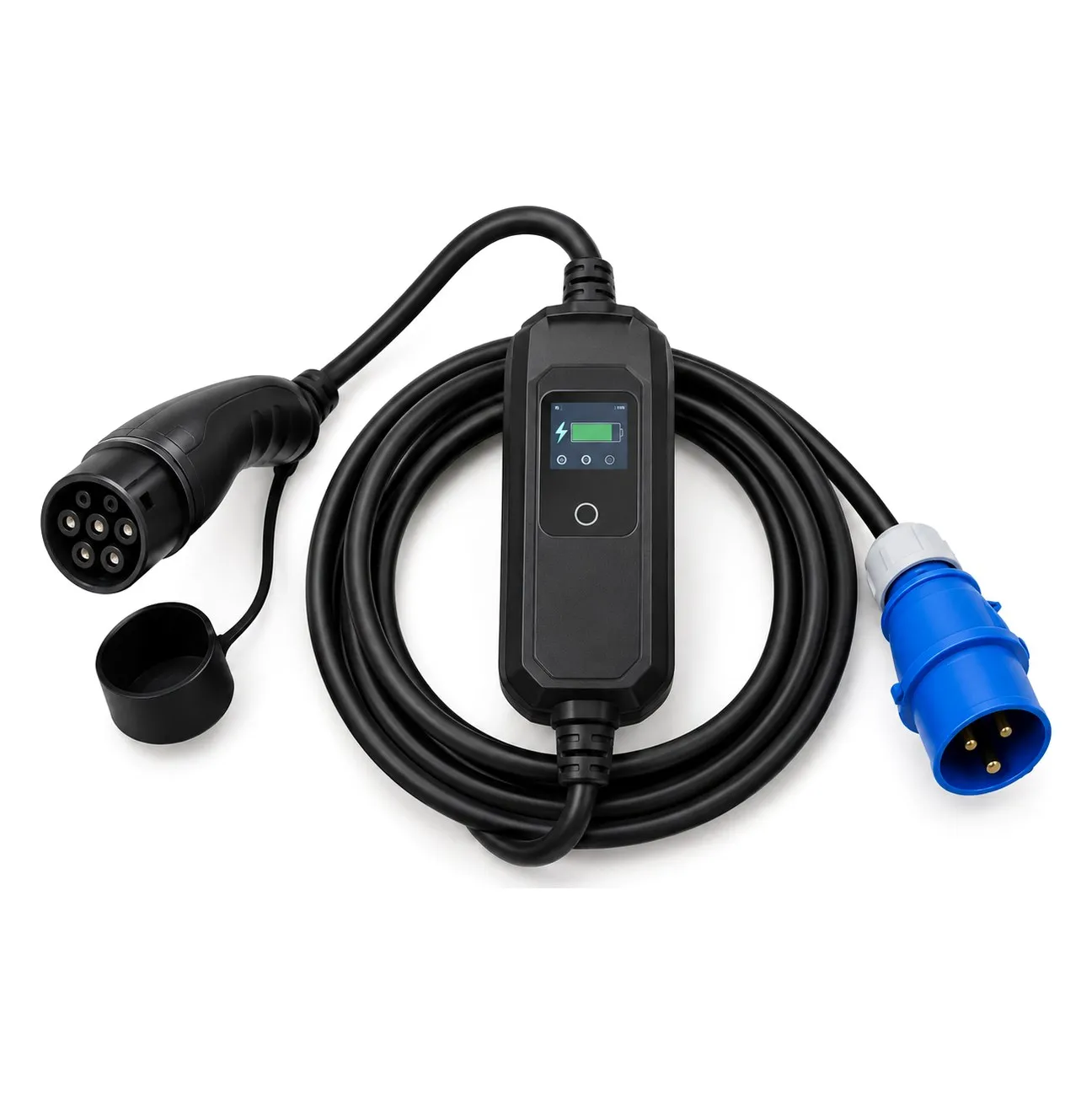
AC chargers · 7 kW
7 kW EV Charger: The Single-Phase Wallbox Explained
What a 7 kW single-phase EV charger delivers: 32 A at 230 V, range per hour, charging times, circuit and protection, and when 11 or 22 kW pays off.
- Prepared by
- VULTAE Engineering Team
- Published
- Reading time
- 4 min
- Sources
- 3 references
At a glance
- Rated power
- 7.4 kW (often called 7 kW)
- Current
- 32 A
- Supply
- 230 V single-phase, 50/60 Hz
- Connector
- Type 2 socket or tethered cable
- Range added
- ≈ 35–40 km per hour*
- Protection
- Type A 30 mA + 6 mA DC
- Back end
- OCPP 1.6J / 2.0.1
- VULTAE model
- VT-HW7S / VT-HW7C
Key takeaways
- 1A “7 kW” charger draws 32 A on a 230 V single-phase supply: 230 V × 32 A ≈ 7.4 kW. It is the standard home and workplace charger wherever homes have single-phase supplies, such as most of the UK.
- 2It adds roughly 35–40 km of range per hour for a typical car — enough to refill a daily commute in two or three hours and almost any battery overnight.
- 3It needs a dedicated circuit with residual-current protection that also detects DC faults (Type A + 6 mA DC detection or Type B) and, in the UK, PEN fault protection on PME supplies.
- 4An 11 or 22 kW charger is only faster if the home has a three-phase supply and the car’s on-board charger accepts three-phase charging.
Contents
Short answer: a 7 kW EV charger is a single-phase wallbox drawing 32 A at 230 V — about 7.4 kW. It is the default home and workplace charger wherever buildings have single-phase supplies, adds roughly 35–40 km of range per hour, and refills almost any car overnight. It needs a dedicated circuit, residual-current protection that detects DC faults and, in the UK, PEN fault protection. Higher-power wallboxes (11 or 22 kW) only charge faster with a three-phase supply and a car whose on-board charger accepts it.
Where “7 kW” comes from
AC chargers do not convert power — the car’s on-board charger does. The wallbox simply supplies AC up to a current it signals to the car. On a single-phase supply:
230 V × 32 A ≈ 7.4 kW (sold as “7 kW” or “7.4 kW”)
32 A is the usual maximum for a single-phase charging circuit, so 7.4 kW is the practical ceiling for single-phase AC charging. Many wallboxes can be set lower — 16 A (3.7 kW) where the supply is weak.
Range added per hour of charging
Charging times at 7 kW
Divide the energy needed by about 6.5 kW (7.4 kW less charging losses):
| Battery | 20 → 80 % | Empty → full |
|---|---|---|
| 40 kWh | ≈ 3.5 h | ≈ 6 h |
| 60 kWh | ≈ 5.5 h | ≈ 9 h |
| 80 kWh | ≈ 7.5 h | ≈ 12 h |
Figures are estimates; cold batteries and the car’s own charging behaviour near 100 % add time. For a typical daily distance of 40–60 km, a 7 kW charger needs only one to two hours.
Installation essentials
| Item | What is needed |
|---|---|
| Circuit | Dedicated 32 A circuit from the consumer unit; cable sized by the electrician for length and installation method |
| Overcurrent protection | Breaker rated and selected to local rules (VT-HW7 datasheet lists the recommended upstream rating) |
| Residual-current protection | Type A 30 mA RCD plus 6 mA DC detection (built into the VT-HW), or Type B |
| UK PME supplies | PEN fault protection (VT-HW option) or an earth electrode arrangement under BS 7671 |
| Main fuse capacity | Load balancing with a current clamp if the house supply is small |
| Smart functions (UK) | Smart Charge Points Regulations 2021: off-peak default, randomised delay, security |
7, 11 or 22 kW?
| Situation | Best choice |
|---|---|
| Single-phase home or garage | 7 kW — the maximum the supply allows |
| Three-phase home, car with an 11 kW on-board charger | 11 kW |
| Three-phase site, cars that accept 22 kW AC, or shared workplace chargers | 22 kW, with load management |
| Weak supply or long cable run | 3.7 kW (16 A), or 7 kW with load balancing |
Most homes do not need more than 7 kW: the car sits for 10–12 hours overnight. See single-phase vs three-phase charging and the 11 kW charger page for three-phase sites.
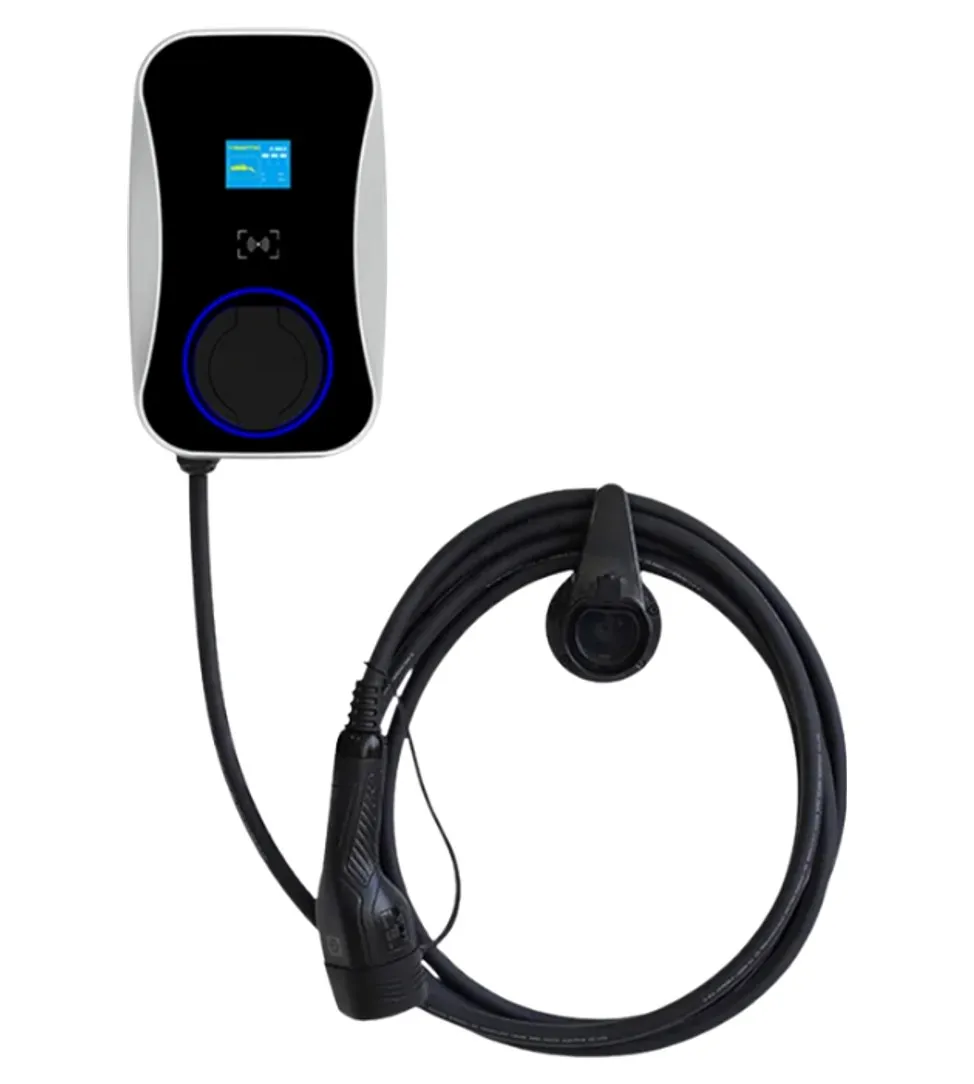
VT-HW7: our 7 kW wallbox
| VT-HW7S / VT-HW7C | |
|---|---|
| Supply | 1P + N + PE, 220–240 V, 50/60 Hz |
| Rated current / power | 32 A / 7.4 kW (adjustable lower) |
| Connector | Type 2 socket with optional shutter (S) or tethered Type 2 cable (C) |
| Protection | Type A 30 mA + 6 mA DC detection; PEN fault protection option (UK) |
| Enclosure | IP55 (socket) / IP65 (cable) |
| Start modes | RFID, app, plug and charge |
| Connectivity | Wi-Fi, 4G, Ethernet options; OCPP 1.6J / 2.0.1 |
| Dimensions | 200 × 330 × 109–140 mm |
The same platform comes in 3.7, 11 and 22 kW IEC versions and 32–48 A North American versions, and is available as OEM / private label. See the VT-HW product page for full specifications.
Questions buyers ask
- How long does a 7 kW charger take to charge an electric car?
- Roughly the energy you need divided by about 6.5 kW (allowing for losses). Taking a 60 kWh battery from 20 % to 80 % (36 kWh) takes about 5.5 hours; a full charge of the same battery from empty takes about 9 hours.
- How many kilometres does a 7 kW charger add per hour?
- About 35–40 km per hour for a typical car using 16–18 kWh per 100 km. Larger, less efficient vehicles add less.
- What breaker does a 7 kW charger need?
- A dedicated circuit for 32 A, protected according to local wiring rules — the breaker rating, curve and cable size are chosen by the electrician based on the cable length and installation method. The charger also needs residual-current protection that detects DC faults.
- Is 7 kW enough for a home charger?
- For most drivers, yes. Daily driving of 40–60 km needs only one to two hours of charging at 7 kW, and the car can be full every morning. Faster home charging only helps with a three-phase supply and a car that accepts it.
- Can I install a 7 kW charger if my main fuse is small?
- Usually yes, with load balancing: a current sensor on the incoming supply lets the charger reduce its current when the house is using a lot of power, so the main fuse is never overloaded.
References
- [1]IEC 61851-1:2017 — general requirements. International Electrotechnical Commission.
- [2]IEC 60364-7-722:2018 — supplies for electric vehicles. International Electrotechnical Commission.
- [3]Regulations: electric vehicle smart charge points. GOV.UK.