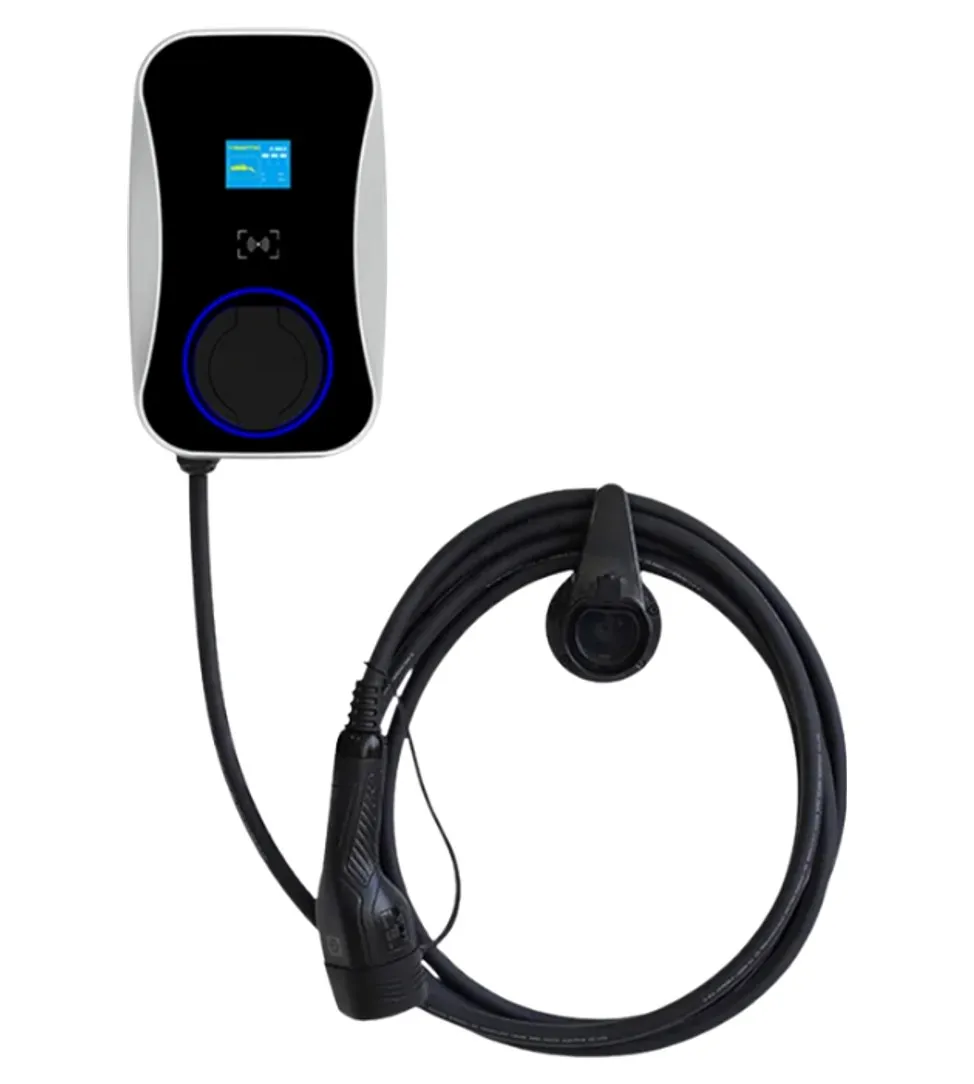
AC chargers · 11 kW
11 kW EV Charger: Three-Phase Supply, Cable and Grid Rules
Why 11 kW is the sweet spot for three-phase AC charging: 16 A per phase, on-board chargers, 11 vs 22 kW, installation and grid notification rules.
- Prepared by
- VULTAE Engineering Team
- Published
- Reading time
- 4 min
- Sources
- 3 references
At a glance
- Rated power
- 11 kW
- Current
- 16 A per phase
- Supply
- 400 V three-phase, 50/60 Hz
- Connector
- Type 2 socket or tethered cable
- Range added
- ≈ 55–60 km per hour*
- Grid rule (Germany)
- Notify DSO; approval above 12 kVA
- Back end
- OCPP 1.6J / 2.0.1
- VULTAE model
- VT-HW11S / VT-HW11C
Key takeaways
- 1An 11 kW charger draws 16 A on each of three phases at 400 V. It is the most common home and workplace wallbox in continental Europe because most electric cars’ on-board chargers accept 11 kW AC.
- 2An 11 kW wallbox is as fast as a 22 kW one for any car limited to 11 kW AC — and it needs half the current per phase, so it is easier on the building supply and the cable.
- 3Grid rules can favour 11 kW: in Germany, every charger must be notified to the grid operator, but approval is required only when the total rated power exceeds 12 kVA per installation.
- 4On a car that only charges on a single phase, an 11 kW three-phase wallbox delivers 3.7 kW (16 A on one phase). Check the car before promising charging times.
Contents
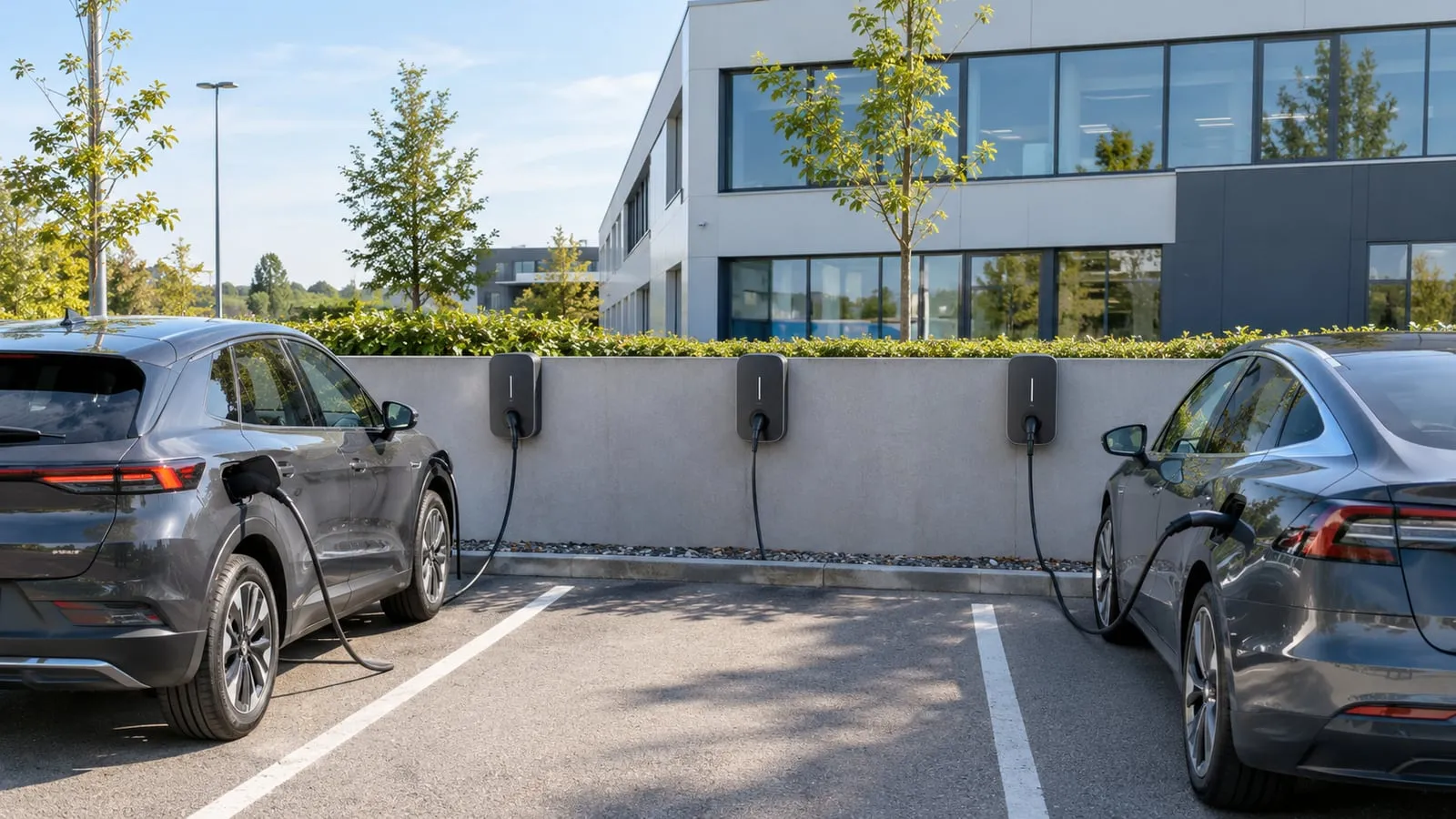
Short answer: an 11 kW EV charger uses a three-phase 400 V supply at 16 A per phase. It is the standard wallbox across most of continental Europe because most electric cars’ on-board chargers accept 11 kW AC — so it charges them as fast as a 22 kW unit while needing half the current per phase. It adds roughly 55–60 km of range per hour, refills most cars in a few hours, and in Germany stays below the 12 kVA threshold that triggers grid operator approval.
How 11 kW is made
On a three-phase supply, power is shared across three conductors:
√3 × 400 V × 16 A ≈ 11 kW
Why 11 kW and not 22 kW
The wallbox can only supply what the car’s on-board charger accepts. Most current electric cars accept up to 11 kW on three-phase AC; fewer accept 22 kW. That makes 11 kW the efficient choice:
| 11 kW wallbox | 22 kW wallbox | |
|---|---|---|
| Current per phase | 16 A | 32 A |
| Charging speed for a car limited to 11 kW AC | 11 kW | 11 kW (no gain) |
| Charging speed for a car accepting 22 kW AC | 11 kW | 22 kW |
| Supply and cable | Smaller | Larger |
| Germany: grid operator | Notification | Approval needed (above 12 kVA) |
| Typical use | Homes, workplaces, hotels | Shared chargers, fleets with 22 kW cars, public AC posts |
Charging times at 11 kW
Divide the energy needed by about 10 kW (11 kW less charging losses), for cars that accept 11 kW three-phase:
| Battery | 20 → 80 % | Empty → full |
|---|---|---|
| 60 kWh | ≈ 3.5 h | ≈ 6 h |
| 80 kWh | ≈ 5 h | ≈ 8 h |
| 100 kWh | ≈ 6 h | ≈ 10 h |
Watch for single-phase cars: some cars — mostly older or smaller models — charge on one phase only. On an 11 kW three-phase wallbox they draw 16 A on one phase, about 3.7 kW. For fleets with such cars, a charger configurable for single-phase 32 A may be better.
Grid rules: the 12 kVA threshold in Germany
Under § 19 of the German Low Voltage Connection Ordinance (NAV), every charging device for electric vehicles must be notified to the grid operator before it goes into operation. Approval is needed when the total rated power exceeds 12 kVA per electrical installation; the grid operator then has two months to respond. A single 11 kW wallbox is therefore notified, while a 22 kW wallbox — or two 11 kW wallboxes on one installation — needs approval. Other countries have their own notification rules; check with the local grid operator.
Multi-charger sites: office and hotel car parks
Five 11 kW chargers can draw 55 kW at once. Dynamic load management shares the available supply between active sessions, so a site can install more chargers than its spare capacity would otherwise allow. Our load management guide explains the options.
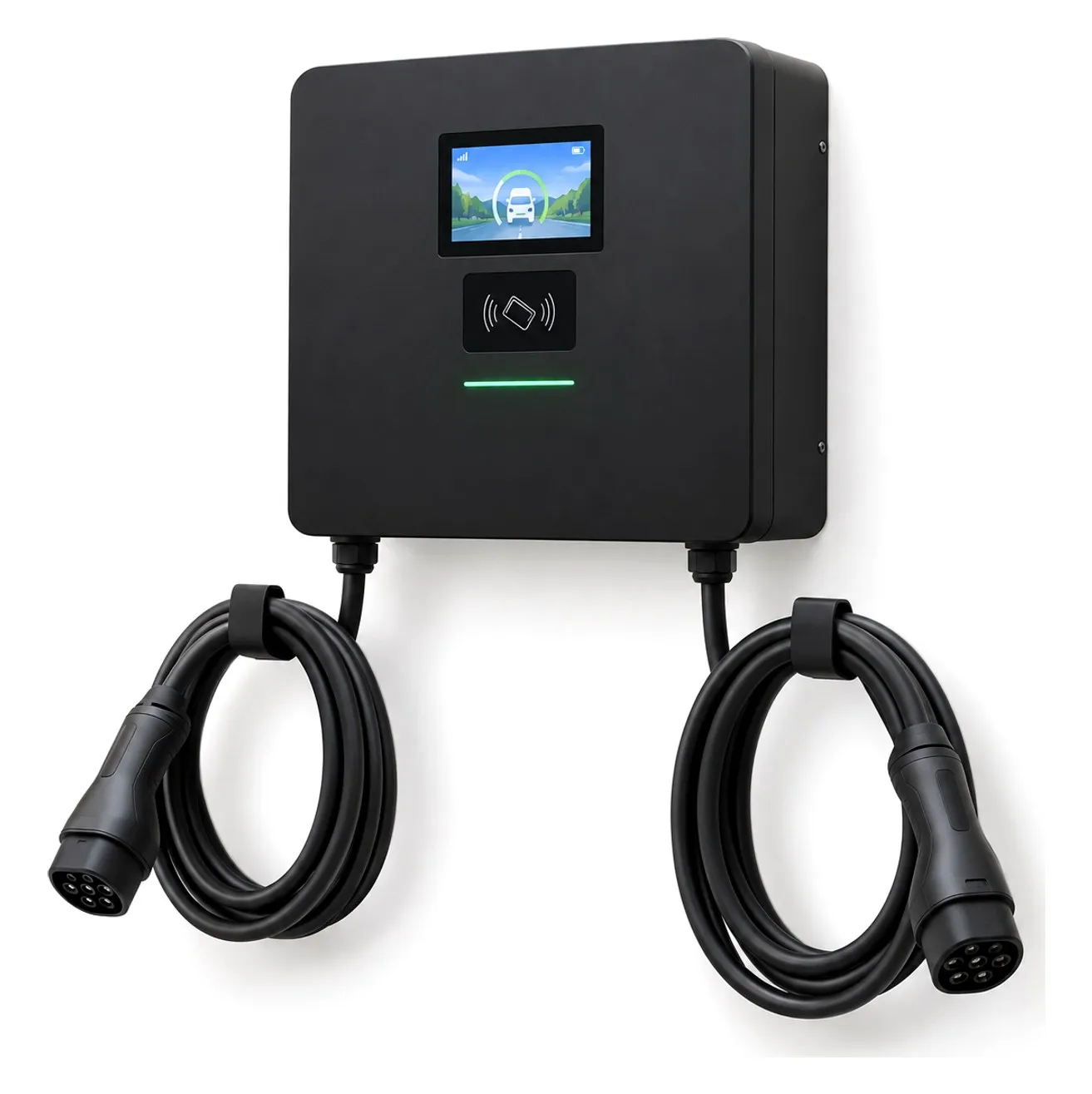
VT-HW11: our 11 kW wallbox
| VT-HW11S / VT-HW11C | |
|---|---|
| Supply | 3P + N + PE, 380–415 V, 50/60 Hz |
| Rated current / power | 16 A per phase / 11 kW |
| Connector | Type 2 socket with optional shutter (S) or tethered Type 2 cable (C) |
| Protection | Type A 30 mA + 6 mA DC detection; PEN fault protection option (UK) |
| Enclosure | IP55 (socket) / IP65 (cable) |
| Incoming cable terminals | 5 × 10 mm² |
| Start modes and back end | RFID, app, plug and charge; OCPP 1.6J / 2.0.1 |
The same platform is available at 3.7, 7.4 and 22 kW and as OEM / private label — see the VT-HW product page.
Questions buyers ask
- How long does an 11 kW charger take to charge a car?
- Divide the energy needed by about 10 kW (allowing for losses). A 60 kWh battery from 20 % to 80 % (36 kWh) takes about 3.5 hours; from empty to full about 6 hours — provided the car’s on-board charger accepts 11 kW three-phase.
- Is 11 kW or 22 kW better for home charging?
- For most homes, 11 kW. Most cars accept at most 11 kW AC, so a 22 kW wallbox charges them no faster, while needing twice the current per phase and, in Germany, grid operator approval. Choose 22 kW only if your cars accept it or the charger is shared.
- Do I need permission to install an 11 kW wallbox in Germany?
- Chargers must be notified to the grid operator (Netzbetreiber) before operation under § 19 NAV. Approval is required only if the total rated power exceeds 12 kVA per installation, so a single 11 kW wallbox is notified rather than approved.
- Can an 11 kW charger work on a single-phase supply?
- Only at single-phase power: on one phase at 16 A it delivers about 3.7 kW. Some wallboxes can be configured for single-phase 32 A (7.4 kW) if the supply allows; check the model.
- What cable does an 11 kW charger need?
- A five-core cable (three phases, neutral and protective earth) sized by the electrician for 16 A per phase, the run length and the installation method. Because the current per phase is half that of a 22 kW charger, cable sizes are smaller.
References
- [1]§ 19 NAV — Niederspannungsanschlussverordnung (charging equipment notification and approval). German Federal Ministry of Justice.
- [2]IEC 61851-1:2017 — general requirements. International Electrotechnical Commission.
- [3]IEC 60364-7-722:2018 — supplies for electric vehicles. International Electrotechnical Commission.