AC Charging
Off-Peak Smart Charging at Home: Schedules, Tariffs and Savings
How scheduled charging uses cheaper off-peak electricity: setting a schedule, matching tariff windows, avoiding peak demand and when it saves little.
- Prepared by
- VULTAE Engineering Team
- Published
- Reading time
- 1 min
- Sources
- —
Key takeaways
- 1Scheduled charging delays or limits charging to the hours when electricity is cheapest or when the grid is least stressed. It can lower the cost per kWh where tariffs vary by time of day.
- 2It only saves money if your tariff actually changes with time, and if the car is parked long enough to finish charging in the cheap window.
- 3A smart charger can combine schedules with load balancing and solar surplus: three different ways to charge when it makes the most sense.
Contents
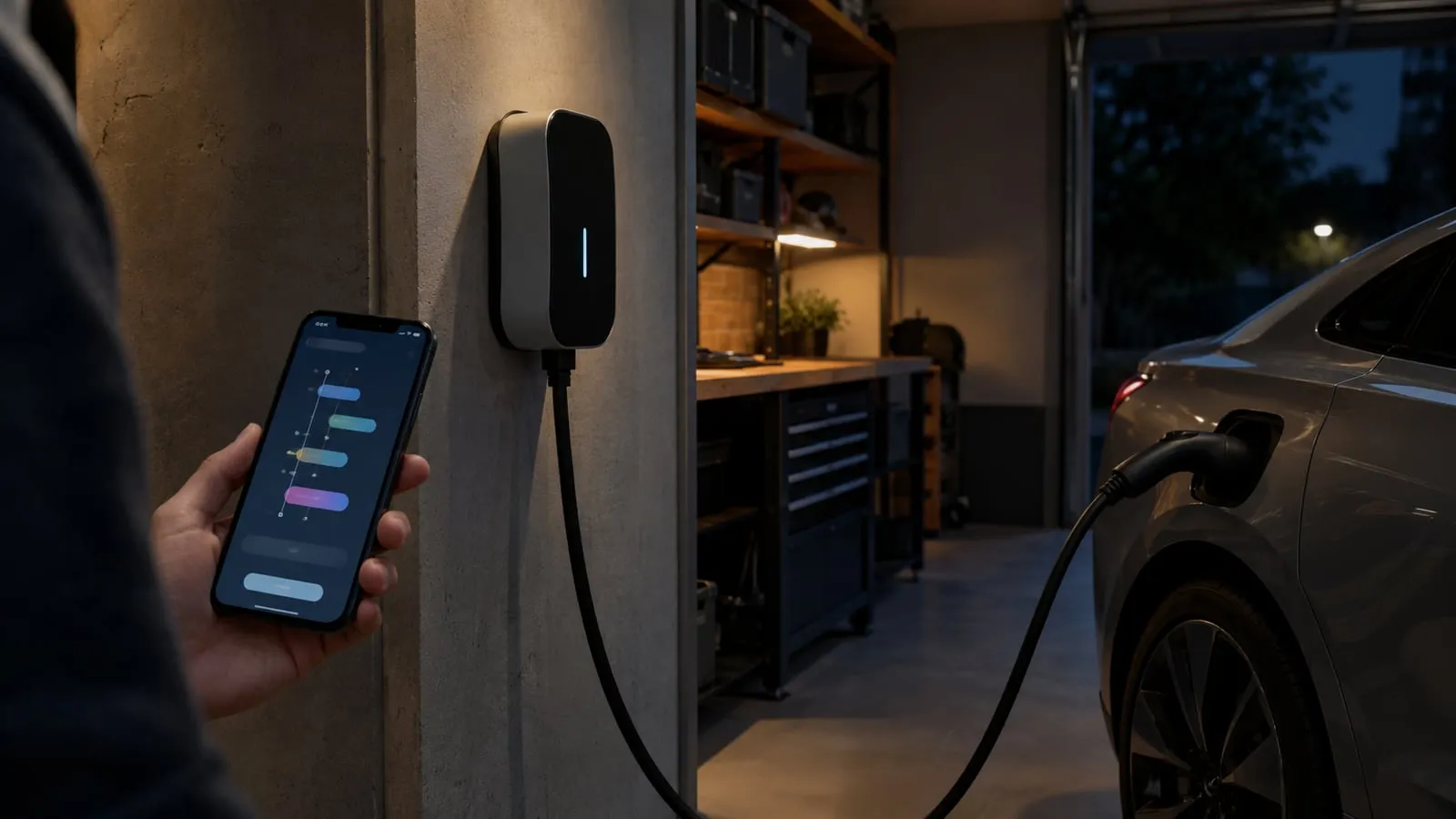
Short answer: scheduled charging starts the session when electricity is cheapest. It saves money only if your tariff varies by time of day and the car stays parked long enough. Set the schedule in the car, the charger or the app.
How it works
- You tell the charger or car the time window (for example 23:00–06:00).
- The charger waits or limits the current until the window opens.
- The car charges during the window, and stops when full or when the window ends.
When it saves money
| Situation | Saving |
|---|---|
| Time-of-use tariff with a big night discount | Good |
| Flat tariff | None on energy cost |
| Tariff with a demand charge | Depends — see demand charges |
| Car parked only a few hours | May not finish in the window |
Combining with other smart features
- Load balancing keeps the household below the main supply limit — see dynamic load management.
- Solar surplus charging follows PV output in the day.
- Group management shares one limit across several chargers.
How to set a good schedule
| Step | Example |
|---|---|
| Find the cheap window | From your tariff or utility |
| Estimate energy needed | Daily distance × consumption |
| Check the time needed | Energy ÷ charging power |
| Set a start time | Early enough to finish before departure |
| Leave a margin | For late returns or extra trips |
Limits
Schedules rely on the clock in the car or charger and on correct tariff data. Check them after a clock change or a tariff change. Our smart wallbox supports scheduling together with load balancing; see smart charger features.
Questions buyers ask
- Do I need a smart charger for scheduled charging?
- Many cars can schedule charging themselves. A smart charger or app can also schedule, and is useful when the car does not support it or when several cars share a charger.
- Will scheduled charging damage the battery?
- No. Delaying the start has no effect on battery health. Charging to a limit that suits daily use is a separate battery-care setting.
- How much can I save?
- It depends entirely on your tariff. If there is little difference between off-peak and peak prices, the savings are small. Check your own tariff and use a calculator.