Portable & Mobile Charging
Mobile DC Chargers: When They Beat Fixed Chargers
Where a mobile DC charger on wheels makes sense: fleet yards, events, roadside help, temporary sites and trials — and where a fixed charger is the better buy.
- Prepared by
- VULTAE Engineering Team
- Published
- Reading time
- 2 min
- Sources
- 2 references
Key takeaways
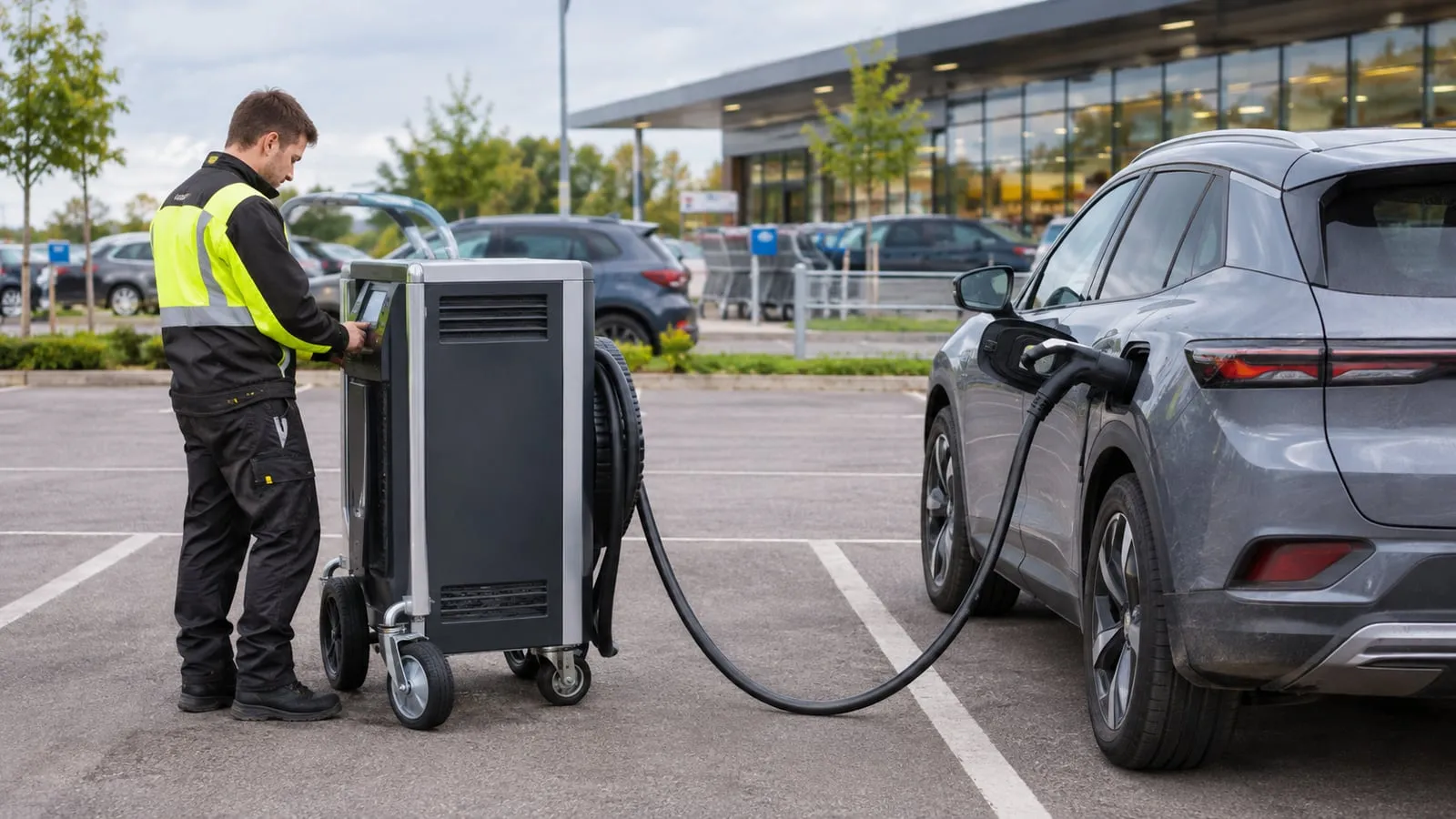
- 1A mobile DC charger is a compact DC unit on wheels that plugs into a three-phase supply and can be moved to the vehicle. It suits changing sites: events, roadside assistance, rental and fleet yards, construction sites and pilot projects.
- 2It still needs a suitable supply at the place where it is parked. Mobility of the charger does not remove the need for power; it moves the charger to where the power is.
- 3For a fixed daily pattern at one site, a fixed charger is cheaper per kW and more robust. Mobile units win when vehicles or locations change, or when the site is temporary.
- 4Check the weight, wheels and cable handling, the input requirement and the operating temperature and IP rating for outdoor use.
Contents
Short answer: a mobile DC charger is a DC unit on wheels that plugs into a local three-phase supply. It beats a fixed charger when vehicles or locations change — events, roadside help, temporary sites, rotating fleet bays and pilots. For a fixed daily pattern at one site, a fixed charger is cheaper per kW.
Where mobile makes sense
| Use | Why mobile helps |
|---|---|
| Fleet yard with rotating bays | Move the charger to the vehicle instead of cabling every bay |
| Events and exhibitions | Temporary demand, no permanent installation |
| Roadside assistance and rescue | A depleted car gets a fast top-up without towing |
| Rental and dealership lots | Charge cars where they stand |
| Construction and temporary sites | Short project, no civil works |
| Pilot projects and demos | Test demand before building |
| Parking operators | Add capacity to peak areas |
Where fixed is better
- A busy public site with constant demand: fixed chargers are more robust, cheaper per kW and easier to protect from theft.
- High power (above about 80 kW): mobile units become heavy and need strong supplies.
- Unattended sites: a movable unit invites theft and misuse.
What to check
| Item | Why |
|---|---|
| Power and voltage range | Matches your vehicles and the supply |
| Input supply | Three-phase current required; plug or hard-wired |
| Weight and wheels | Can one person move it on your surface? |
| Cable length and handling | Reach to different inlets without strain |
| IP rating and temperature range | Outdoor use — see IP ratings |
| Connector type | CCS1, CCS2, CHAdeMO, GB/T — see connector types |
| Locking and anti-theft | Wheel locks, lockable door, alarms |
| Back-end connection | OCPP, payment, user access if shared |
The supply still decides
A mobile charger does not create power. At 40 kW it draws about 63 A per phase at 400 V; the location must provide it. Plan supply points across the site — weatherproof sockets or outlets — and protect them. See grid power for DC sites and wire size.
Cost comparison approach
Compare cost per kW delivered and per vehicle served. A mobile unit serving six bays in rotation may need one charger and six supply points; fixed would need six chargers. If a vehicle needs 30 minutes and cars rotate through, the single mobile unit may be enough. If six cars need charging at the same time, it is not.
VULTAE mobile DC chargers
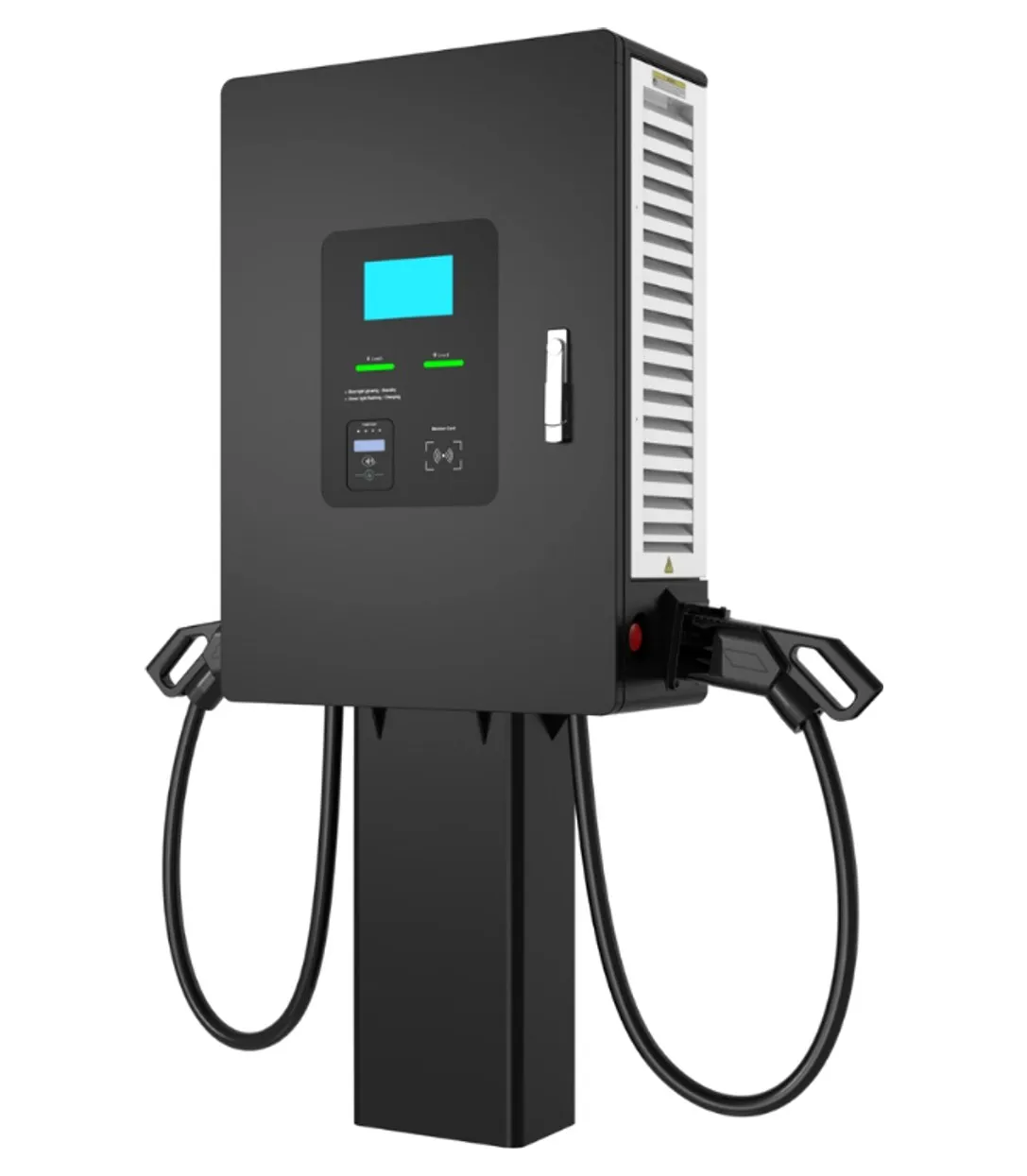
VULTAE’s mobile DC chargers deliver 20–80 kW on a wheeled frame; see the mobile DC EV charger page for the current specifications, and the DC wallbox for a fixed alternative of similar power. For help choosing, see AC vs DC for business.
Questions buyers ask
- What is a mobile DC charger?
- A DC fast charger built on a wheeled frame with a handle or tow point, usually 20–80 kW, which connects to a local three-phase supply and can be moved between parking spaces or sites.
- When is a mobile charger better than a fixed one?
- When the vehicles or the site change: events, temporary yards, roadside assistance, demonstrations, fleets that rotate bays, or when you want to test demand before building fixed infrastructure.
- Does a mobile charger need a special connection?
- It needs a supply suitable for its input power, usually a three-phase socket or a hard-wired connection by an electrician. The supply is the limit, so check the available current first.
- Can a mobile charger charge any electric car?
- It can charge cars that use its connector (for example CCS2) and fall within its voltage and current range. Check the voltage range and connector against your vehicles.
References
- [1]IEC 61851-23:2023 — DC electric vehicle supply equipment. International Electrotechnical Commission.
- [2]IEC 61851-1:2017 — general requirements. International Electrotechnical Commission.