Solutions · Workplace
Workplace EV Charging: Sizing, Load Management and Fair Access for Staff
How to plan workplace EV charging: how many points, AC power per car, load management on the building supply, staff access and payment, fleet cars and EU rules.
- Prepared by
- VULTAE Engineering Team
- Published
- Reading time
- 3 min
- Sources
- 1 references
At a glance
- Typical stay
- 7–9 hours
- Power per car
- 3.7–7.4 kW is usually enough
- Charger type
- AC wallboxes or dual-port posts
- Key feature
- Load management on the building supply
- Access
- RFID per employee, OCPP back end
- EU rule (new non-residential)
- ≥ 1 point per 5 spaces
- EU rule (existing, > 20 spaces)
- ≥ 1 point per 10 spaces by 2027
- VULTAE series
- VT-HW · VT-CW · VT-CP
Key takeaways
- 1Staff cars park for a working day, so low AC power per car is enough: an average commute needs well under 20 kWh, which 3.7 kW delivers in about five hours. Many points at modest power beat a few fast ones.
- 2Load management is the core of a workplace system: it lets dozens of chargers share the spare capacity of the building supply and prevents morning peaks when everyone plugs in at once.
- 3Give each employee an RFID card linked to an OCPP back end. That makes it possible to charge for energy, report usage for tax or expense purposes, and separate company fleet cars from private cars.
- 4In the EU, the recast Energy Performance of Buildings Directive requires at least one charging point per five spaces in new non-residential buildings with more than five spaces, and one per ten spaces in existing ones with more than twenty by 2027.
Contents
Short answer: workplace charging is about many points at modest power. Cars stay 7–9 hours, so 3.7–7.4 kW per car covers almost any commute. Use AC wallboxes or dual-port units on a load-managed group so dozens of points share the building’s spare capacity, give each employee an RFID card on an OCPP back end for access and billing, and lay ducting for future bays now. In the EU, building rules already set minimum numbers of charging points for office car parks.
Why low power per car is enough
| Commute (one way) | Daily energy, round trip* | Time at 3.7 kW | Time at 7.4 kW |
|---|---|---|---|
| 15 km | ≈ 5 kWh | ≈ 1.5 h | < 1 h |
| 30 km | ≈ 10 kWh | ≈ 3 h | ≈ 1.5 h |
| 60 km | ≈ 20 kWh | ≈ 5.5 h | ≈ 3 h |
*At about 17 kWh per 100 km, typical for a mid-size electric car; winter and motorway driving use more.
With eight hours of parking, even long commutes are covered at low power. Higher-power points are useful for fleet cars, visitors and shift changes — not for every bay.
Load management: the heart of the system
When the whole office arrives at 8:30 and plugs in, uncontrolled chargers would create a peak the building supply cannot take. Dynamic load management solves this:
| Function | Effect |
|---|---|
| Group current limit | All chargers together never exceed the capacity you set |
| Building-load measurement | Chargers use only what the building is not using |
| Priorities | Fleet cars or visitors can be given priority |
| Phase balancing | Single-phase cars spread across the three phases |
The result is that a supply with, say, 100 A of spare capacity per phase can run 20 or more points: each car charges more slowly at peak times and faster later, and almost all are full by the end of the day. See dynamic load management.
Access, billing and reporting
| Need | How |
|---|---|
| Only staff can charge | RFID card or app per employee |
| Charge staff for energy | Price per kWh in the back end; monthly statements |
| Reimburse home-office or fleet energy | Per-user and per-vehicle energy reports |
| Visitors | QR-code payment or guest RFID cards from reception |
| Rotation of bays | Idle-fee or time-limit rules after charging ends |
An OCPP 1.6J or 2.0.1 back end — your own or a charging service provider’s — handles all of this without being tied to one hardware brand.
The rules in the EU
The recast Energy Performance of Buildings Directive (EU) 2024/1275 sets minimums for non-residential buildings:
| Building | Requirement |
|---|---|
| New or major renovation, more than 5 parking spaces | At least one charging point per 5 spaces; pre-cabling for at least 50 % of spaces and ducting for the rest |
| Existing, more than 20 parking spaces | At least one charging point per 10 spaces (or ducting for at least 50 % of spaces) by 1 January 2027 |
Member states write these into national law, sometimes with stricter numbers. Outside the EU, many cities and states have similar building-code requirements — check yours before you design.
Layout tips
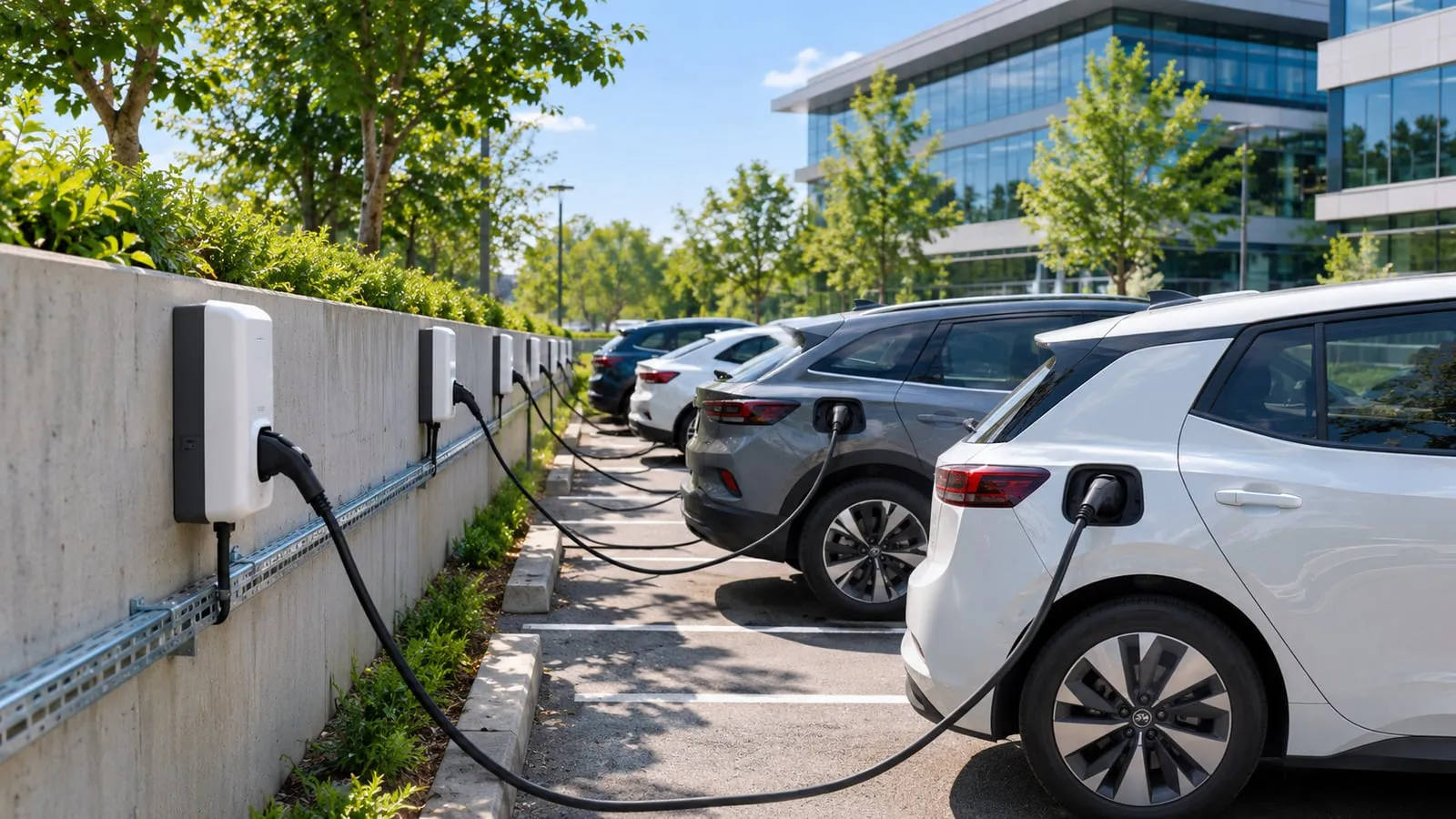
- Wall-mounted units along the perimeter or on pillars are cheapest to install; dual-port posts suit open car parks between rows.
- Cable length: 5 m tethered cables reach most inlets from the front of the bay.
- Spread single-phase points across phases if you use 7.4 kW single-phase chargers.
- Ducting now for the bays you will electrify later.
- Accessible bays and lighting for evening use.
Recommended VULTAE configuration
| Situation | Model |
|---|---|
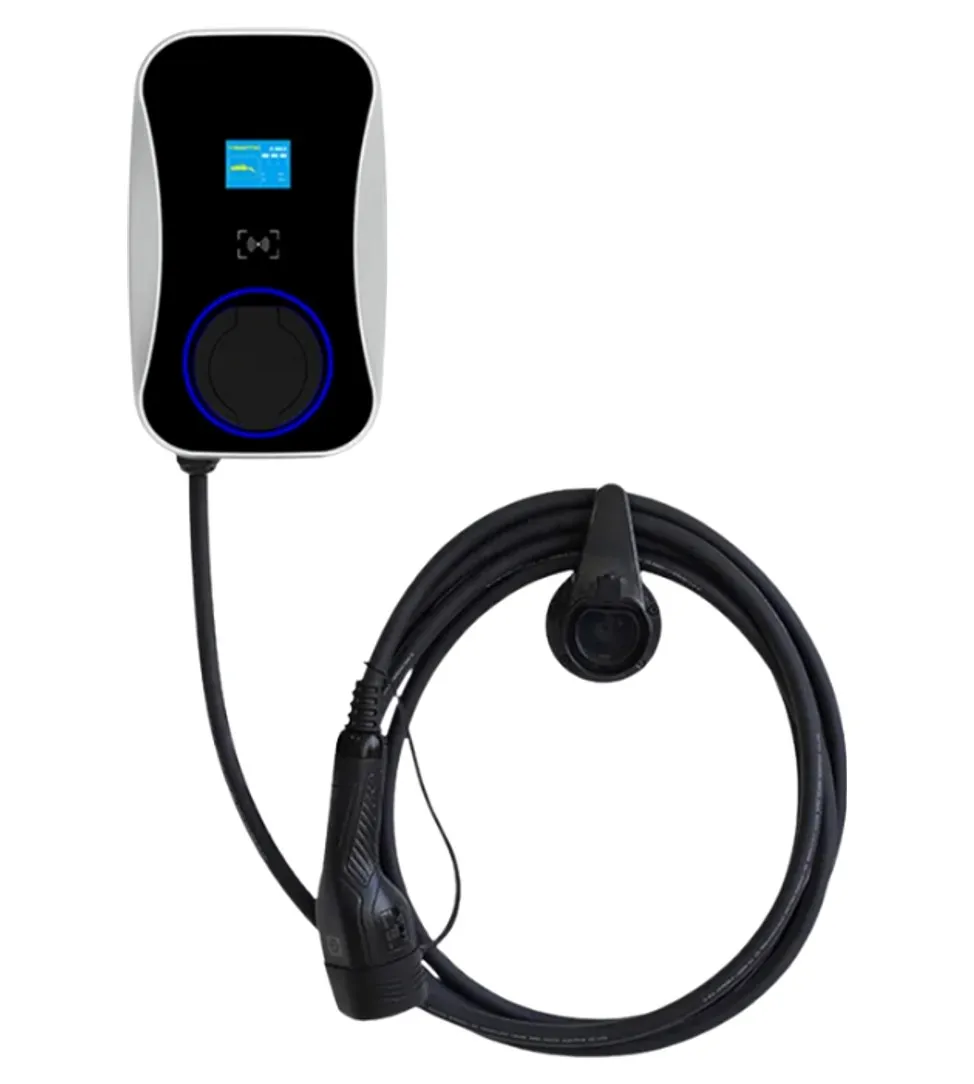
| Walls and pillars, one car per unit | VT-HW smart wallbox, 3.7–22 kW, RFID, OCPP, load balancing |
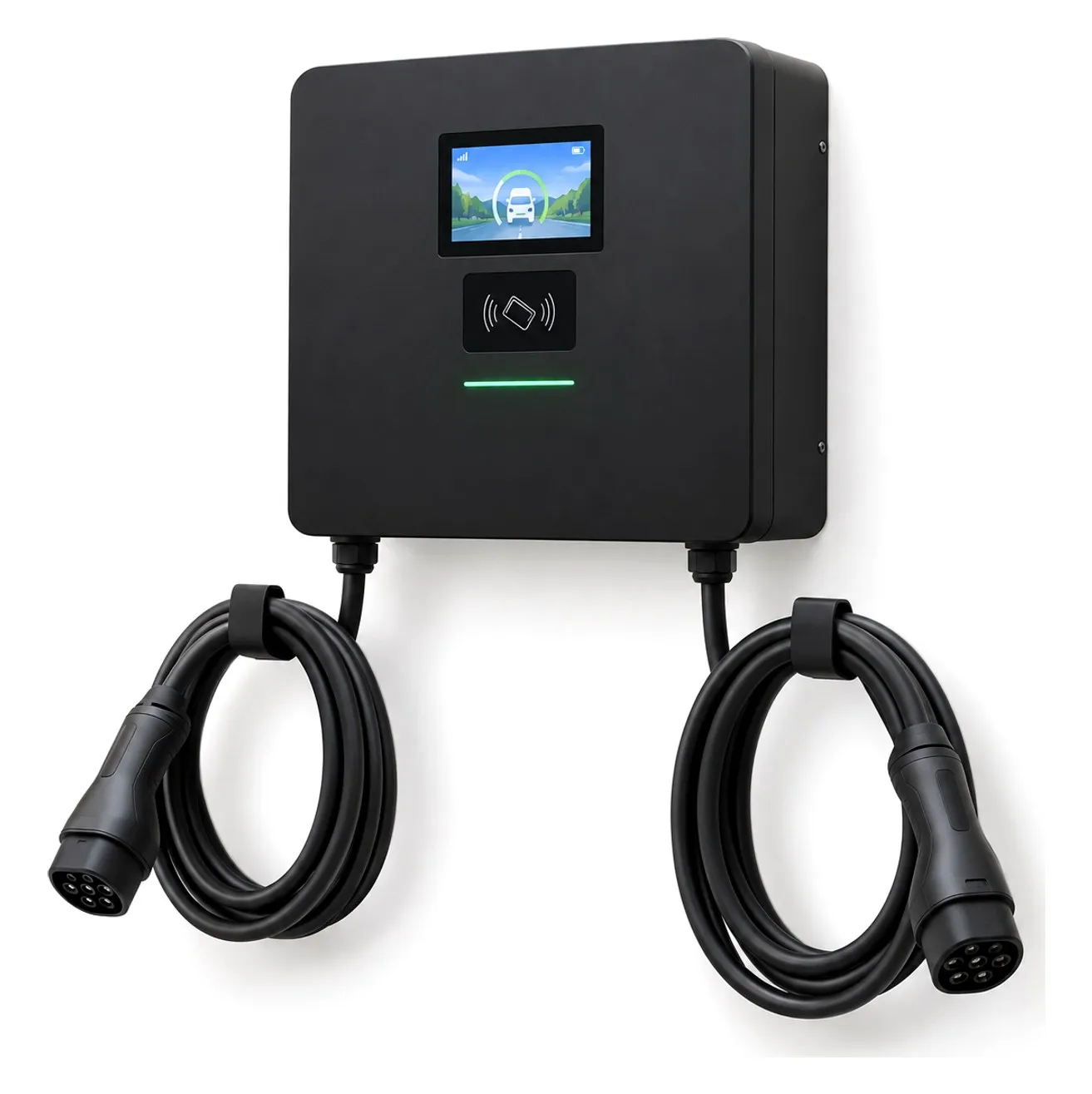
| Walls between two bays | VT-CW dual-port wall charger, 2 × 7–22 kW |
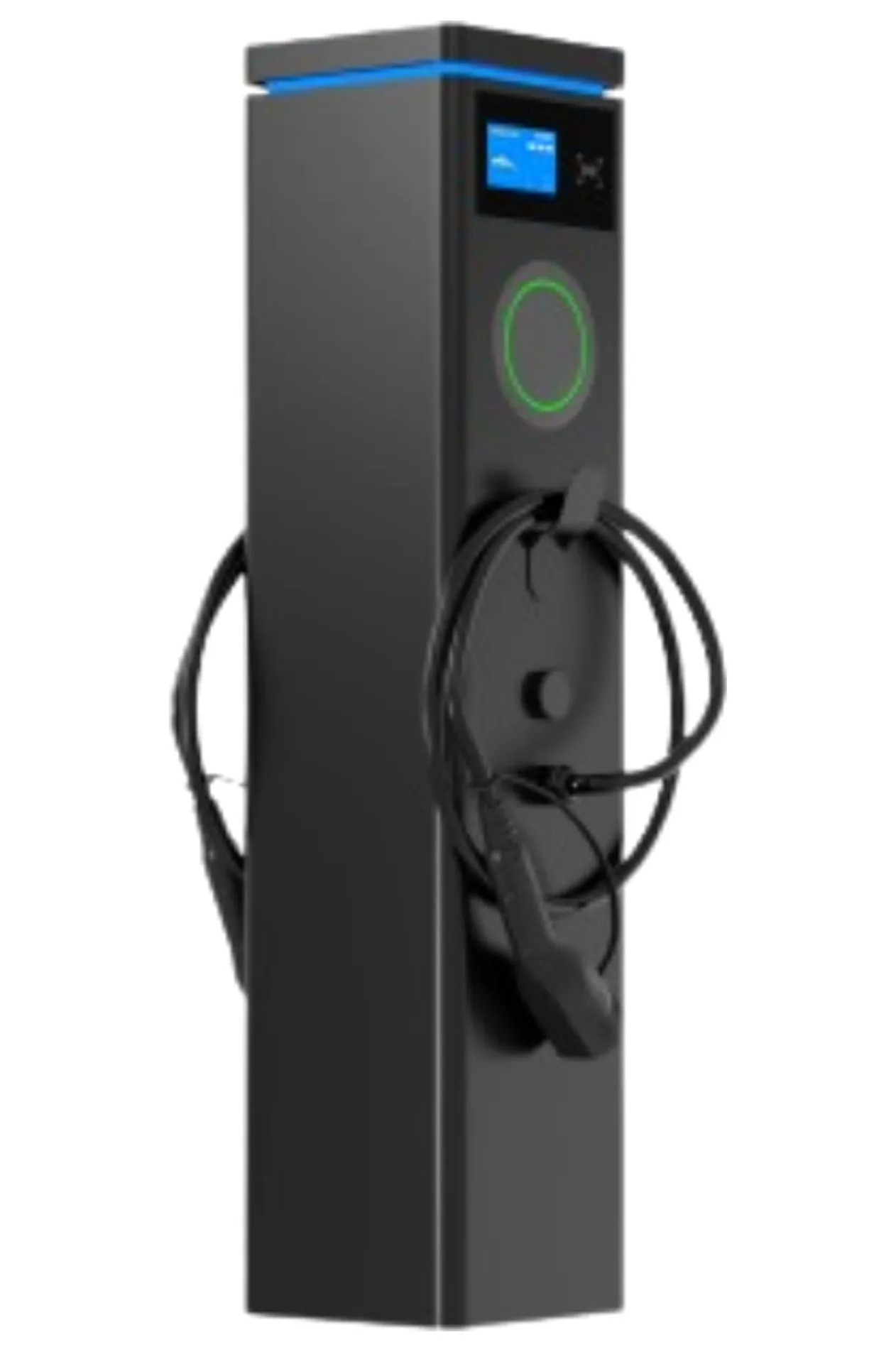
| Open car park | VT-CP dual-port pedestal, 2 × 7–22 kW, IP55 · IK10 |
| North America | VT-HW North American wallboxes, 32–48 A, J1772 |
Tell us the number of parking spaces, the spare capacity of your supply and how many employees drive electric today, and we will size a first phase and an expansion path.
Questions buyers ask
- How much power do workplace chargers need?
- Less than most people expect. A car parked for eight hours at 3.7 kW receives about 30 kWh — more than most daily commutes use. 7.4 or 11 kW per point gives headroom for longer commutes and fleet cars, and load management lowers the power automatically when many cars charge at once.
- How many charging points should an office car park have?
- Start with current demand plus growth: in the EU, the building rules set a floor of one point per five spaces for new non-residential buildings and one per ten for existing buildings with more than twenty spaces by 2027. Install ducting for more bays at the same time so later expansion is cheap.
- Should employees pay for workplace charging?
- It is the employer’s choice. Free charging is a simple benefit; paid charging at cost or a small margin avoids people treating the car park as a free fuel station. With RFID cards and an OCPP back end, each employee’s energy can be recorded and billed or reimbursed.
- Can company fleet cars and staff cars share the same chargers?
- Yes. Assign RFID cards to fleet vehicles and staff separately, give fleet cars priority in the load-management settings if needed, and report their energy separately for cost accounting.