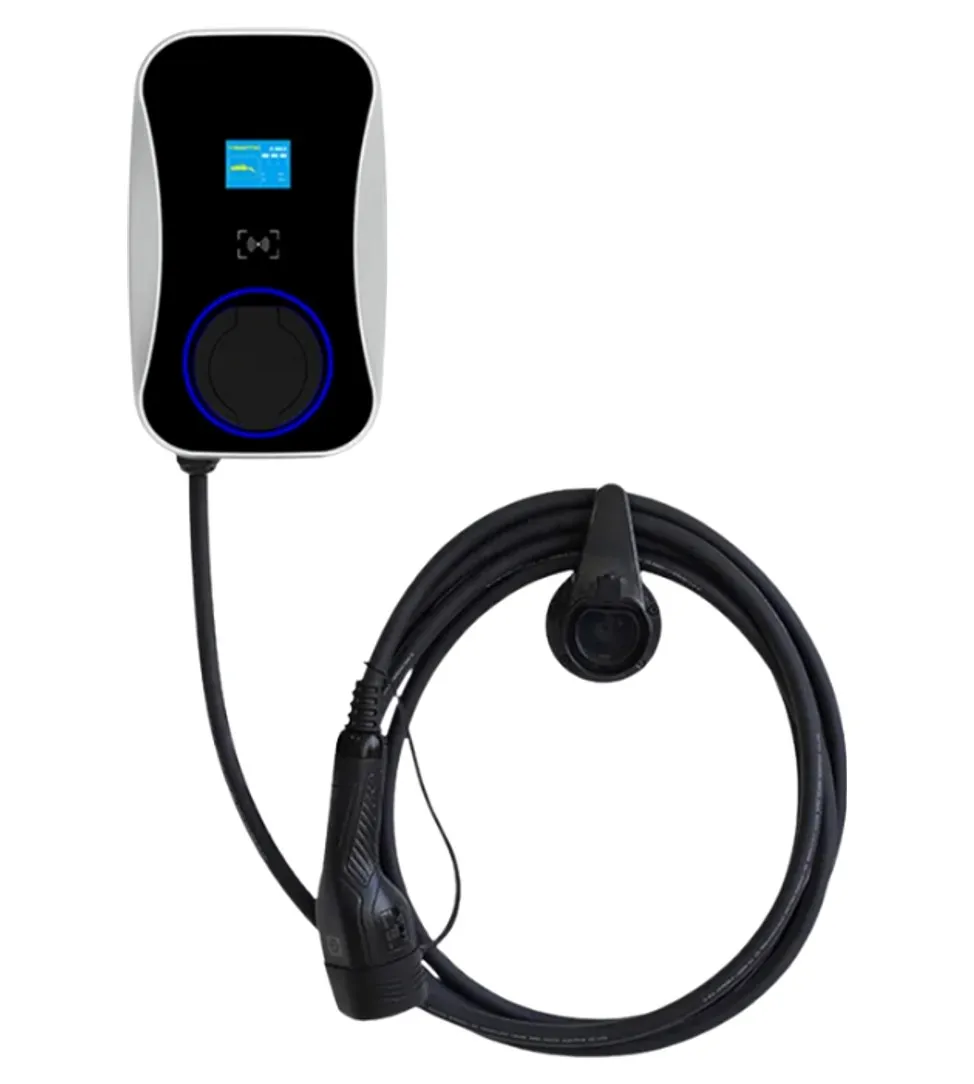
AC chargers · 48 A Level 2
48 Amp Level 2 Charger: Circuit, Wiring and Who It Is For
A 48 A Level 2 charger delivers 11.5 kW at 240 V. Why it needs a hardwired 60 A circuit, how it compares with 32 and 40 A, and charging speeds.
- Prepared by
- VULTAE Engineering Team
- Published
- Reading time
- 4 min
- Sources
- 4 references
At a glance
- Power at 240 V
- 11.5 kW
- Power at 208 V
- ≈ 10 kW
- Circuit (NEC 125 %)
- 60 A, hardwired
- Connector
- J1772 (Type 1)
- Ground fault protection
- CCID 20 mA
- Range added
- ≈ 30–37 miles per hour*
- Back end
- OCPP 1.6J / 2.0.1
- VULTAE model
- VT-HW11-NA
Key takeaways
- 1A 48 A Level 2 charger delivers 11.5 kW at 240 V (about 10 kW at 208 V) — the highest common home charging rate in North America.
- 2The NEC treats EV charging as a continuous load, so 48 A needs a 60 A circuit. A NEMA 14-50 outlet on a 50 A breaker supports only 40 A charging, so a 48 A charger must be hardwired.
- 3It only charges faster than a 40 A unit if the vehicle’s on-board charger accepts 48 A; many do, especially larger trucks and SUVs, but some are limited to 32 or 40 A.
- 4Most 48 A chargers can be set to a lower current, so one product can serve houses with smaller panels — or the panel capacity can be managed with load management.
Contents
Short answer: a 48 A Level 2 charger delivers 11.5 kW at 240 V (about 10 kW on 208 V commercial supplies) and adds roughly 30–37 miles of range per hour. Because the NEC treats EV charging as a continuous load, it needs a 60 A dedicated circuit and must be hardwired — a NEMA 14-50 outlet supports only 40 A of charging. It pays off when vehicles accept 48 A and the panel has room; otherwise the same charger can be set to 40 or 32 A.
Plug-in 40 A or hardwired 48 A
32, 40 or 48 A?
| Charger setting | Circuit (125 % rule) | Power at 240 V | Power at 208 V | Range per hour* |
|---|---|---|---|---|
| 32 A | 40 A | 7.7 kW | 6.7 kW | ≈ 20–25 miles |
| 40 A | 50 A | 9.6 kW | 8.3 kW | ≈ 25–30 miles |
| 48 A | 60 A | 11.5 kW | 10.0 kW | ≈ 30–37 miles |
*For typical cars using about 0.3 kWh per mile, after charging losses; large trucks and SUVs add fewer miles per hour.
The vehicle’s on-board charger is the other limit. Many current vehicles accept 48 A, especially larger trucks and SUVs, while others are limited to 32 or 40 A. A 48 A charger set to the vehicle’s maximum gives no penalty and leaves room for the next vehicle.
Charging times at 48 A
| Battery | 20 → 80 % | Empty → full |
|---|---|---|
| 60 kWh | ≈ 3.5 h | ≈ 6 h |
| 100 kWh | ≈ 6 h | ≈ 10 h |
| 130 kWh (large pickup) | ≈ 7.5 h | ≈ 12.5 h |
Estimates at about 10.4 kW delivered to the battery; actual times vary with battery temperature and the vehicle’s charging behaviour near full.
Panel capacity and load management
A 60 A circuit is a large load for a home with a 100 A or 150 A service. Before installing:
- Load calculation: the electrician checks the existing service under NEC Article 220.
- Lower setting: set the charger to 40 or 32 A to fit a smaller available capacity.
- Load management: an energy management system can limit charging when the house draws heavily, which the NEC allows to be taken into account in sizing.
- Two EVs: two chargers can share one circuit with load sharing rather than needing two 60 A circuits.
Commercial sites at 208 V
Apartment buildings, offices and parking garages are often supplied at 208Y/120 V three-phase. A 48 A Level 2 charger connected between two phases delivers about 10 kW there — still fast for workplace and overnight charging, with load management to share the building’s capacity across many units.
VT-HW-NA: our North American wallbox
| VT-HW7-NA | VT-HW9-NA | VT-HW11-NA | |
|---|---|---|---|
| Supply | L1 + L2 + PE, 208–240 V | L1 + L2 + PE, 208–240 V | L1 + L2 + PE, 208–240 V |
| Rated current | 32 A | 40 A | 48 A |
| Power at 240 V | 7.7 kW | 9.6 kW | 11.5 kW |
| Connector | J1772 (Type 1) | J1772 (Type 1) | J1772 (Type 1) |
| Ground-fault protection | CCID 20 mA | CCID 20 mA | CCID 20 mA |
| Enclosure | Type 3 | Type 3 | Type 3 |
| Back end | OCPP 1.6J / 2.0.1 | OCPP 1.6J / 2.0.1 | OCPP 1.6J / 2.0.1 |
North American versions are offered with ETL and ENERGY STAR certification; we send the certificates for the exact model you order. See the VT-HW product page and our North American standards guide.
Questions buyers ask
- What size breaker does a 48 amp EV charger need?
- A 60 A breaker on a dedicated circuit. The NEC treats EV charging as a continuous load, so the circuit must be rated at 125 % of the charger current: 48 A × 1.25 = 60 A.
- Can I plug a 48 amp charger into a NEMA 14-50 outlet?
- No. A NEMA 14-50 outlet is on a 50 A circuit, which supports at most 40 A of continuous charging. A 48 A charger must be hardwired to a 60 A circuit — or set to 40 A or less if used on a 14-50.
- How fast does a 48 amp charger charge?
- It delivers 11.5 kW at 240 V, which adds roughly 30–37 miles of range per hour for typical cars and fewer for large trucks. A 60 kWh charge from 20 % to 80 % takes about 3.5 hours.
- Is 48 A worth it over 40 A?
- Only if your vehicles accept 48 A and you have the panel capacity for a 60 A circuit. For vehicles limited to 40 A (9.6 kW) or 32 A (7.7 kW), the extra capacity is unused — but a 48 A charger set to a lower current keeps the option open for the next vehicle.
- What wire size is needed for a 48 amp charger?
- A 60 A circuit commonly uses 6 AWG copper conductors in conduit, but the right size depends on the conductor insulation, terminal temperature ratings, run length and installation method. Your electrician confirms it under the NEC and local amendments.
References
- [1]Nationally Recognized Testing Laboratory (NRTL) Program. OSHA.
- [2]NFPA 70, National Electrical Code. NFPA.
- [3]ENERGY STAR certified EV chargers — product finder. U.S. EPA.
- [4]Charging electric vehicles at home. U.S. Department of Energy.