OEM & Private Label
White-Label Charging App and CPMS: How to Choose a Partner
What a white-label charging app and CPMS give an EV charger brand, what to compare in a partner, who owns the data and how to avoid lock-in.
- Prepared by
- VULTAE Engineering Team
- Published
- Reading time
- 2 min
- Sources
- —
Key takeaways
- 1A branded charger sells better with a branded app and dashboard. A white-label platform gives you both without building software, but you are choosing a long-term partner, not buying a template.
- 2Compare the features that your customers will see: payment, user accounts, tariffs, roaming, reports and support. Then look at the things they will not see: data ownership, OCPP compatibility, uptime of the platform and your options if the partner closes or changes price.
- 3Test your own chargers against the partner’s platform before you sign. Interoperability claims are not a test report.
Contents
Short answer: choose the partner on ownership, interoperability and exit options as well as features. Test your chargers on their platform and write the data and exit terms into the contract.
What white label means here
| Part | Typically branded for you |
|---|---|
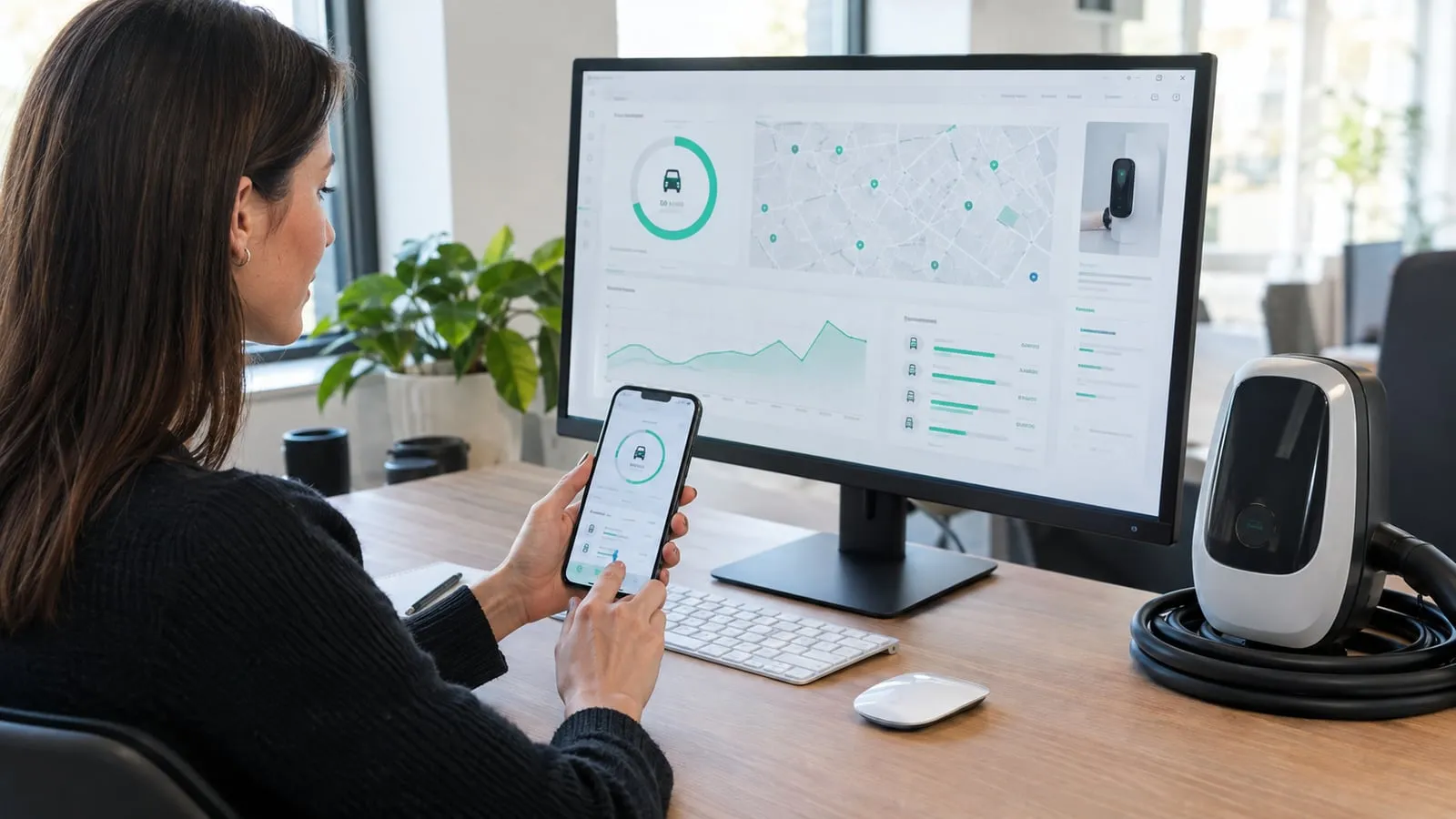
| Driver app | Your name, logo, colours and app-store listing |
| Web portal | Your domain and branding |
| Operator dashboard | Sites, chargers, tariffs and reports under your account |
| Emails and receipts | Your name and details |
| Payments | Your merchant or the partner’s, depending on the model |
Behind this is a charge point management system; see what a CPMS does and how to choose one.
Compare partners
| Area | Questions to ask |
|---|---|
| Charger compatibility | Which OCPP versions and profiles? Which brands tested? |
| Driver experience | Map, booking, RFID, Plug & Charge, languages |
| Payment | Card, wallet, invoices, local methods, who is the merchant |
| Tariffs | Per kWh, per minute, idle fee, time-of-use; see how to price EV charging |
| Roaming | OCPI or other links; see OCPP, OCPI and OICP |
| Reports | Sessions, uptime, revenue, exports; see KPIs |
| Hosting and security | Location, backups, penetration tests, certificates |
| Support | Hours, languages, response times |
| Pricing | Set-up fee, per charger fee, transaction fee, changes |
Ownership and lock-in
- Data: you own users, sessions and tariffs and can export them.
- App store accounts: the app is published under your developer account, not only the partner’s.
- Domain and branding: registered in your name.
- Protocol: standard OCPP, so the chargers can move to another back end; see migrating between platforms.
- Source and escrow: whether the code is available if the partner fails.
These points mirror the questions in firmware, app and backend ownership in OEM deals.
Test before you sign
- Connect two or three chargers of each model and run the OCPP integration test checklist.
- Check start and stop, metering, error reporting and firmware update.
- Make a payment with the real flow, including a refund.
- Review the invoice and the data export.
Costs to model
Add the set-up cost, per-charger fees, transaction fees and your own staff for support. Check how the fees scale: a low fee per charger that grows quickly per transaction can change the economics of busy DC sites. See operating costs.
What the charger supplier can do
A supplier that supports OCPP 1.6J and 2.0.1, remote firmware updates and clear logs makes the partnership easier. VULTAE chargers support both OCPP versions; tell us the platform you are considering and we will help with the configuration and test plan.
Questions buyers ask
- Do I need my own app?
- Not always. Many buyers only need an RFID card and a web dashboard. A branded app helps for home and small-business customers who want to schedule and view sessions.
- Who owns the data?
- It should be your company: users, sessions and tariffs. Put the ownership, the export format and the deletion rules into the contract.
- What if the partner stops trading?
- Ask for a data export on request, standard OCPP so chargers can move to another back end, and a notice period. See the article on migrating between platforms.