Connectors & Protocols
OCPP 2.0.1 Device Model: What Buyers Need to Know
The OCPP 2.0.1 device model describes a charger as components and variables. What it enables for configuration and monitoring and what to ask a supplier.
- Prepared by
- VULTAE Engineering Team
- Published
- Reading time
- 2 min
- Sources
- 1 references
Key takeaways
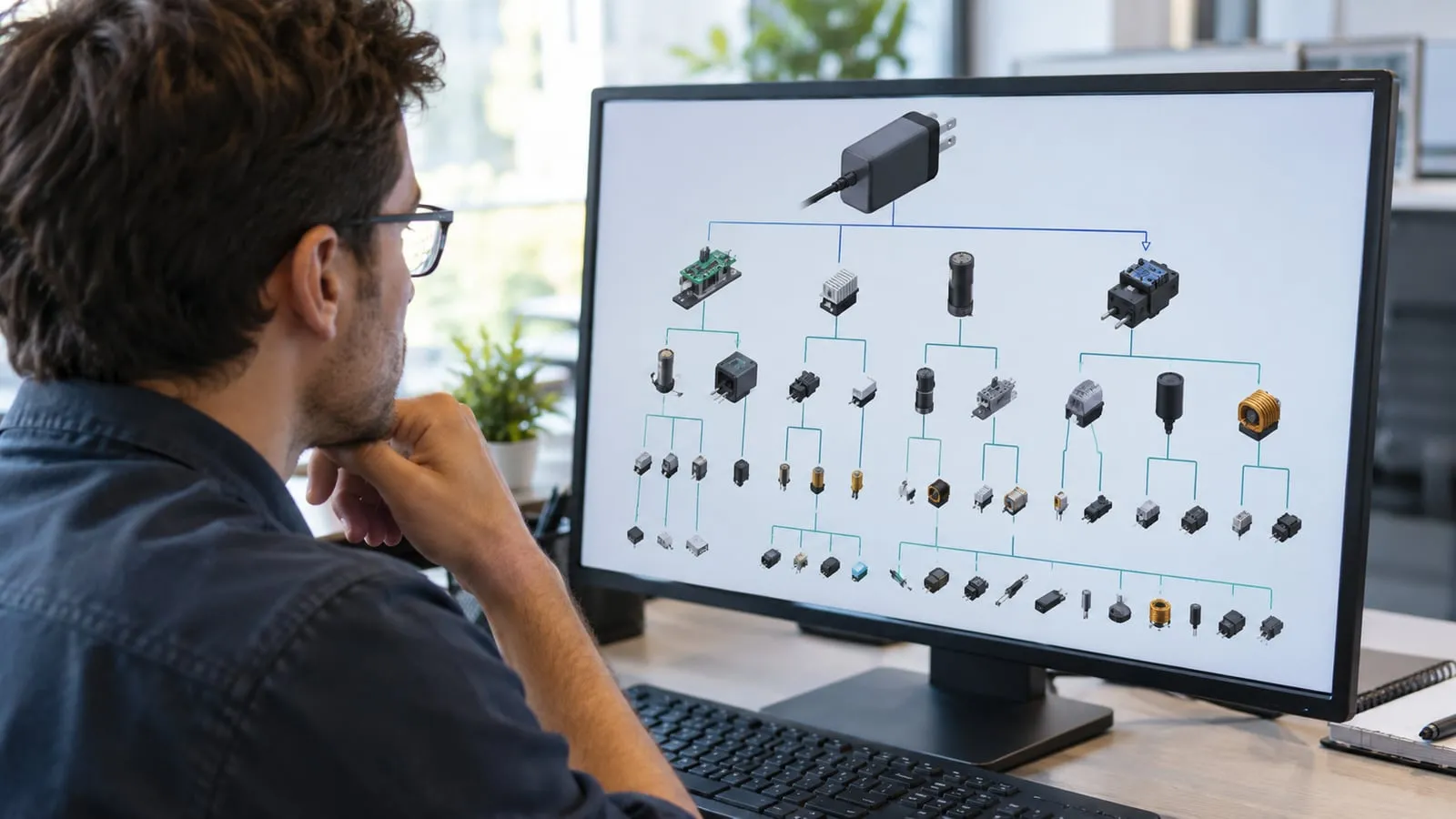
- 1OCPP 2.0.1 describes a charger as a tree of components (the charger, its connectors, the meter, the display) each with variables (settings and readings). That gives back ends a standard way to read and change configuration and to set up monitoring.
- 2The benefit is easier management of mixed hardware, but it depends on how completely the charger implements the model and how well your back end uses it.
- 3Ask which components and variables are exposed, how monitoring and reporting are configured and whether the charger has been tested with your back end.
Contents
Short answer: the device model in OCPP 2.0.1 lets the back end read and set the charger’s components and variables in a standard way, and set up monitoring. For buyers the questions are how completely the charger implements it and how well your back end uses it.
The idea
| Concept | Meaning | Example |
|---|---|---|
| Component | A part of the charging station | Charger, EVSE, connector, meter, display, fan |
| Variable | A setting or reading of a component | Maximum power, temperature, connector status |
| Attribute | A property of a variable | Actual value, target value, minimum, maximum |
| Monitoring | Rules that raise events | Alert if temperature exceeds a limit |
Instead of a list of vendor-specific keys, the back end sees a structured tree.
What it enables
- Standard configuration: the same messages to configure chargers from different brands.
- Inventory: the back end can ask the charger what components it has.
- Monitoring: alerts on variables, with severity levels, instead of polling.
- Better diagnostics: richer reports and event data; see remote diagnostics.
- Security: the model works together with the security profiles; see OCPP security profiles.
What it does not guarantee
- Full implementation: a charger may expose only some variables.
- Back-end support: your platform must use them.
- Interoperability without testing: run tests with your back end; see the OCPP integration test checklist.
Questions for the supplier
| Question | Why |
|---|---|
| Which components and variables does the charger expose? | Compare with your needs |
| Is monitoring supported? | Event-driven alerts |
| Which security profile is supported? | Authentication and encryption |
| Which back ends has it been tested with? | Interoperability |
| How is configuration changed and logged? | Operations and audit |
| How do you handle firmware updates? | Maintenance |
1.6J or 2.0.1
| OCPP 1.6J | OCPP 2.0.1 | |
|---|---|---|
| Configuration | Key-value | Device model |
| Security | Extensions | Built-in profiles |
| Monitoring | Limited | Variable monitoring |
| Support | Very widespread | Growing |
For the comparison in full see OCPP 1.6J vs 2.0.1. VULTAE chargers support both OCPP 1.6J and 2.0.1; send us your back end details and we will confirm the configuration.
Questions buyers ask
- Is the device model better than OCPP 1.6J configuration?
- It is more structured and richer, with standard names and monitoring. OCPP 1.6J uses a simpler key-value configuration that is widely supported. Which is better depends on your back end and needs.
- What is device monitoring?
- The ability to set triggers on variables, for example a temperature above a limit, so the charger reports events to the back end without constant polling.
- Do I need OCPP 2.0.1?
- Not always. If your back end supports only 1.6J, or you need maximum compatibility, 1.6J may be right. For new projects with security and monitoring needs, 2.0.1 is worth considering.
References
- [1]Open Charge Point Protocol (OCPP). Open Charge Alliance.