Portable & Mobile Charging
Portable EV Chargers: A Distributor’s Guide to Mode 2 Safety
What distributors should know before selling portable Mode 2 EV chargers: IC-CPD protection, plug temperature sensing, socket limits, markets and labelling.
- Prepared by
- VULTAE Engineering Team
- Published
- Reading time
- 3 min
- Sources
- 3 references
Key takeaways
- 1A portable charger is a Mode 2 device: a cable with a control box (IC-CPD) that protects the circuit between a normal socket and the car. It is convenient, but it relies on the socket and the wiring behind it.
- 2The risk is heat at the plug and socket. Look for plug temperature sensing, which cuts or reduces current if the plug warms, a proper IC-CPD with residual current protection, and selectable current limits (for example 6, 8, 10, 13, 16 A).
- 3Sell portable chargers as a supplement for travel, emergency and occasional use — not as the main charger for a fleet or an apartment building. Include clear instructions about sockets and extension cords.
- 4Local rules differ: plug type, certification (CE/UKCA, ETL/UL 2594), warning labels and, in some countries, restrictions on selling Mode 2 cables with certain plugs.
Contents
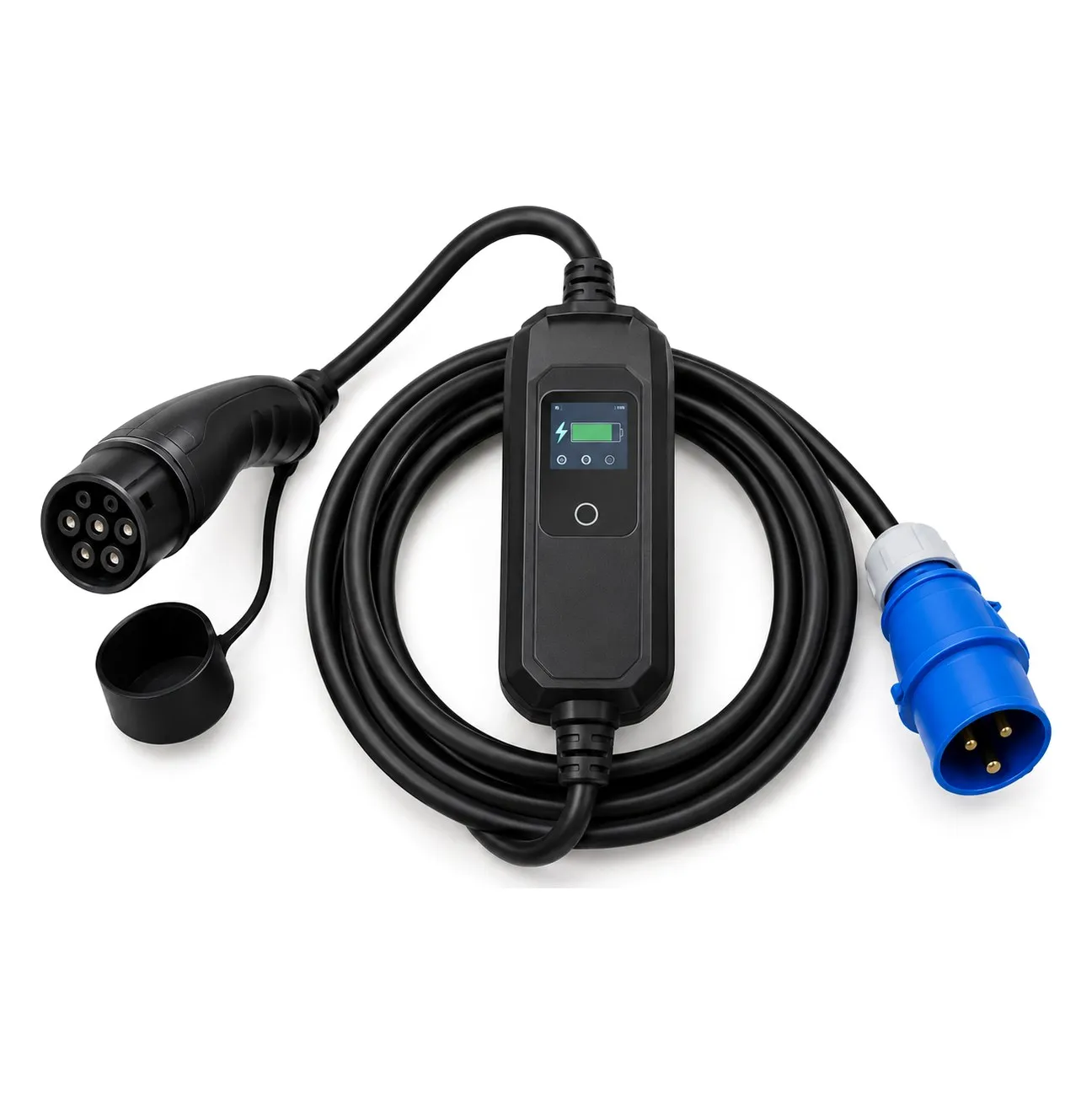
Short answer: a portable charger is a Mode 2 cable with a control box (IC-CPD). It is safe only if the box has real protection and the socket is up to the job. As a distributor, look for plug temperature sensing, selectable current, residual current protection, correct plug types and certificates for each market, and sell it as a supplement, not a replacement for a wallbox.
What is in the box
| Part | Function |
|---|---|
| Plug (household, industrial or other) | Connects to the supply socket; may have a temperature sensor |
| Control box (IC-CPD) | Control pilot signal, residual current detection, contactor, current limit |
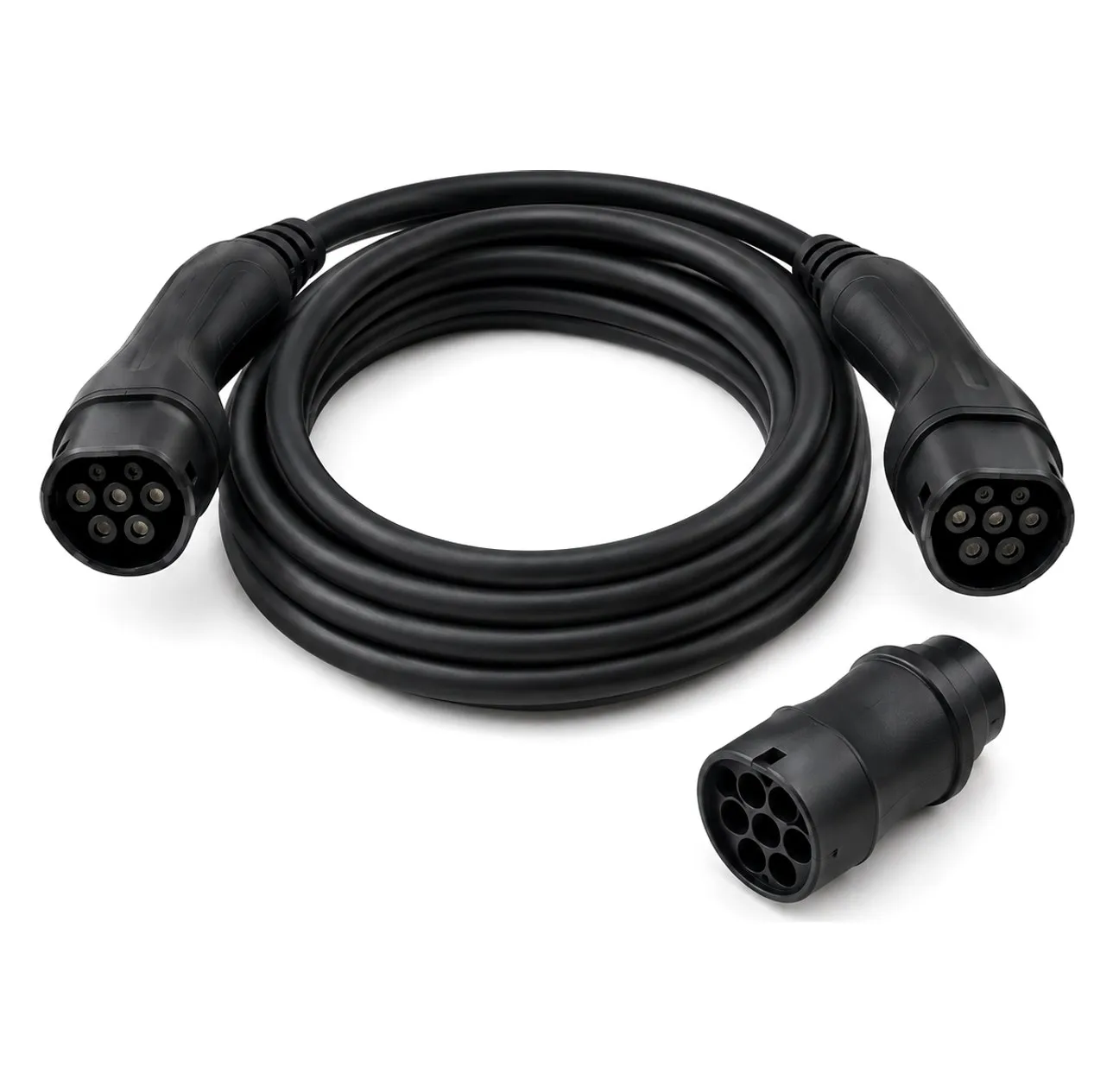
| Cable and vehicle connector | Type 2 (Europe), Type 1 (North America and others), GB/T (China) |
| Display or LEDs | Status, current setting, faults |
| Bag, holder | Storage; some products include a wall hook |
Why the plug is the weak point
A household socket and plug are made for short loads of appliances. A car charges for hours at constant current, and a worn socket or a loose connection heats up. Reasons for caution:
- Old sockets with worn contacts.
- Long extension cords with thin conductors.
- Shared circuits where other loads add current.
- Poor plug fit — loose pins cause hot spots.
Good portable chargers measure plug temperature and either reduce the current or stop if it rises. They also let the user choose the current to suit the socket.
What to check on a product
| Check | Why |
|---|---|
| IC-CPD with residual current protection (and DC detection where the standard asks) | Protection that a wallbox would otherwise give |
| Plug temperature sensor | Prevents overheating at the socket |
| Selectable current (for example 6–16 A, or up to 32 A) | Matches the socket |
| Ingress protection (IP65 on the box or the whole unit for many models) | Outdoor use in rain |
| Cable material rated for outdoor and cold | Flexible, durable |
| Certificates for the exact model and plug | Market access — see verify certificates |
| Clear manual and warning label | Liability |
| Operating temperature range | Hot and cold use |
Markets and plugs
| Market | Common plug | Notes |
|---|---|---|
| Europe | Schuko (CEE 7/4), CEE blue, CEE red | Different plugs for different current; check national rules |
| UK | BS 1363 (13 A), commando plugs | 13 A sockets are limited for continuous load; use low current |
| North America | NEMA 5-15 (120 V), NEMA 14-50 (240 V) | UL 2594 for EV supply equipment; 240 V is much better than 120 V |
| Australia, NZ | AS/NZS 3112, commando | Local plug approvals |
| Others | Local plug types | Choose by market; adapters are not a solution |
The connector on the car side follows the market — see EV connector types and charging modes explained.
Sales advice
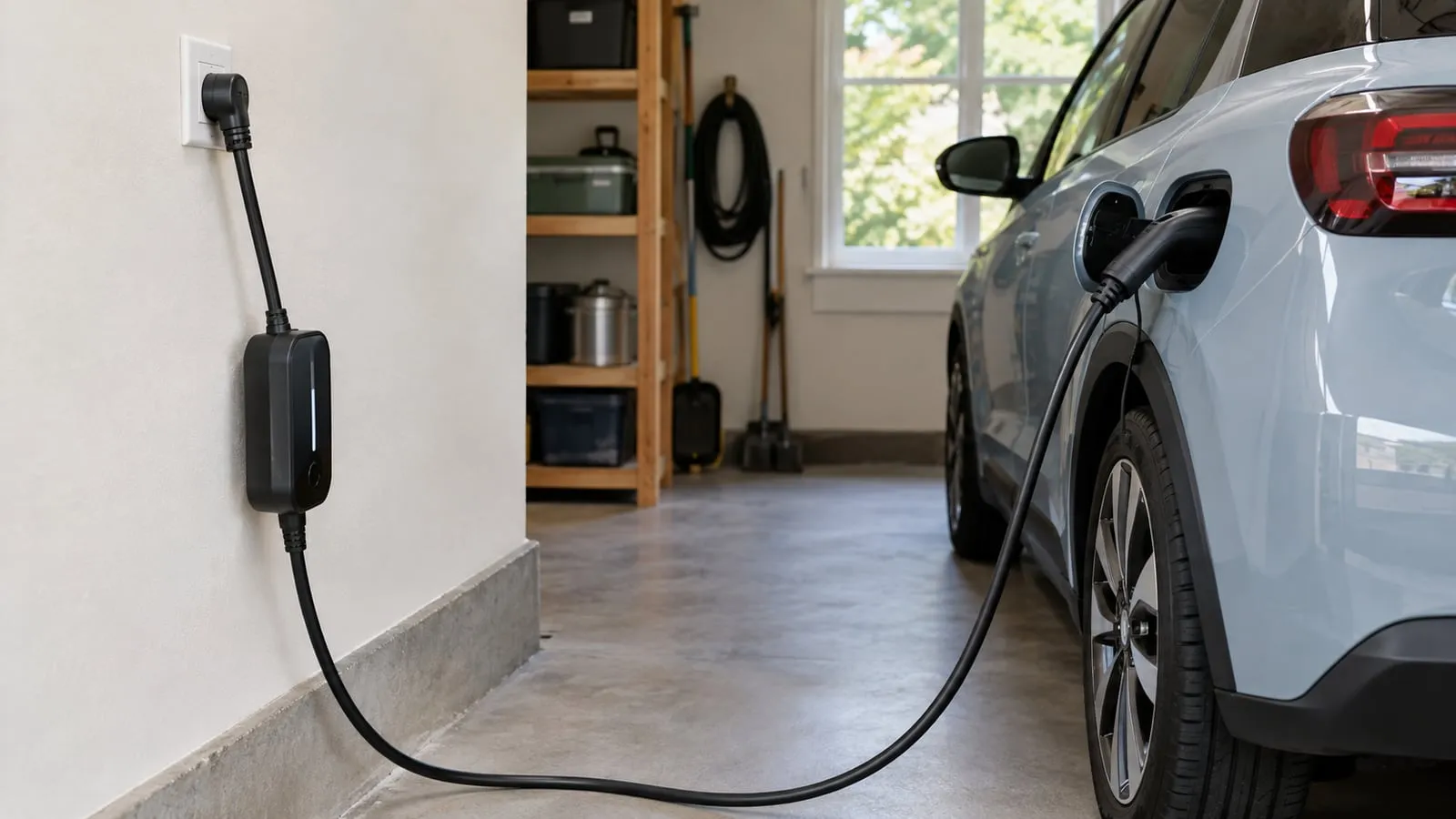
- Position it correctly: travel, second homes, emergencies, occasional visits.
- Include instructions: do not use extension cords; use a dedicated socket; set a low current for old sockets.
- Offer a wallbox alongside: sell the safer solution for daily charging — see wall-mounted vs pedestal.
- Keep records: model, plug type, batch and certificates by market.
- Warranty: clarify that damage from overheated sockets, extension cords and water immersion is excluded.
VULTAE portable chargers
VULTAE’s portable chargers are 16 A and 32 A Mode 2 units with a plug, IP65-rated, with certification depending on the plug and the market. See the portable EV charger page and the cables and adapters. For distributor terms and regional versions, contact us.
Questions buyers ask
- Is a portable EV charger safe to use at home?
- It can be, if the charger has proper in-cable protection and the socket and wiring are in good condition and suitable for continuous load. Household sockets are not designed for hours of high current, so use a low current setting, no extension cords and a dedicated, healthy circuit.
- What does IC-CPD mean?
- In-cable control and protection device: the box in a Mode 2 cable that carries the control pilot signal, residual current protection and switching. It is covered by IEC 62752 in Europe and equivalent standards elsewhere.
- Why do some portable chargers have selectable current?
- So the user can match the socket: a lower current for an old household socket, a higher one for a good industrial socket. This reduces heat at the plug.
- Can a portable charger replace a wallbox?
- Not as the primary solution for regular daily charging. A wallbox on a dedicated circuit is safer and more convenient. A portable charger suits holidays, a second home, a workplace visit or emergencies.
References
- [1]IEC 61851-1:2017 — general requirements. International Electrotechnical Commission.
- [2]IEC 60364-7-722:2018 — supplies for electric vehicles. International Electrotechnical Commission.
- [3]ENERGY STAR EVSE specification. U.S. EPA.