Charging Business
Advertising Screens on DC Chargers: Do They Pay?
How advertising screens on DC fast chargers work, what decides whether they pay — audience, dwell time, sales model — and what to specify.
- Prepared by
- VULTAE Engineering Team
- Published
- Reading time
- 3 min
- Sources
- 1 references
Key takeaways
- 1A DC charger with an advertising screen is a digital out-of-home (DOOH) display with a captive audience: drivers wait 15–40 minutes beside it, and passers-by see it too.
- 2It pays when three things line up: enough audience (traffic, footfall, sessions), a way to sell the screen time (the site host’s own promotions, a media partner or programmatic DOOH), and content managed remotely.
- 3For retailers and malls, the simplest return is promoting their own offers to shoppers; for operators, selling screen time through a media partner adds revenue per site.
- 4Check local rules on roadside screens and brightness, plan connectivity and content management, and include the screen in the power, maintenance and warranty plan.
Contents
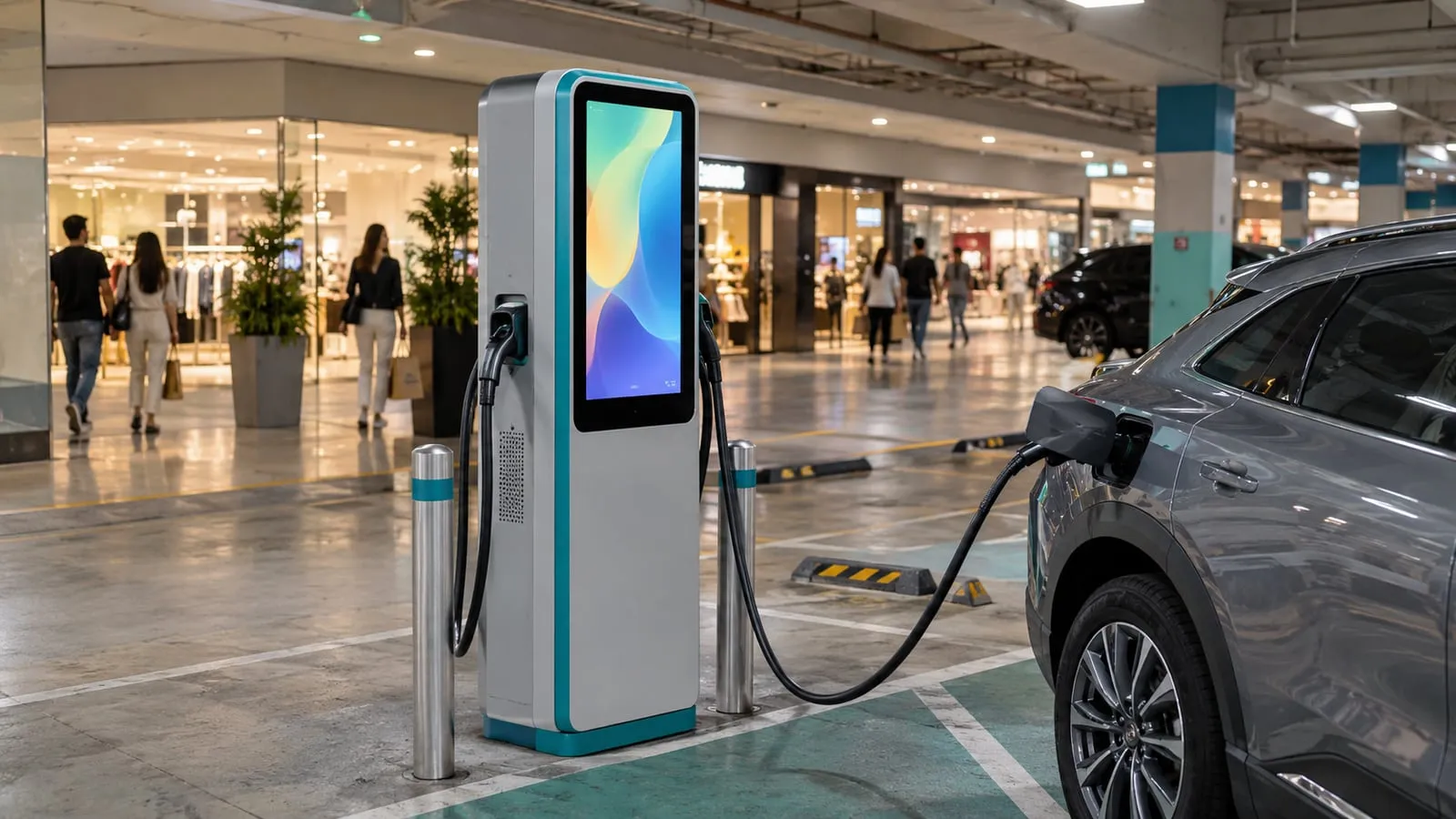
Short answer: an advertising screen turns a DC charger into a digital out-of-home display with a captive audience — drivers wait 15–40 minutes beside it and shoppers walk past. It pays when the site has enough audience, the screen time is sold (host promotions, a media partner or programmatic DOOH) and content is managed remotely. For malls and retailers, promoting their own offers is the quickest return; for operators, media sales add revenue per site. Check local rules on screens before you build.
Who sees the screen
| Audience | Time with the screen | Value |
|---|---|---|
| The charging driver | 15–40 minutes, standing or sitting nearby | High attention, small numbers |
| Passengers | Same | Often bored — receptive |
| Shoppers and pedestrians | Seconds, repeatedly | Large numbers at malls and city sites |
| Passing traffic | Seconds | Large numbers on busy roads; rules may limit content |
The busier the site, the more the screen is worth. A highway charger at night has a small audience; a charger at a busy mall entrance has thousands of passers-by a day.
Three ways to earn from the screen
| Model | How it works | Effort | Best for |
|---|---|---|---|
| Host’s own promotions | The mall or retailer shows its offers, events and brands | Low | Retail, malls, fuel stations with shops |
| Direct local sales | Operator sells slots to local businesses | Medium–high | Operators with a sales team in a city |
| Media partner / programmatic DOOH | Screens join a digital out-of-home network; ads are sold automatically | Low once integrated | Networks with many screens in good locations |
Many sites mix them: the host’s promotions most of the time, plus paid campaigns sold by a media partner.
Does it pay? The questions that decide it
| Question | Why |
|---|---|
| How many people pass or wait in view each day? | Advertisers pay for audience |
| Is the screen visible from where people walk, not just from the car door? | More impressions |
| Who will sell the time, and on what revenue share? | Your net income |
| Can content be updated remotely and scheduled? | Without it, the screen goes stale |
| What does it add to the charger price, power use and maintenance? | Your cost side |
| What do local rules allow? | Content, brightness and movement limits |
Treat the screen as a separate small business case inside the site plan: expected revenue per month against the extra hardware cost, connectivity, content management and maintenance.
What to specify in the hardware
| Item | What to ask |
|---|---|
| Screen size and brightness | Readable in daylight; brightness control at night |
| Mounting and protection | Sealed to the charger’s IP rating; impact-resistant glass |
| Media player and connectivity | Remote content management, 4G or Ethernet bandwidth |
| Content system | Compatible with your or your partner’s signage platform |
| Power and heat | Included in the charger’s power and cooling design |
| Warranty and spare parts | Screen covered like the rest of the charger |
Don’t let the screen get in the way of charging
The charging screen — price, status, instructions — must stay clear and separate from adverts. In the EU, AFIR requires clear price information for ad-hoc charging; drivers must never have to look past an advert to find the price or start a session.
VULTAE options
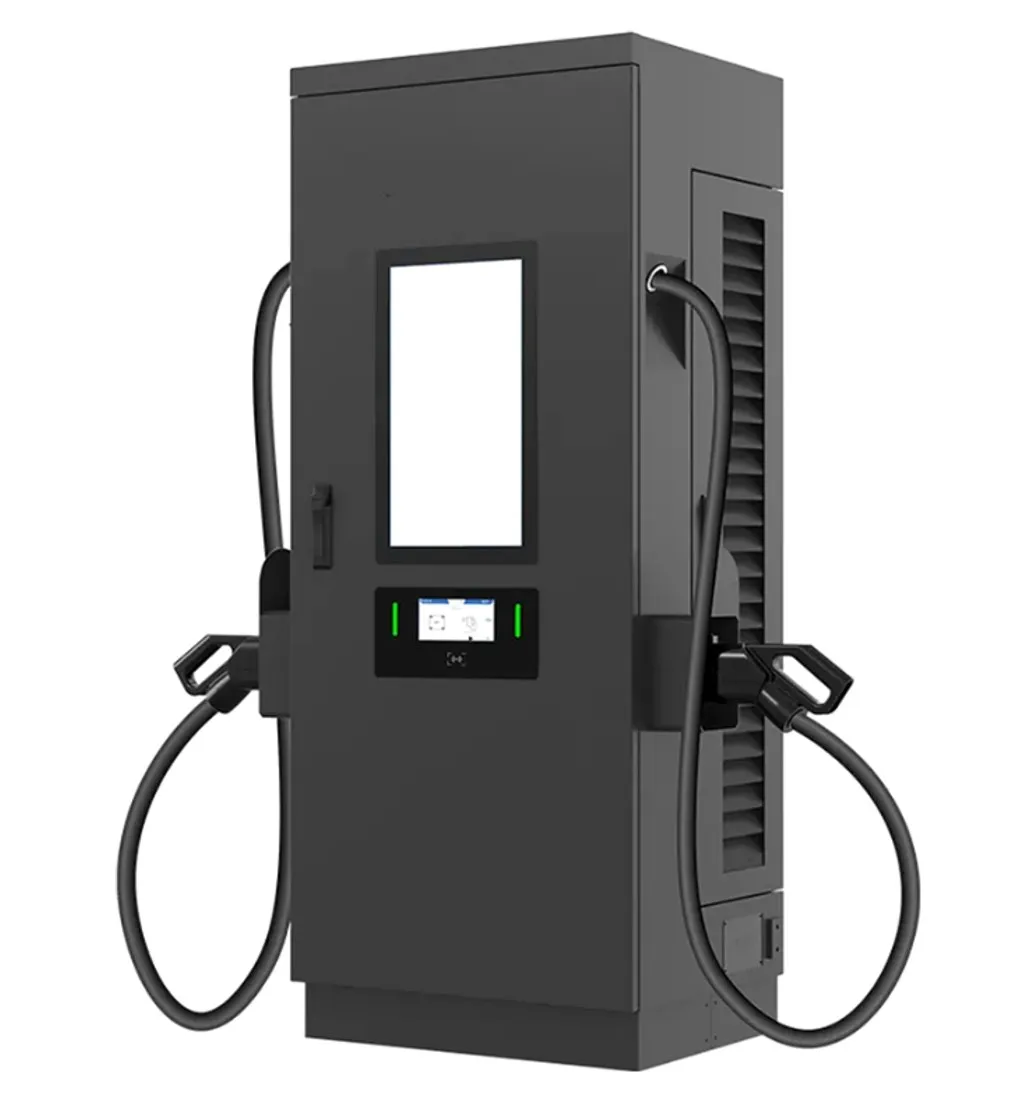
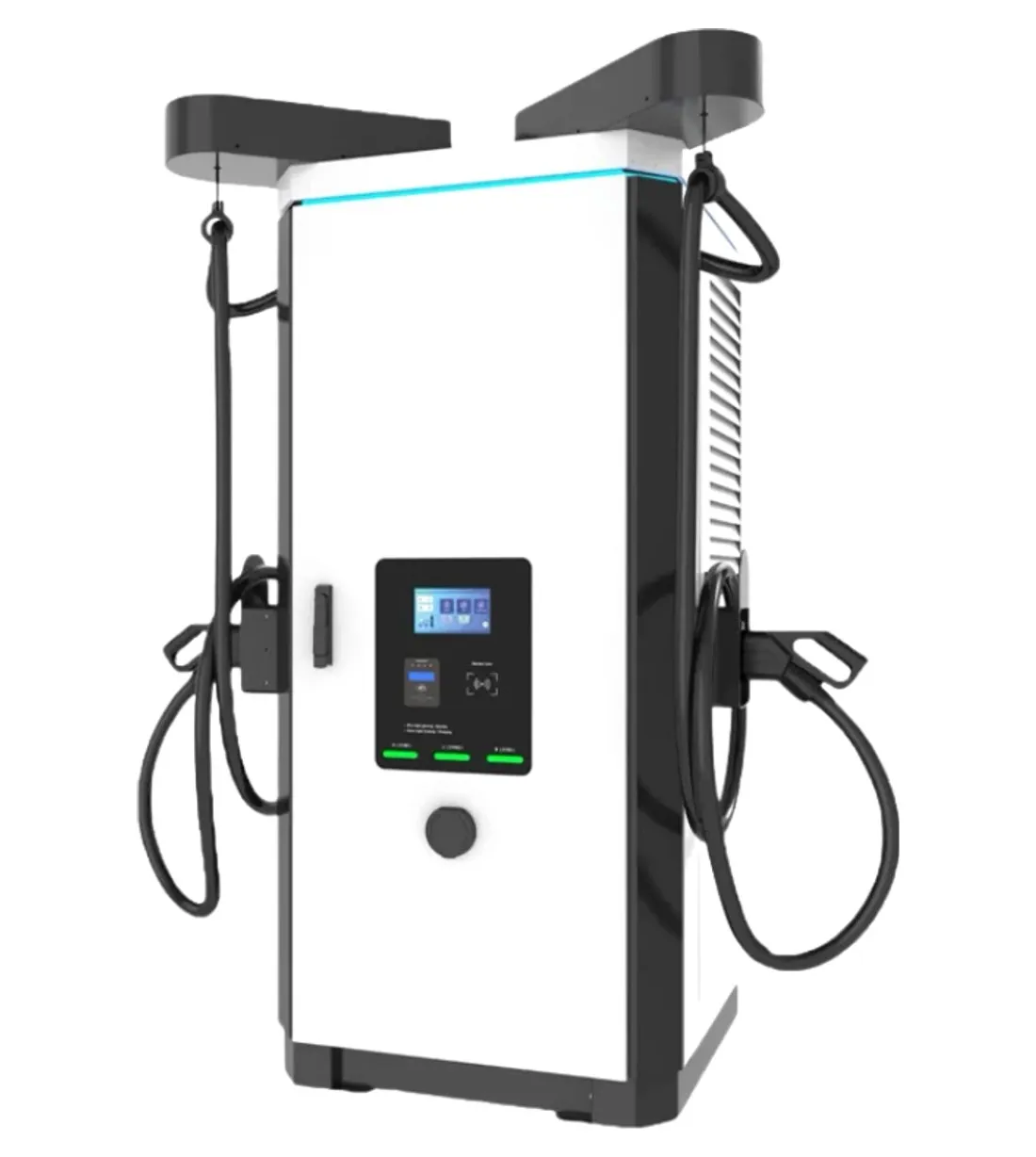
The VT-DFC compact DC charger (120 / 180 kW) and the VT-DF dual-connector DC charger are available with a 21-inch advertising screen in addition to the 7-inch charging touchscreen, with remote content management over the charger’s network connection. For retail sites, see EV charging for shopping malls and retail.
Questions buyers ask
- Do advertising screens on EV chargers make money?
- They can, where many people see them and the screen time is sold — through a media partner, programmatic digital out-of-home platforms or the site host’s own promotions. At quiet sites the revenue is small; at busy retail and urban sites it can be a meaningful addition to charging revenue.
- Who sells the advertising on charger screens?
- Either the site host uses the screen for its own promotions, the operator sells it directly to local advertisers, or a media company sells it as part of a digital out-of-home network. The model affects how much effort the operator needs.
- What size are advertising screens on DC chargers?
- Typically 20–55 inches depending on the charger design. VULTAE’s VT-DF and VT-DFC DC chargers offer a 21-inch advertising screen option.
- Are there rules for advertising screens at charging sites?
- Often. Local planning rules may limit screens visible from roads, brightness at night, moving content and content types. Check with the local authority before installing.