Portable & Mobile Charging
Portable EV Charger Plug Types by Country
Which household and industrial plugs portable EV chargers use around the world, why adapters matter and how to avoid overloading the wrong socket.
- Prepared by
- VULTAE Engineering Team
- Published
- Reading time
- 1 min
- Sources
- —
Key takeaways
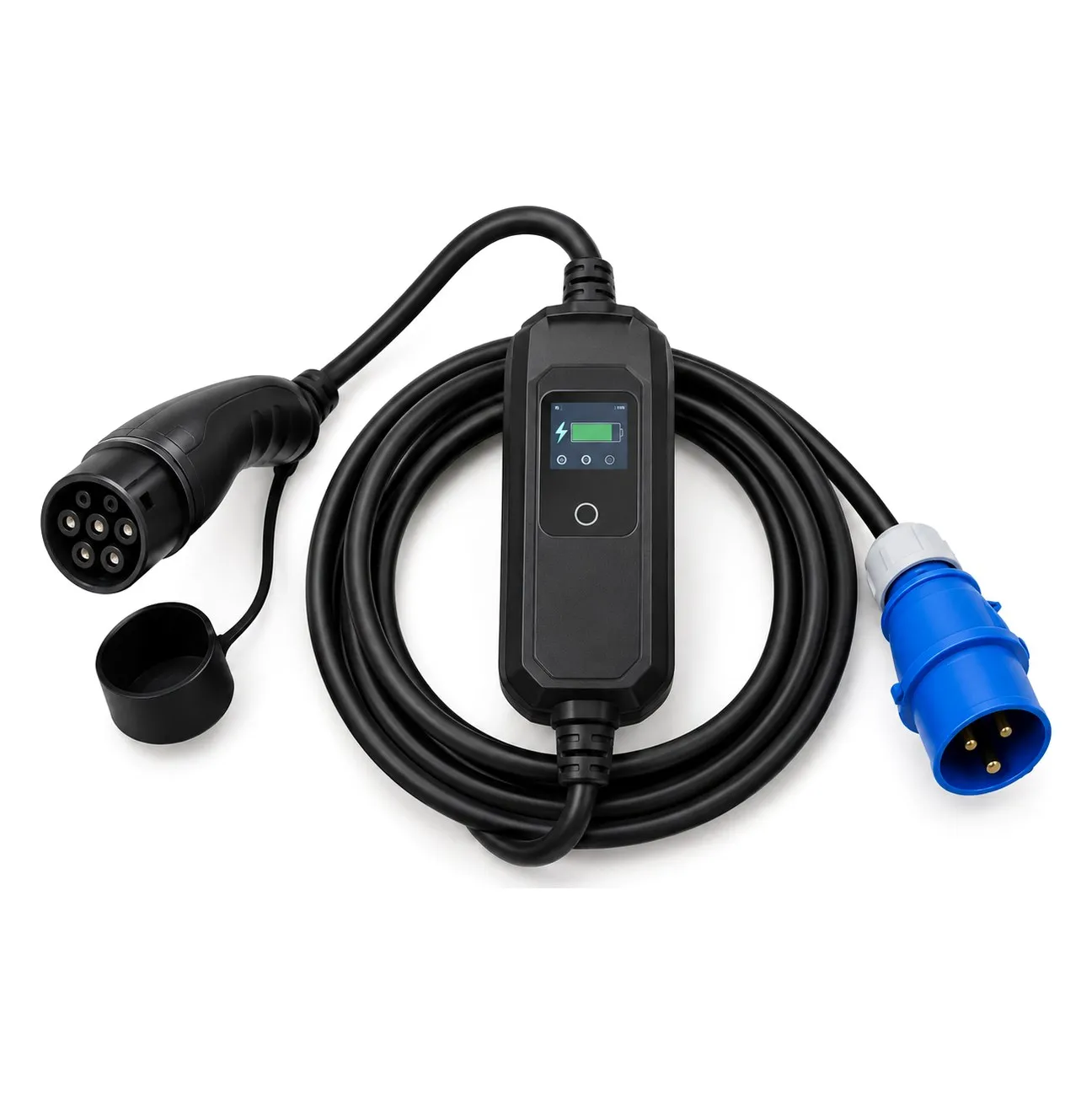
- 1A portable charger needs a plug that matches the local socket. Plug types, voltage and rated current differ by country, so the same charger needs different plugs or adapters.
- 2A plug that fits is not a plug that is safe. The socket and circuit must be rated for the current you set. Use the current limit setting and avoid cheap adapters that lack ratings.
- 3For industrial sockets such as the IEC 60309 family (CEE), a matching plug is often fitted to the charger. For household use, lower current is wise.
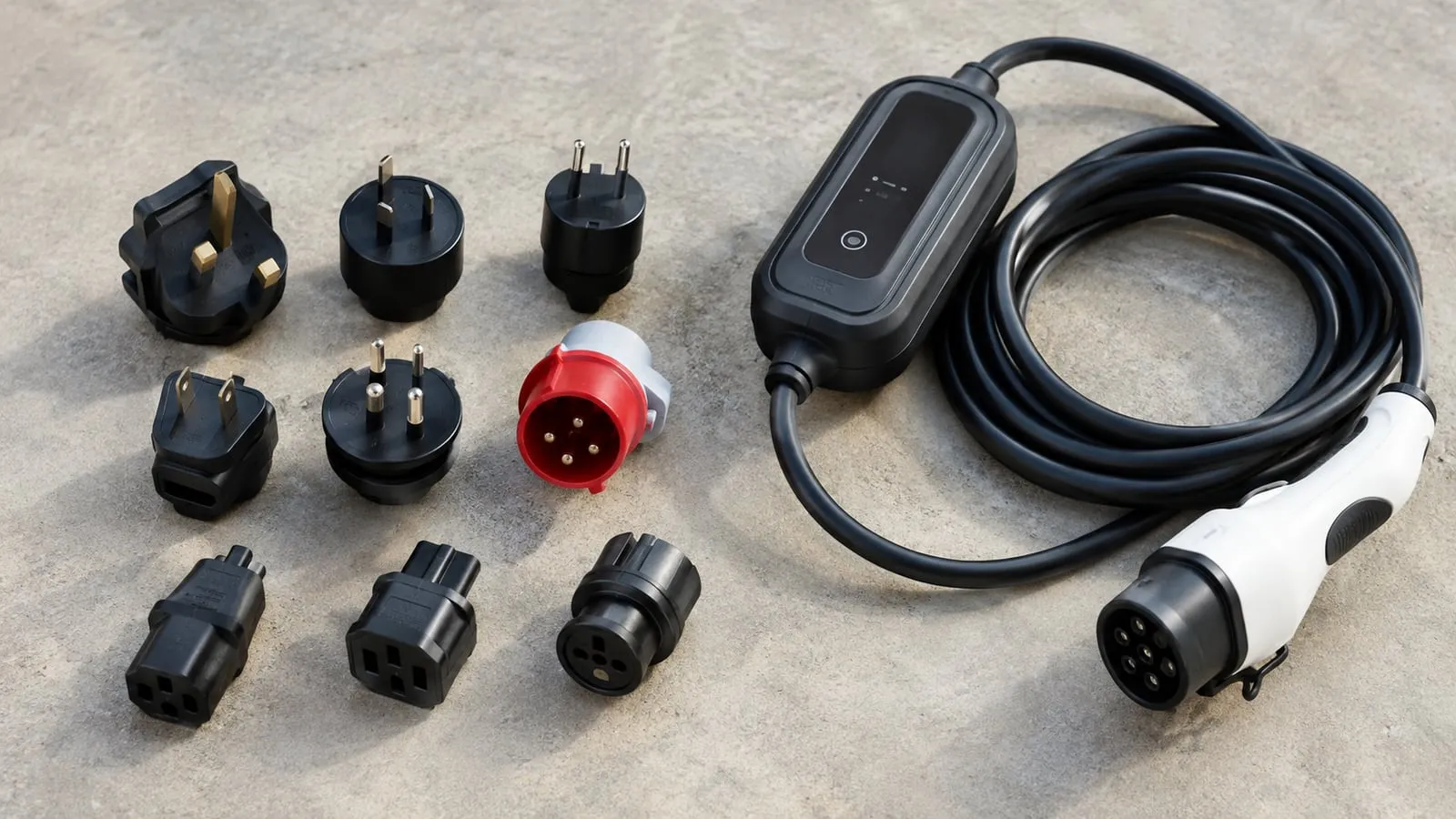
Short answer: match the plug to the socket and the current to the circuit. Use rated adapters only. The same portable charger needs different plugs in different countries.
Plug families (general)
| Family | Where common | Notes |
|---|---|---|
| Schuko (CEE 7/4) | Much of continental Europe | Household, 16 A rated; use lower current for long sessions |
| UK BS 1363 | UK and related regions | Fused plug, household |
| NEMA 5-15 / 5-20 | North America | 120 V, low power |
| NEMA 14-50 | North America | 240 V, higher power |
| IEC 60309 (CEE) | Europe and many regions | Industrial, single- or three-phase |
| Other national types | Various | Check local rules |
Always confirm the socket type and the circuit rating on site; local installations vary.
Why the adapter matters
An adapter is another contact point. A poor adapter heats at charging current. Choose adapters rated for the current and made for the purpose, and avoid chains of adapters.
How to set the current
| Socket | Practical approach |
|---|---|
| Household | Lower current, check socket condition |
| Industrial | Use the circuit rating; verify the protection |
| Unknown | Start low and check for heat |
Travel tips
- Carry the right plugs for your destinations.
- Check voltage and frequency — the charger must support them.
- Prefer industrial sockets for higher power.
See travelling with a portable charger, safety checks and the VULTAE portable charger, which is available with adapter plugs for regional sockets.
Questions buyers ask
- Can I use a travel plug adapter?
- Use only adapters rated for the current. Ordinary travel adapters are often rated for a few amps and can overheat at charging currents.
- Which industrial plug is common in Europe?
- The IEC 60309 (CEE) blue single-phase and red three-phase plugs are common in Europe and many other regions for higher-power connections.
- Does the plug type change the charging mode?
- No. Mode 2 is defined by the control box on the cable; the plug only connects to the local supply.