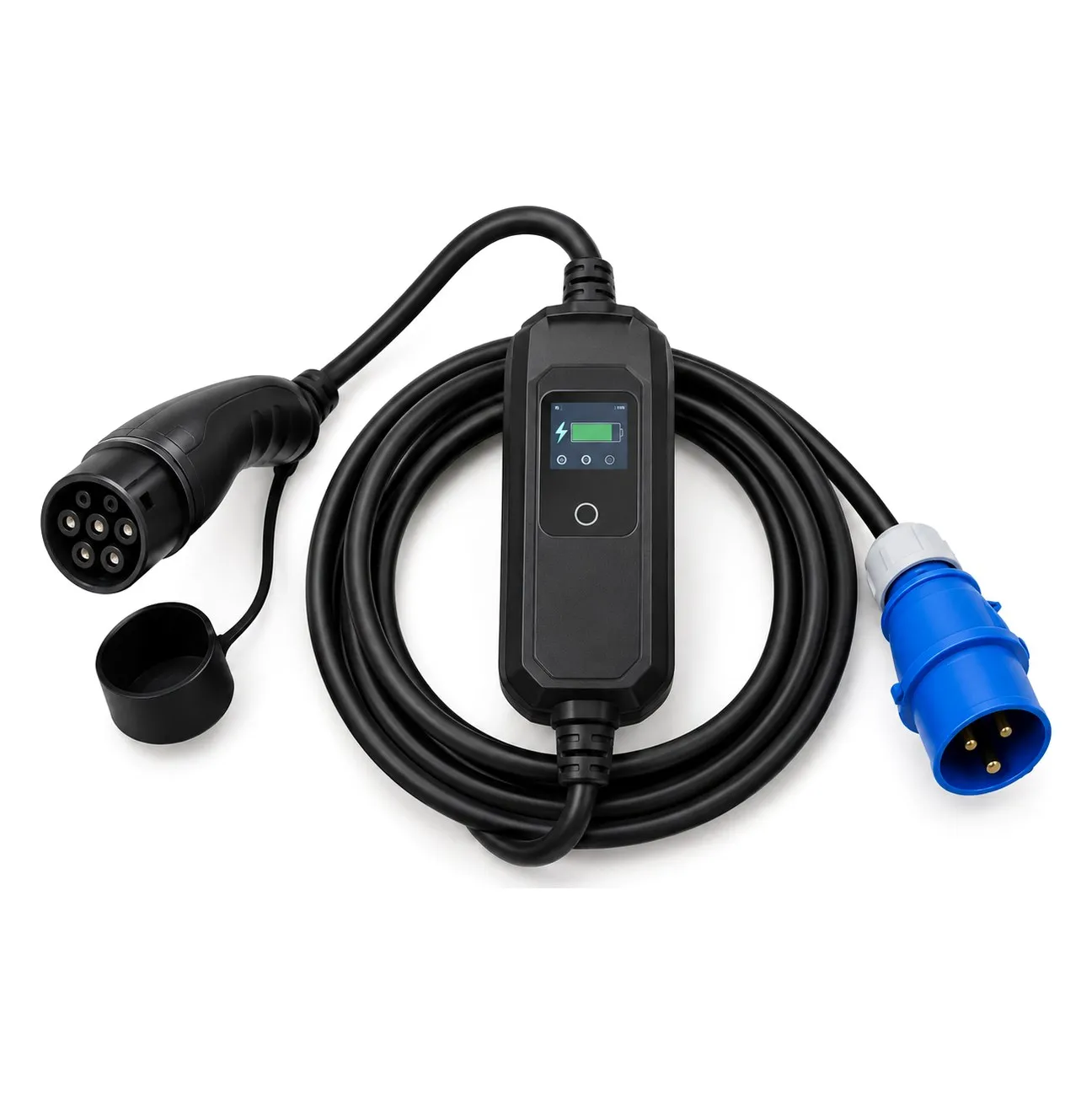
Portable & Mobile Charging
In-Cable Control Box Safety Checks for Portable EV Chargers
What to check on a portable EV charger control box: protection devices, temperature limits, plug and socket condition, ratings and a simple routine before use.
- Prepared by
- VULTAE Engineering Team
- Published
- Reading time
- 1 min
- Sources
- —
Key takeaways
- 1In a Mode 2 portable charger, the in-cable control box holds the control and protection electronics. It does not replace the safety of the socket and circuit you plug it into.
- 2Check the control box for protection functions, temperature handling, ratings and damage. Check the plug and socket for heat, looseness or marks before each use.
- 3Use the current setting that matches the socket and circuit. A plug that is warm after charging is a warning sign.
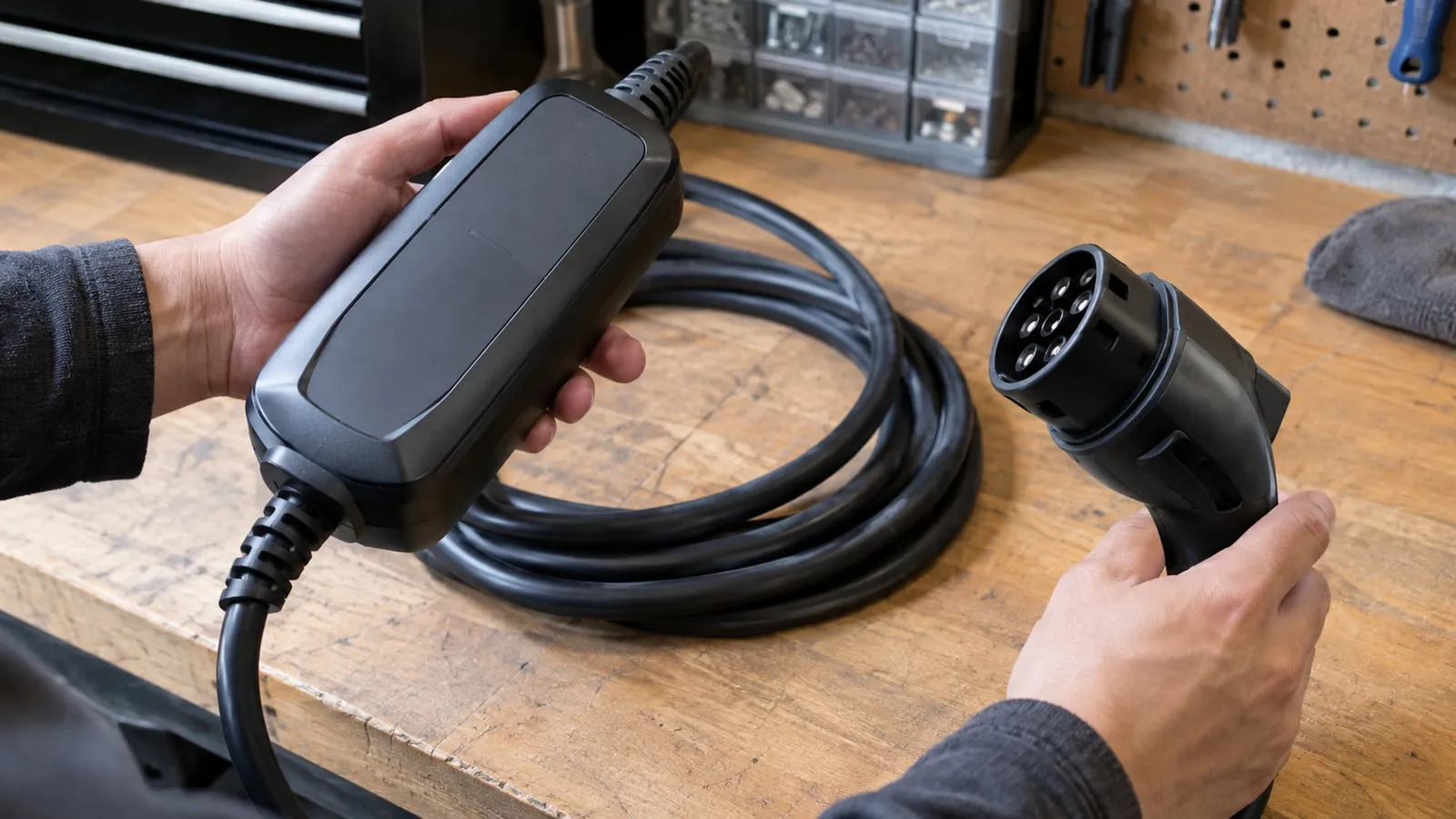
Short answer: check the control box, the plug, the cable and the socket before each use. Set the current to suit the socket, and stop if anything is warm, loose or damaged.
What the control box does
| Function | Purpose |
|---|---|
| Control pilot | Tells the car how much current it may draw |
| Residual current detection | Trips on earth leakage |
| Over-current and over-temperature | Reduces or stops charging |
| Earth monitoring | Detects loss of earth |
| Display | Shows status and settings |
Pre-use routine
- Look for cracks, burns or crushed cable.
- Check the plug for discolouration or damage.
- Check the socket for looseness and heat marks.
- Set the current to match the socket and circuit.
- After 10–15 minutes, feel the plug (carefully): it should not be hot.
- Do not use if the display or LEDs show a fault.
Socket matters
| Socket | Guidance |
|---|---|
| Household | Lower current; avoid long periods at high current |
| Industrial | Check the rating and the circuit |
| Extension lead | Avoid |
See portable vs wallbox for when a fixed charger is the better choice, and charging modes for how Mode 2 works.
Maintenance
- Keep the plug and connector clean and dry.
- Do not wrap the cable tightly while in use.
- Replace the unit if the cable or connector is damaged.
The VULTAE portable charger includes Type A 30 mA + 6 mA DC residual current detection and over-temperature current limiting.
Questions buyers ask
- What protections should a portable charger have?
- Residual current detection, over-current and over-temperature protection, earth monitoring and control pilot signalling, built into the control box.
- Why does the plug get warm?
- A loose or worn socket, a poor connection or too high a current for the circuit. Reduce the current and have the socket checked by an electrician.
- Can I use an extension lead?
- It is generally not recommended: extension leads add resistance and heat. Use the charger directly in a suitable socket.